2025 Ironman Maryland Race Review
Six weeks. That's how much time separated my 44-minute PR at Ironman Lake Placid and the starting line of Ironman Maryland. Coming off Lake Placid, I was riding a massive high. I had just put together my best full-distance race ever, run a 3:37 marathon for a 25-minute marathon PR, and proven to myself that my fitness had reached another level. Six weeks later, I was standing on the opposite side of the endurance racing spectrum.
Lake Placid had mountains, thousands of feet of elevation, rain, and one of the most intimidating descents I've ever raced. Maryland looked almost comically easy by comparison. The bike course was pancake flat, the roads were good, and on paper it looked like the perfect opportunity to go fast. I did go fast, but I definitely paid for it later.
Ironman Maryland became one of the most physically painful races I've completed and a reminder that an "easy" Ironman course doesn't really exist. Sometimes the courses that look easiest on paper just find completely different ways to beat the hell out of you. This would be my fourth full Ironman.
Arriving in Cambridge
One of the first things I noticed about Ironman Maryland was that accommodations around Cambridge were pretty limited. Unlike Lake Placid, where the entire town feels built around having athletes within walking distance of everything, most hotel options required some driving to get to Ironman Village and the swim start. If you're considering this race, I'd definitely recommend figuring out accommodations early rather than waiting until the last minute.
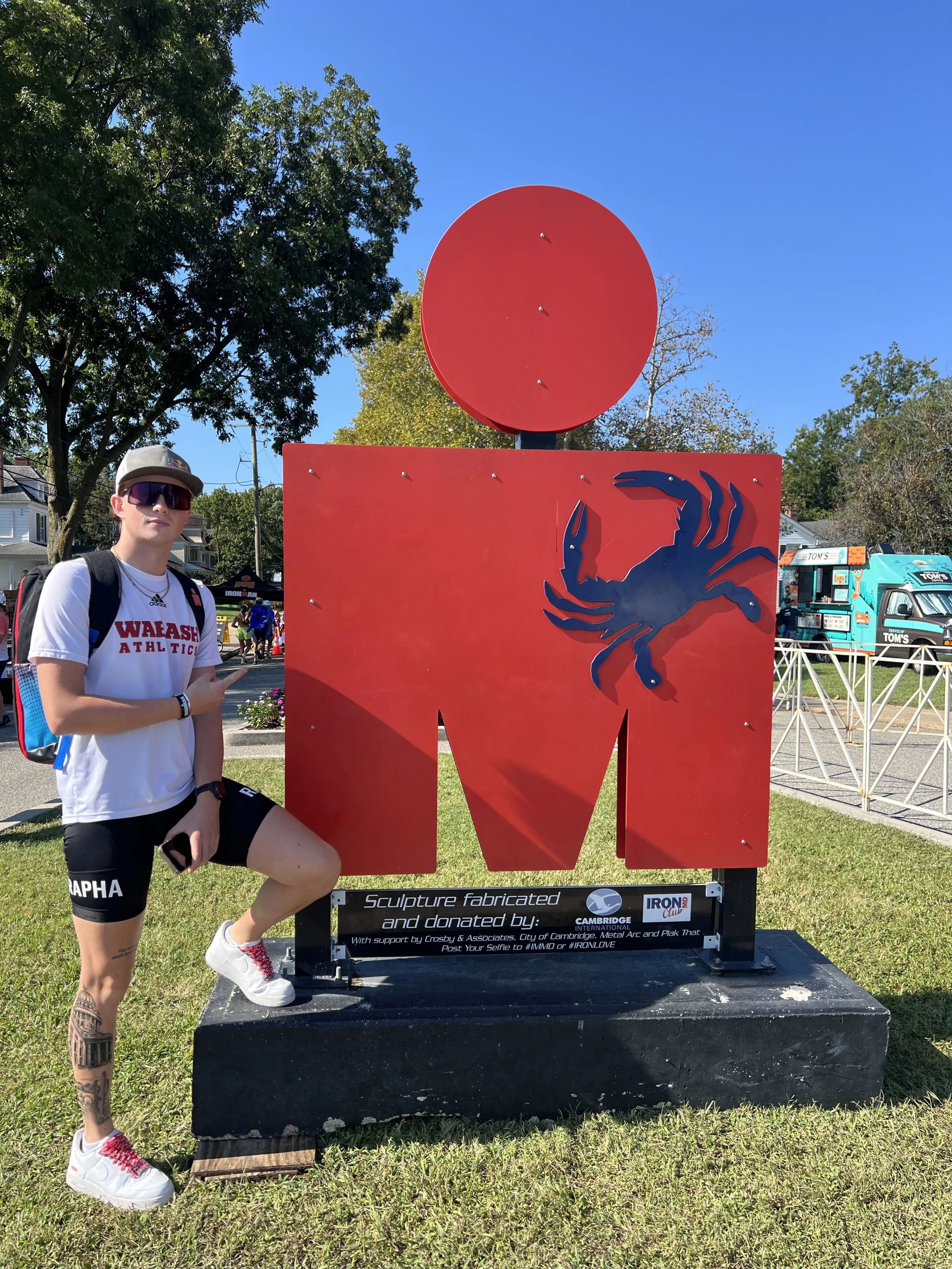
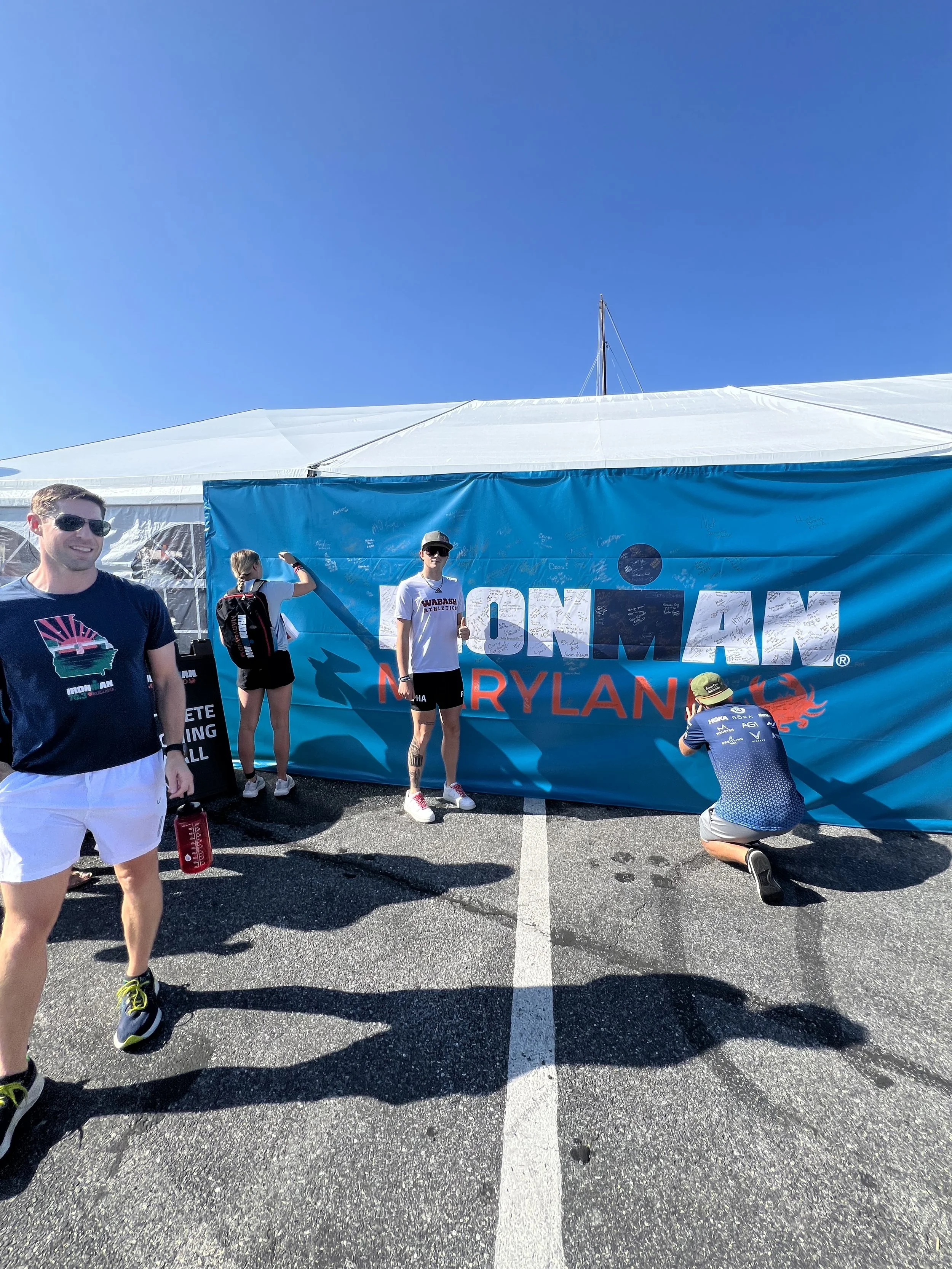
Once we actually made it to check-in, though, my impression of the race improved immediately. Ironman Village was beautiful, there were plenty of vendors, the volunteers were fantastic, and there were athletes everywhere to talk with. Cambridge really leaned into the Maryland identity too, with crab-inspired M-Dot logos scattered around the venue that made for some awesome pictures.
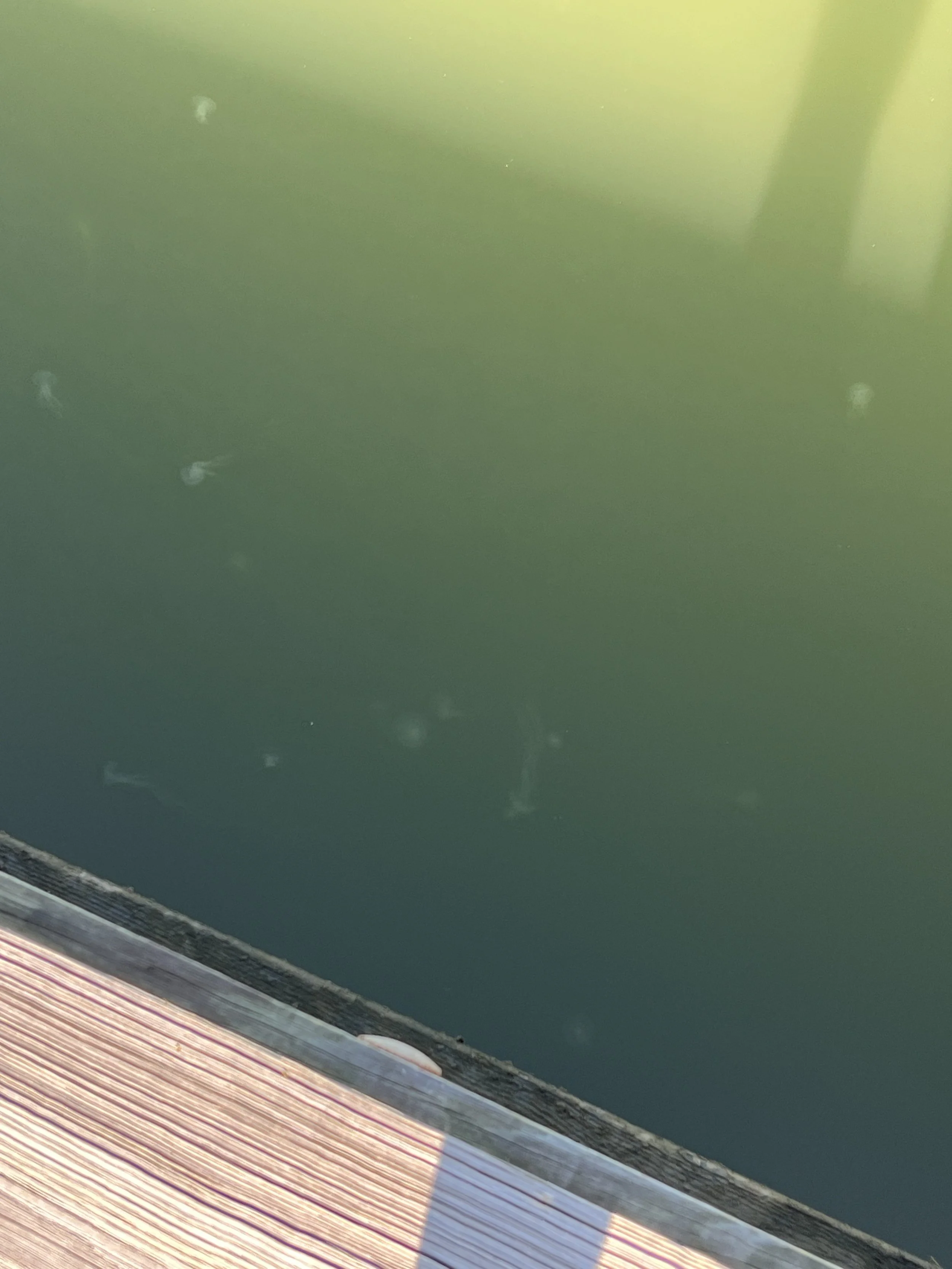
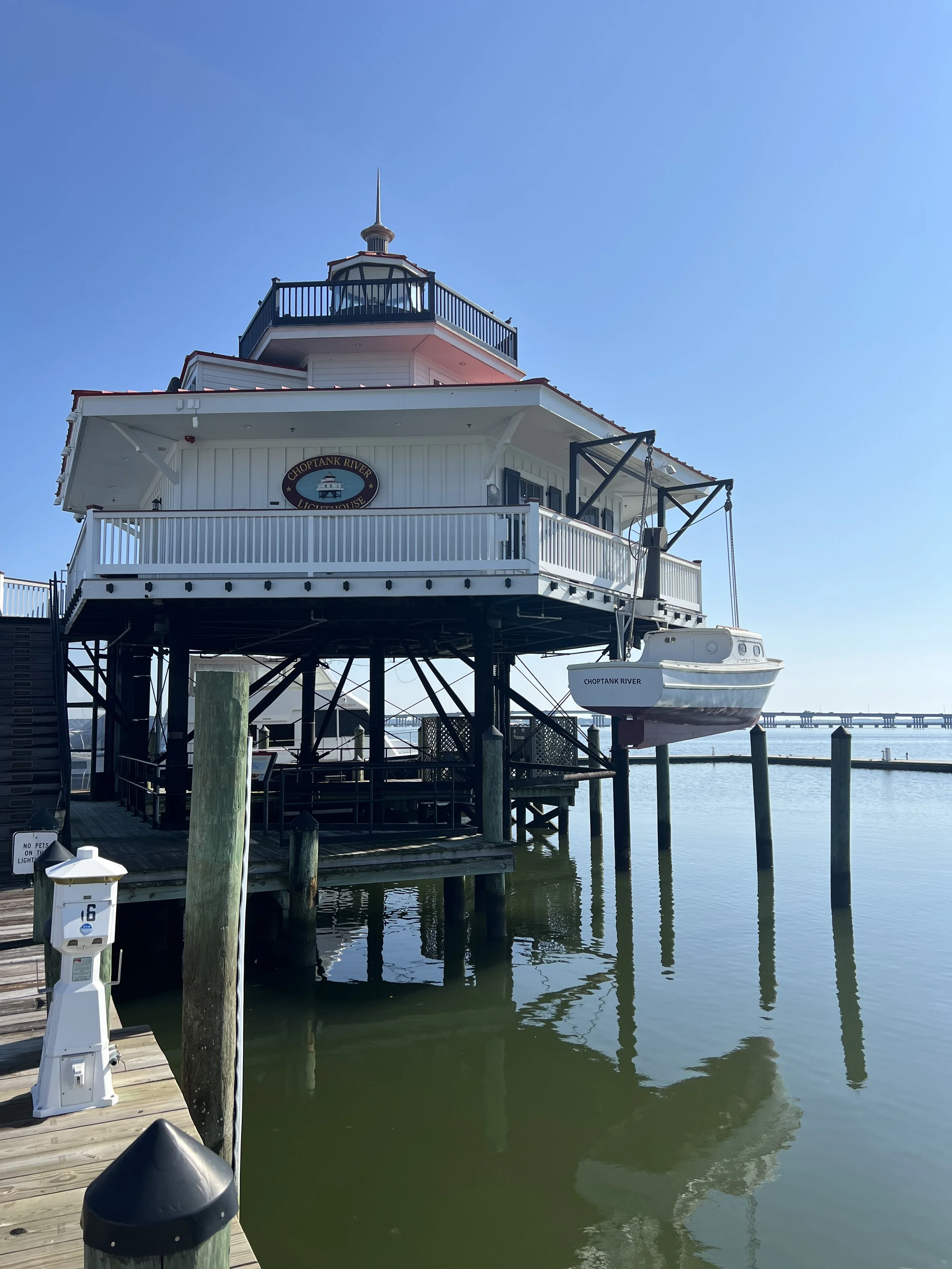
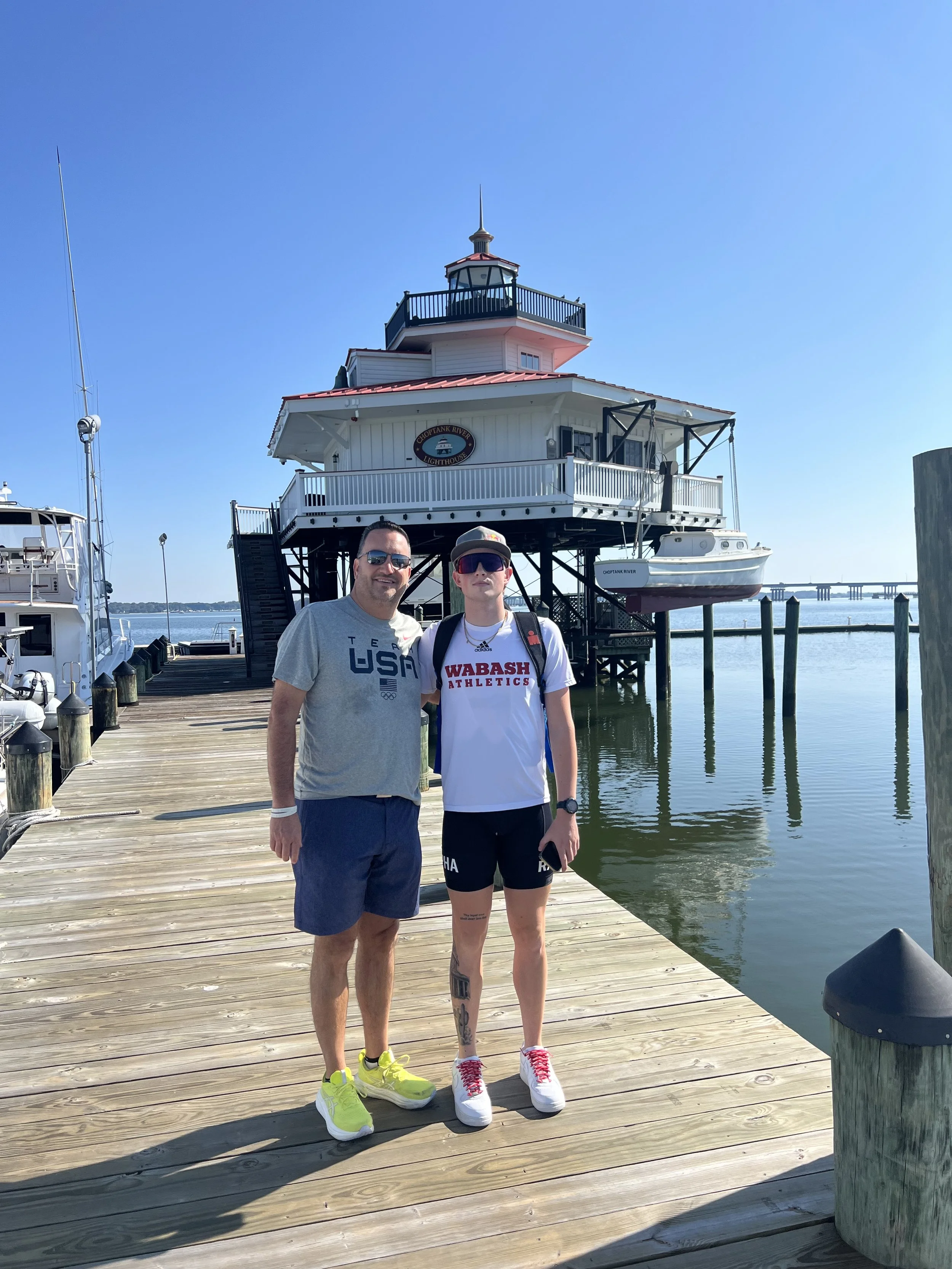
Toward the end of check-in, we decided to walk along the docks and look at the water. I wanted to get an idea of the visibility and what I would be dealing with the next morning. That's when I saw hundreds of jellyfish scattered throughout the water around the docks. The locals called them sea nettles, and suddenly the swim became considerably less appealing. Sea nettles are a known part of swimming in the Choptank River, especially around the warmer months, so this wasn't exactly some freak occurrence.
Seeing that many of them the day before definitely made me anxious. There wasn't much I could do about it, though. I knew I would wear a wetsuit if allowed and cover as much skin as possible. Everything else was going to be between me and the jellyfish.
The Flattest Bike Course I've Ever Seen
We also drove the bike course before the race, and I couldn't believe how flat it was. When I say flat, I don't mean "flat for an Ironman." I mean flat. My Garmin would eventually record three feet of elevation gain across the entire 111.43-mile bike activity. For comparison, six weeks earlier at Lake Placid, Strava had recorded 6,060 feet.
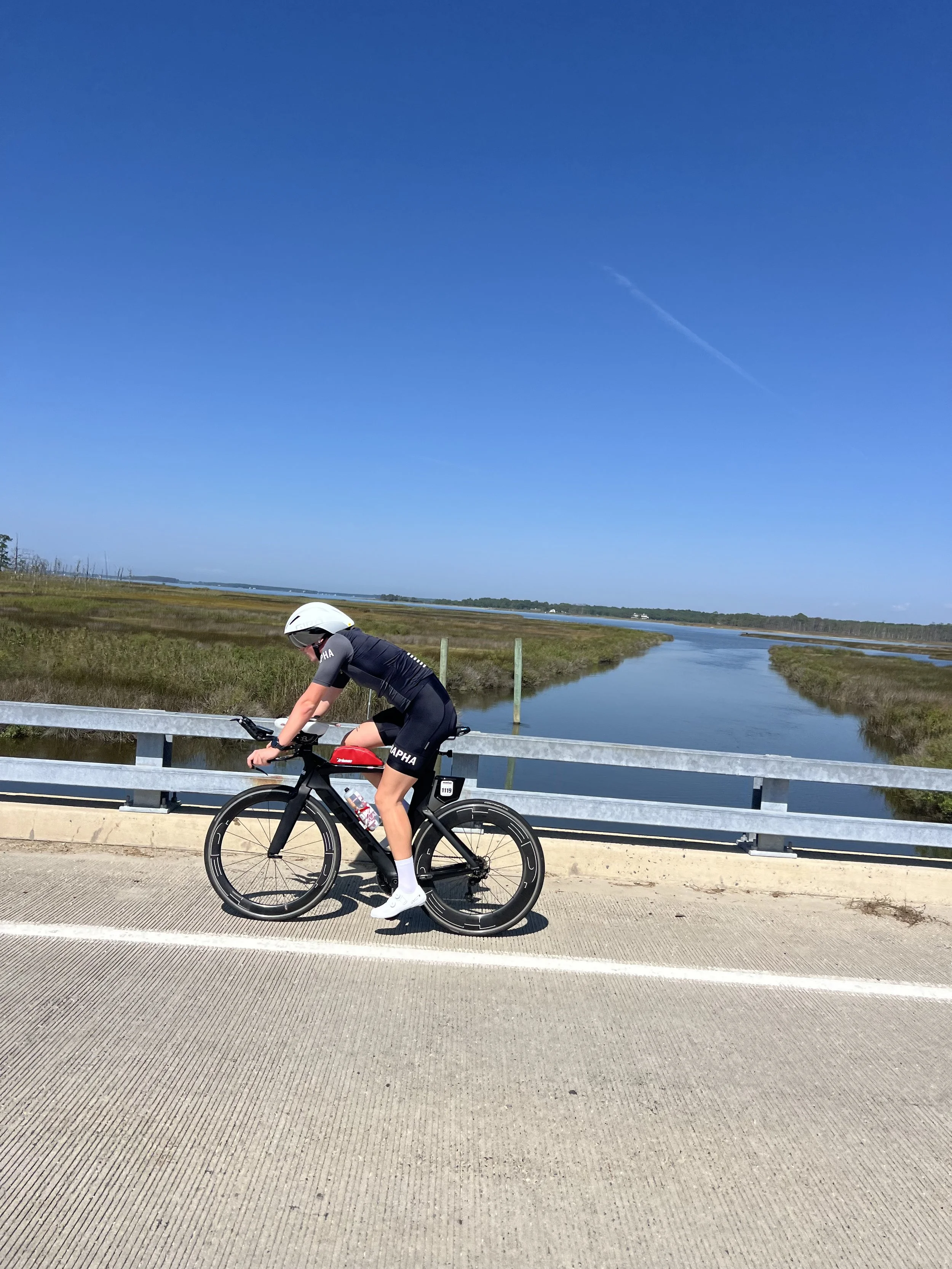
The Maryland bike course travels through the countryside and wetlands surrounding Cambridge, with long stretches through open grasslands and along the water. It's a beautiful area, but there was one thing I didn't fully appreciate before racing it. When there are no hills, there are also no descents. That means no free speed, no long opportunities to coast, and no sitting up after cresting a climb while gravity does the work. You're just pedaling for 112 miles.
Wind also becomes much more important when there's nothing on the course to block it. Maryland can be an incredibly fast bike course, but all of that open terrain means the wind can completely change how the course rides. I would learn that lesson, along with another lesson about what happens when you spend five hours basically locked into an aero position.
Swim
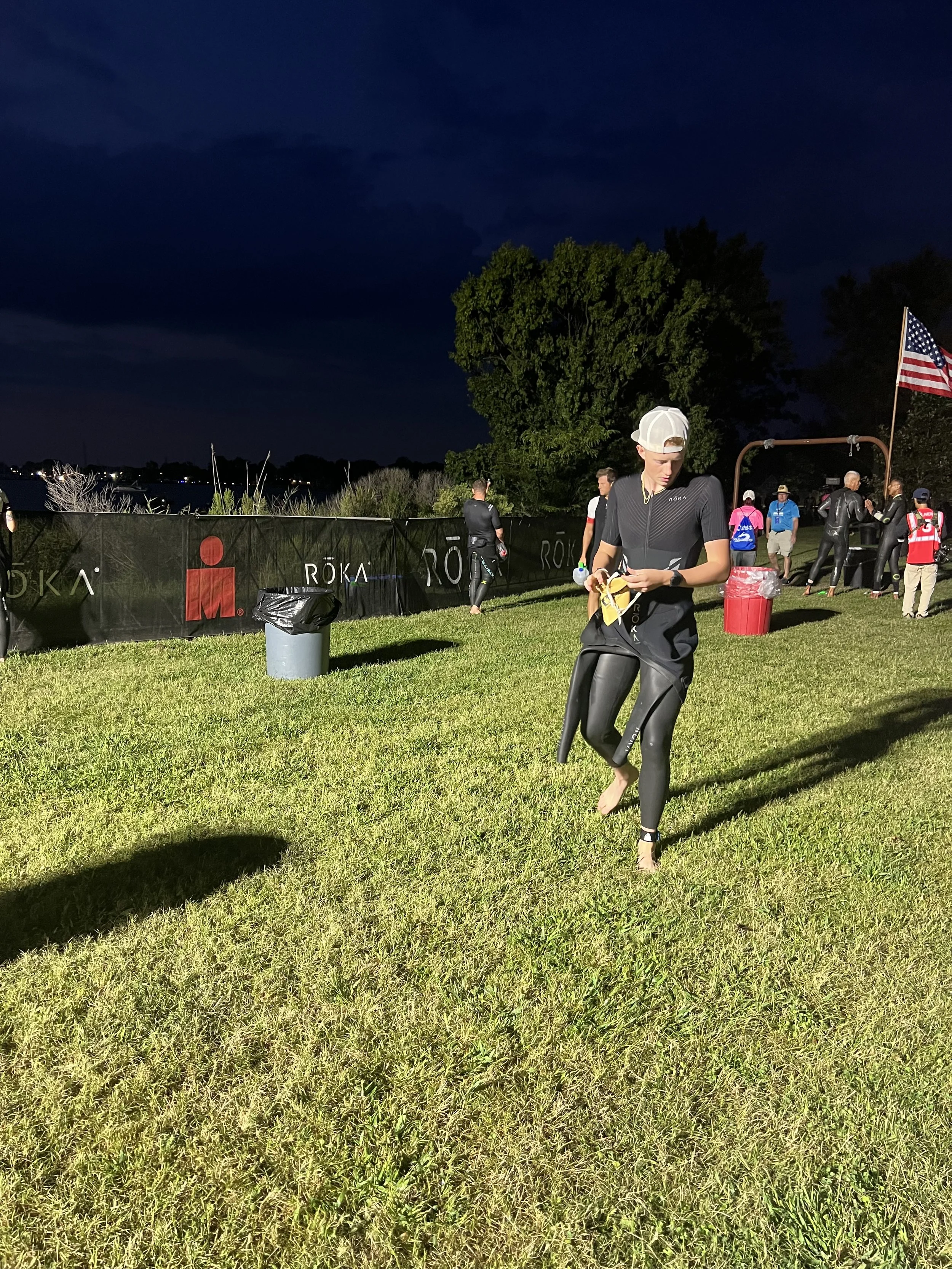
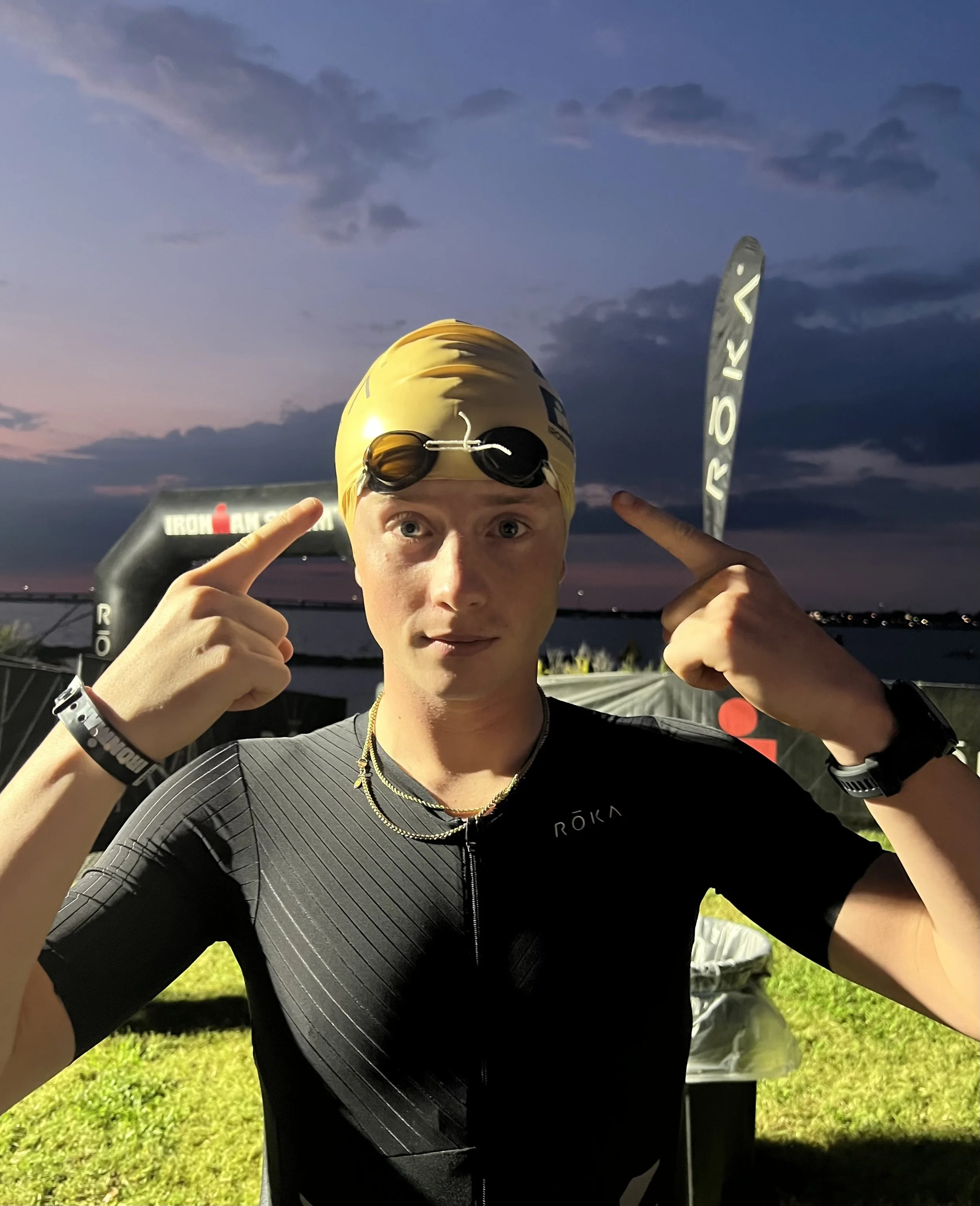
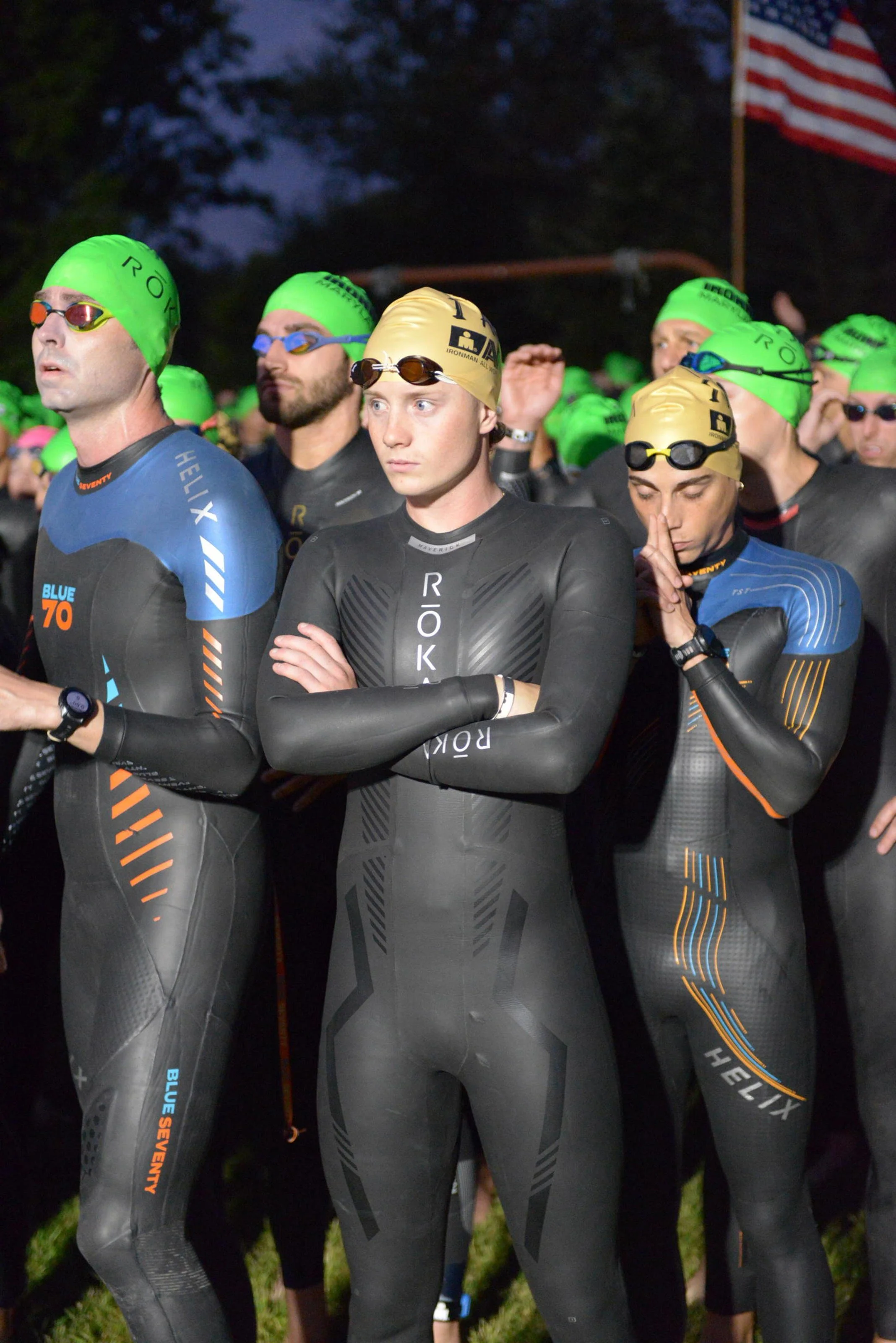
Race morning started with the Choptank River. Standing at the start, the swim course honestly didn't look too intimidating. The water was extremely shallow near shore, to the point that you could basically walk toward the first buoy if you really wanted to. The problem wasn't the depth. It was everything living in it.
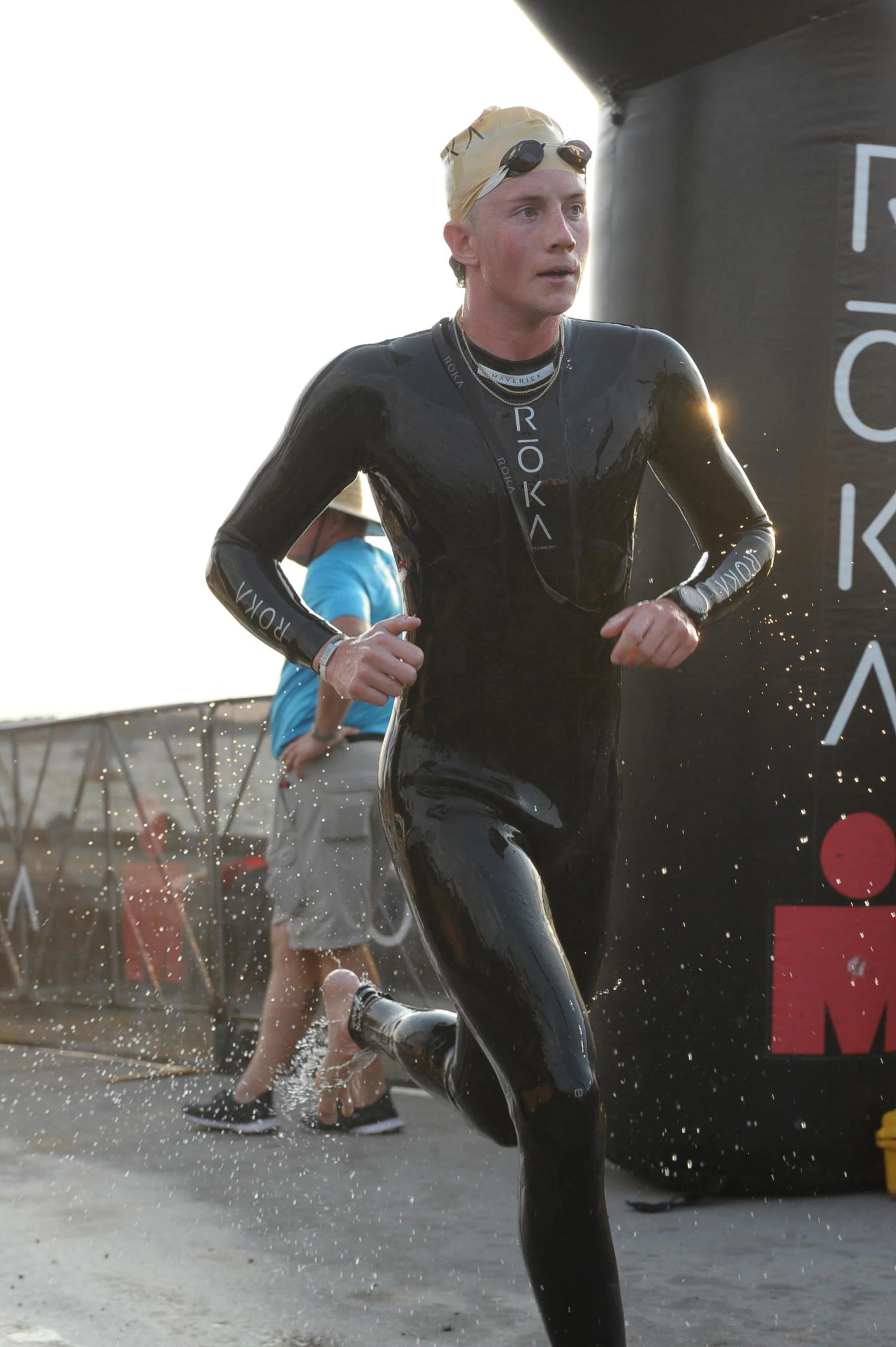
The swim started relatively well, but it didn't take long before I met the sea nettles firsthand. They got my face, nose, neck, and hands. At one point my fingers were literally combing through tentacles during my stroke. It sucked. The wetsuit helped tremendously by protecting most of my body, but there's obviously no wetsuit covering your face or hands. Every time I reached forward, there was the possibility of grabbing another jellyfish.
The current made things harder too. By the second loop, I had enough of fighting both people and jellyfish. Because the water was so shallow near shore, I realized I could stay farther away from some of the congestion and sea nettles by getting my feet underneath me and walking portions near the beginning of the loop. So that's exactly what I did. Was it the most elegant Ironman swim strategy ever? Absolutely not. Did it keep me away from some jellyfish? Yep.
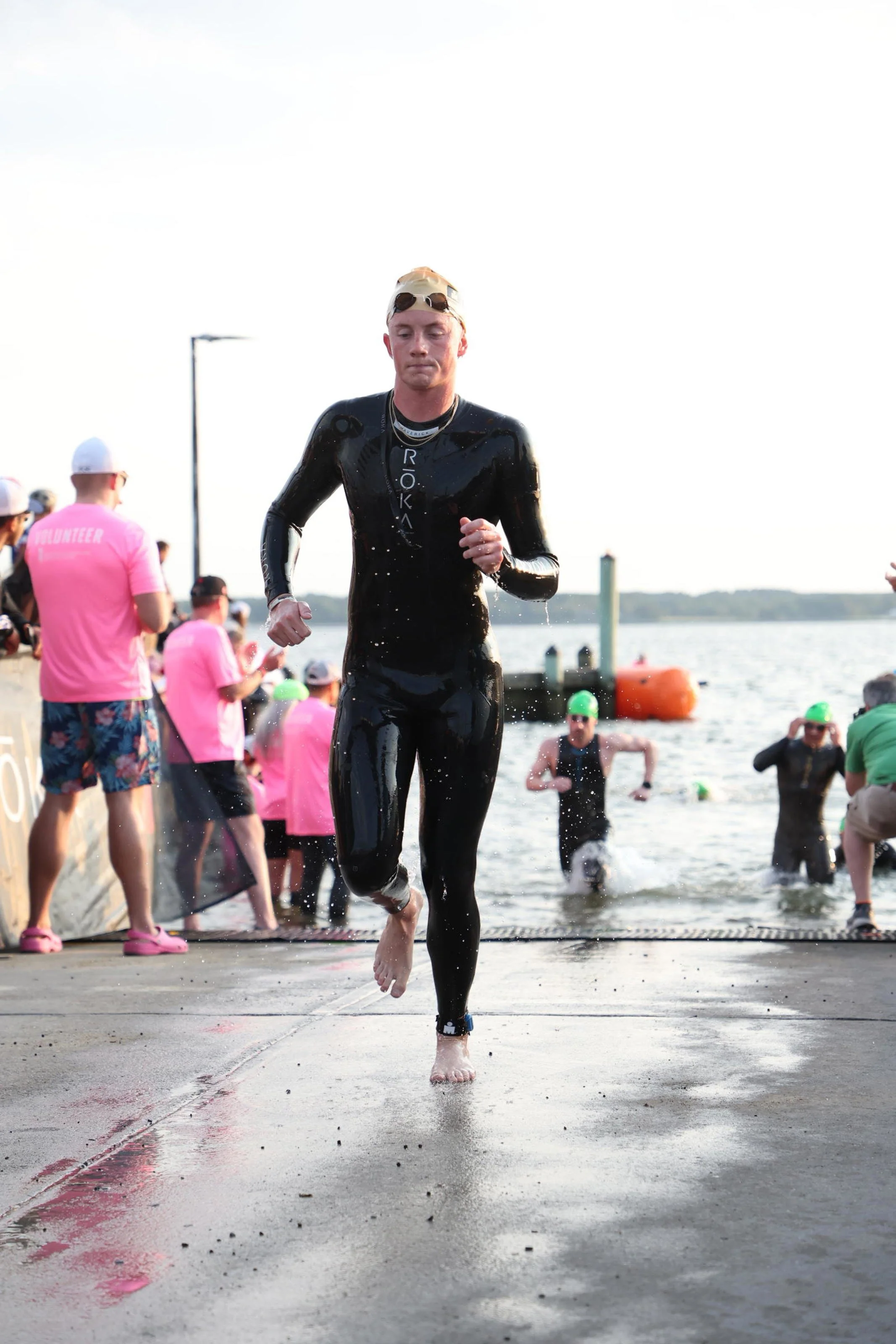
My watch recorded 4,332 yards in 1:00:56 of moving time, averaging 1:24 per 100 yards. Considering this was my first real swim back since Lake Placid, combined with the current and repeatedly getting stung by sea nettles, I was actually pretty impressed with the result. More importantly, I was extremely happy to get out of that water.
Bike
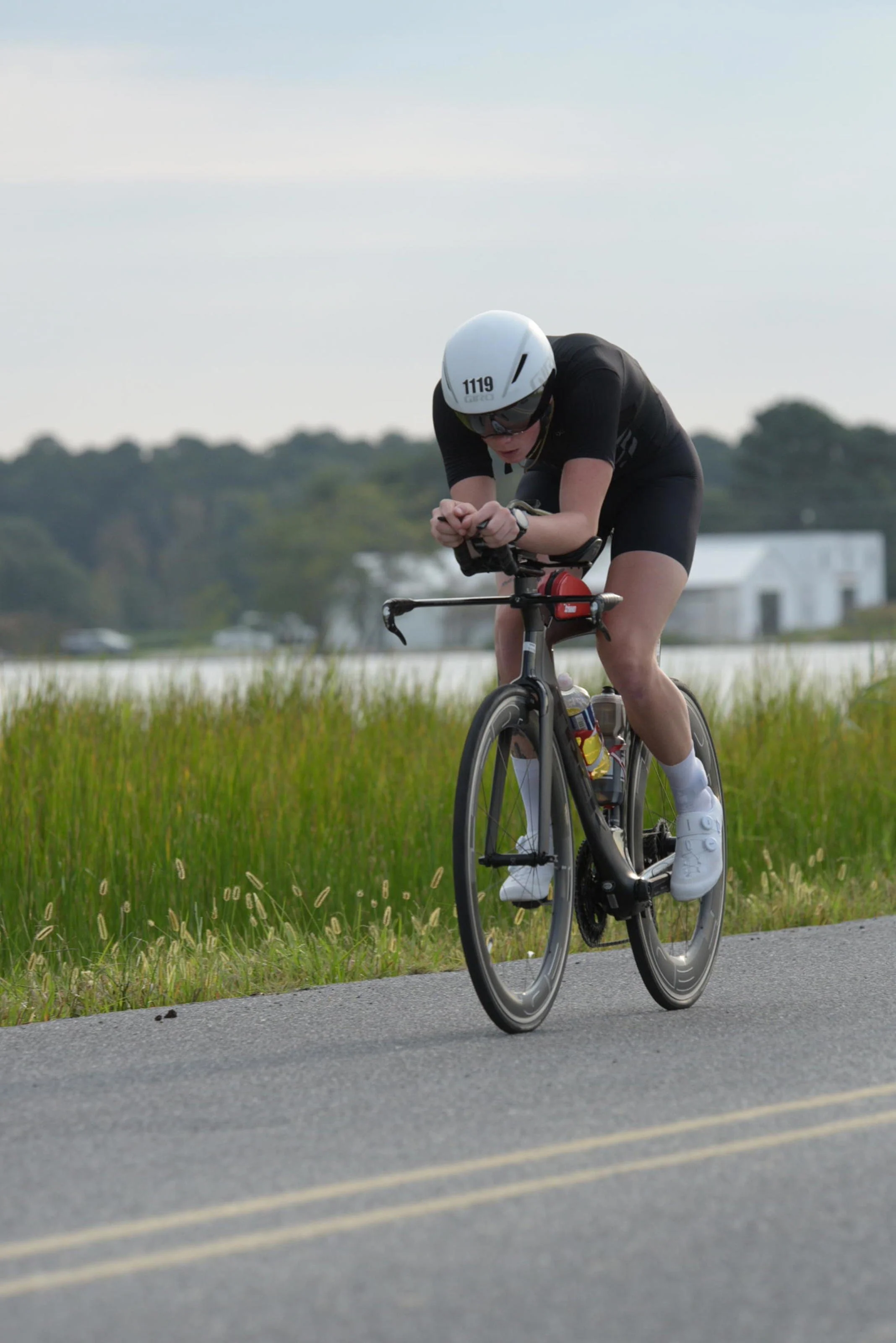
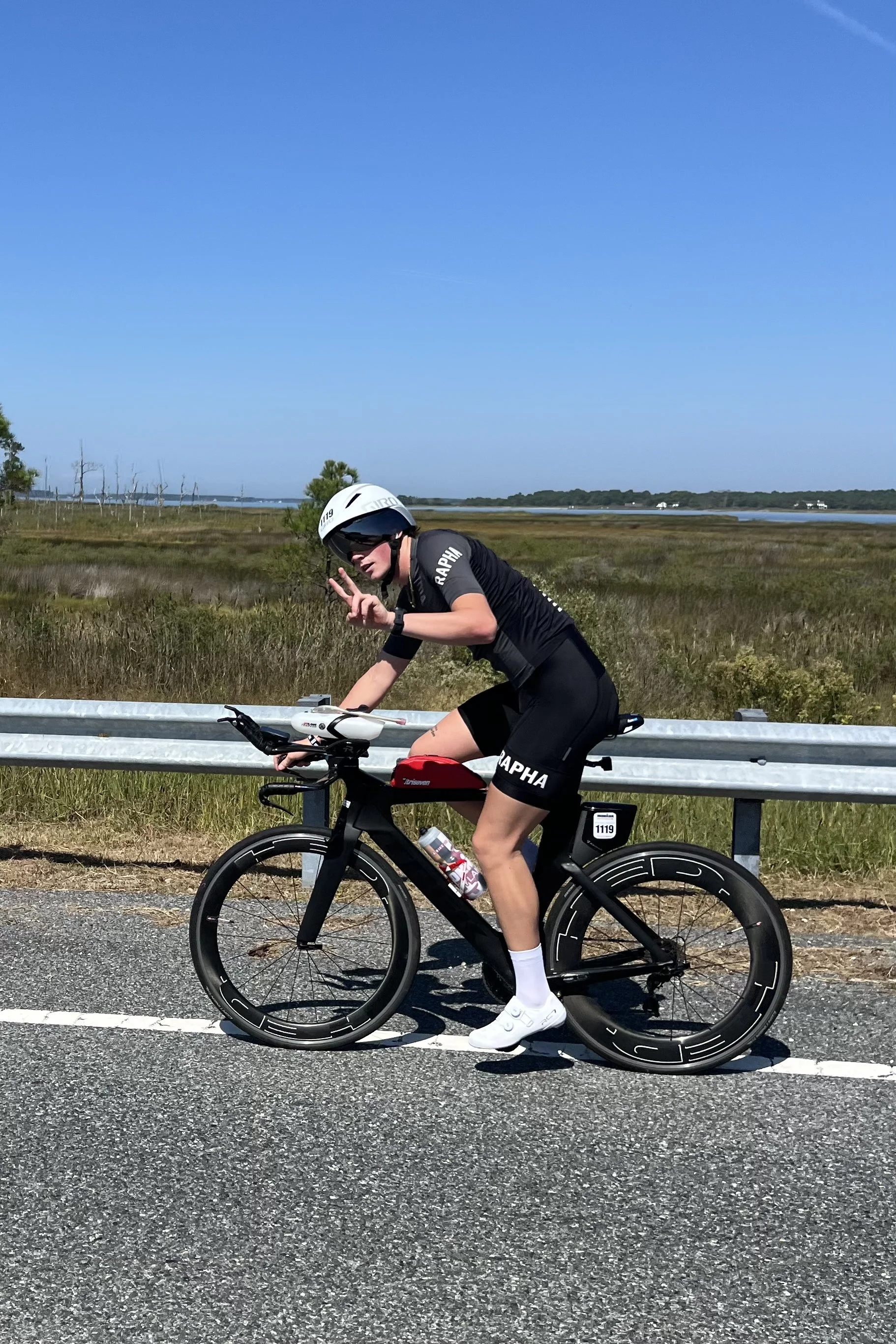
Once I got onto the bike, it was time to go fast, and I went fast. This was easily my strongest Ironman bike leg up to that point. With essentially no elevation to worry about, I could settle into the aero position and continuously put power into the pedals. For the first 70 miles, I felt fantastic. My Strava description afterward probably explained my mentality best: I was pushing "big boy power."
The course itself was beautiful. We rode through open grasslands, wetlands, and long stretches along the water. The roads were also in excellent condition, which meant I could focus on holding power instead of worrying about potholes or broken pavement. The wind was definitely noticeable, though. My Strava activity recorded winds around 9 mph, and on a course this exposed, there isn't much protection from it.
I kept pushing, and the result was a massive bike PR. I completed 111.43 recorded miles in 5:16:16 of moving time, averaging 21.1 mph with 221 watts weighted average power. That was the fastest Ironman bike leg I had ever produced, and at the time I was thrilled with it.
Somewhere around mile 90, however, the bill arrived. My neck and lower back started hurting badly, and this wasn't normal Ironman discomfort. It became excruciating. The aero position that had allowed me to ride so aggressively for the first several hours was becoming almost impossible to maintain. Eventually, I actually got off the bike and laid down so I could stretch my back before getting up and continuing.
Looking back, I think the flatness of Maryland contributed heavily to the problem. At Lake Placid, the terrain constantly forced me to change position. I would climb, descend, sit up, shift around, and naturally get breaks from being locked into aero. Maryland didn't give me that. It was just power for more than five hours, and my neck and back eventually had enough.
I also have to acknowledge that I was only six weeks removed from Lake Placid. At the time, I wanted to believe I was completely recovered because my fitness was obviously still there. Looking back, I'm not convinced my body was fully ready to race another Ironman as aggressively as I did. I had the fitness to ride fast. Whether I had the recovery to absorb that effort and still run a marathon was another question.
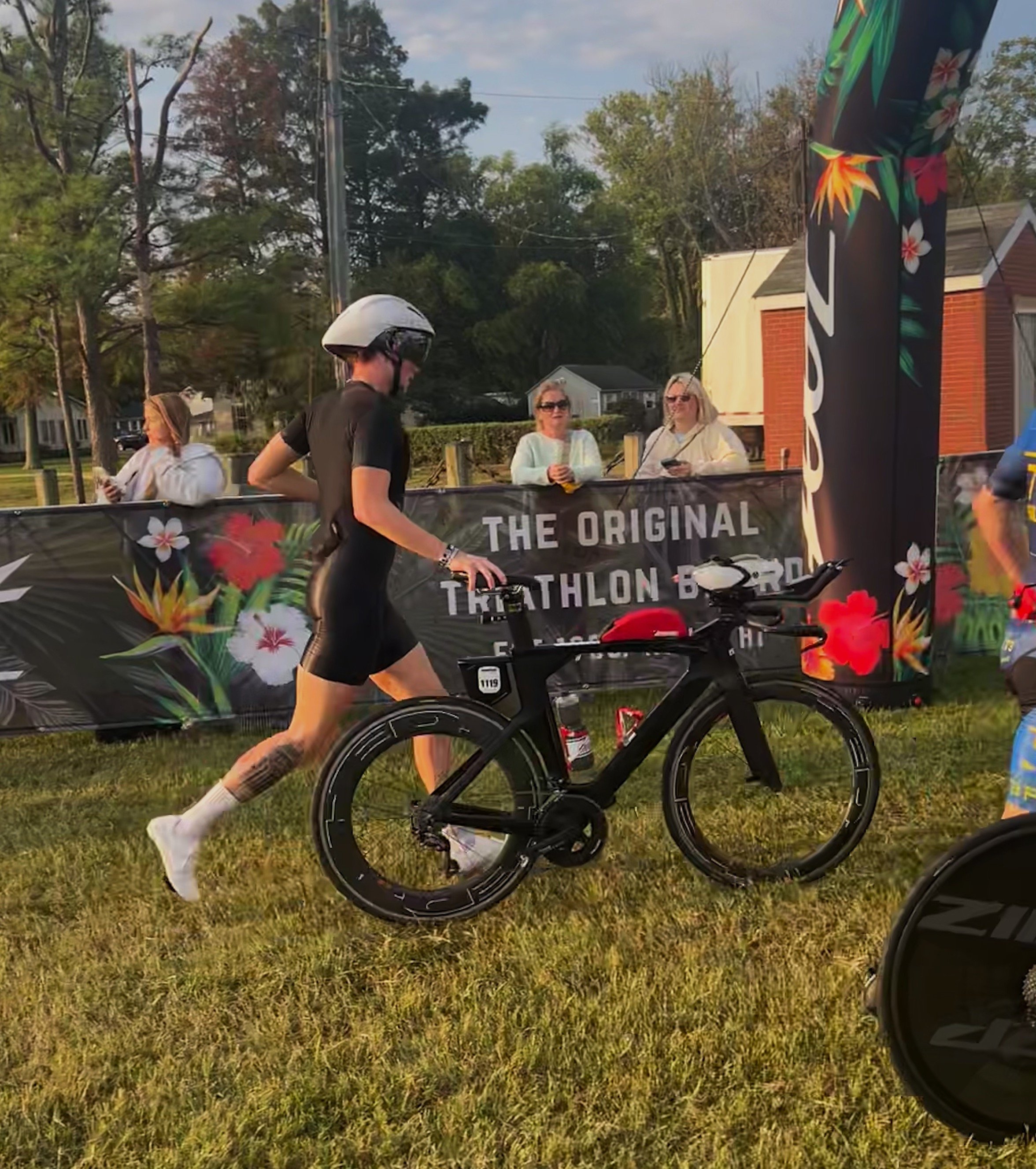
I rolled into T2 with a huge bike PR. Unfortunately, I had also spent a lot of what I had left.
Run
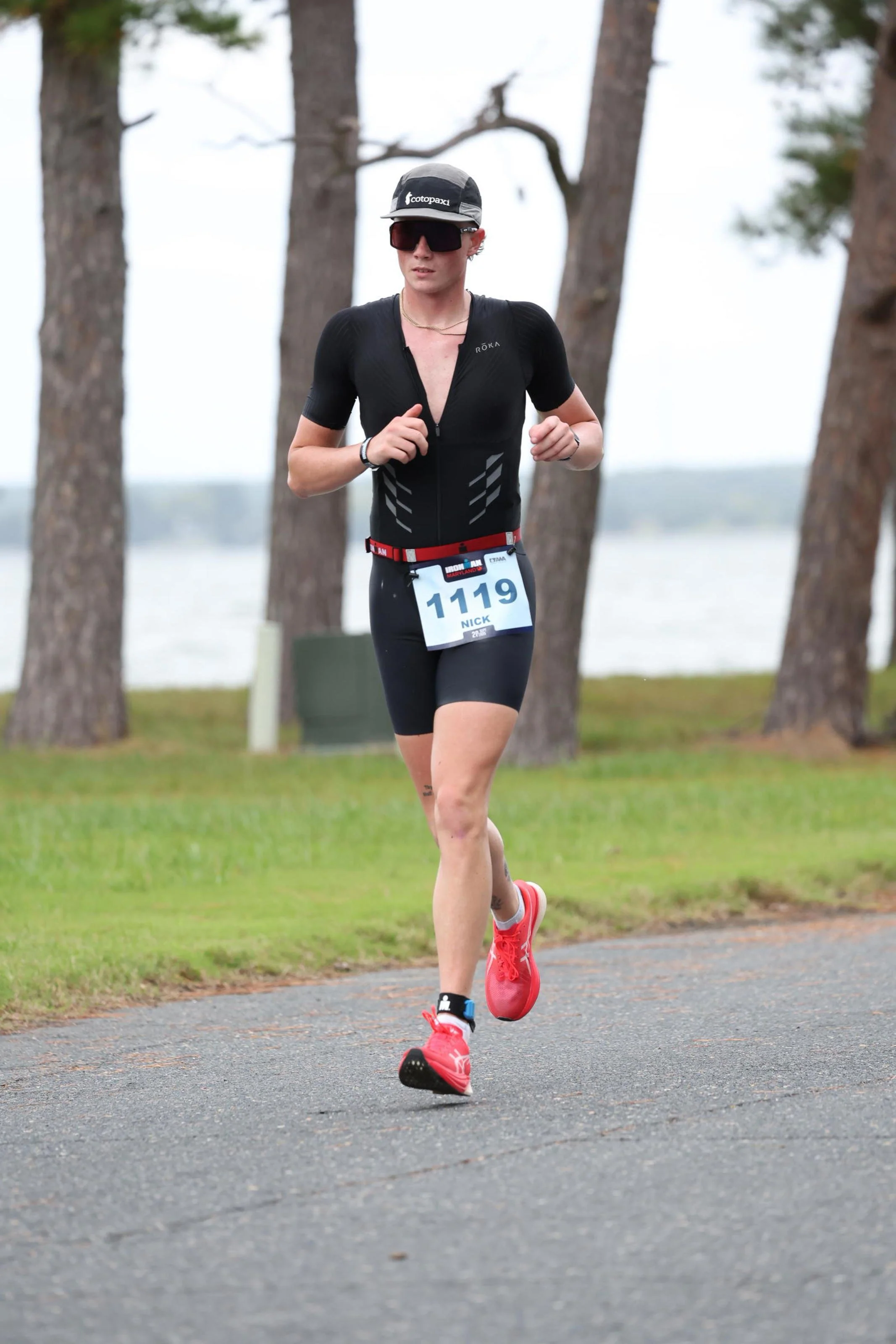
The Ironman Maryland marathon was a three-loop course through Cambridge. I'll be honest, I didn't love the course design. There were some weird turns, sections through parking lots, and areas that felt like they had been added simply because the race needed to find 26.2 miles somewhere. After how beautiful the bike course was, portions of the run felt a little rushed in their planning.
There was one major exception, and that was the market district. The final finger of each loop went through one of the liveliest parts of Cambridge, where a bar was absolutely stacked with spectators throughout the day. Every time I came through, people were yelling, drinking, and cheering for athletes. It was awesome. The three-loop format also made it a great race for spectators because they had several opportunities to see their athletes. My parents had invited some of their college friends who now live in Maryland, so they were able to hang out, enjoy the atmosphere, and see me multiple times throughout the marathon.
I wish I had been enjoying the marathon as much as they were. The first loop was relatively strong. My legs definitely hurt, and my neck and back were still angry from the bike, but I was moving. My first mile was around 8:21, and most of the opening miles stayed around nine-minute pace.
Then things started changing. Mile nine went over ten minutes, mile eleven was around 10:34, mile twelve was 11:35, and by mile thirteen I was over thirteen minutes. The race was coming apart. At that point, I knew trying to force the kind of marathon I had run at Lake Placid was only going to make things considerably worse.
Six weeks earlier, I had run 3:37 and spent portions of the middle of that marathon clicking off miles in the 7s. That athlete wasn't showing up in Maryland. Instead of continuing to fight for a time that clearly wasn't there, I changed the goal to simply keep moving forward. I slowed down and eventually transitioned into a run/walk. The later miles bounced between roughly 11 and 14 minutes as I tried to manage my legs, neck, and back.
This wasn't about setting a PR anymore. It was about finishing my fourth Ironman. My Strava description afterward said it pretty well: "Wasn't in it for the last 16 miles." I wasn't, but I kept moving.
The marathon took 4:48:32 elapsed, covering 26.08 miles with 449 feet of elevation gain. Strava calculated an overall pace of 11:04 per mile. Almost everything about that number bothered me after running 3:37 six weeks earlier, but I made it home.
The Finish
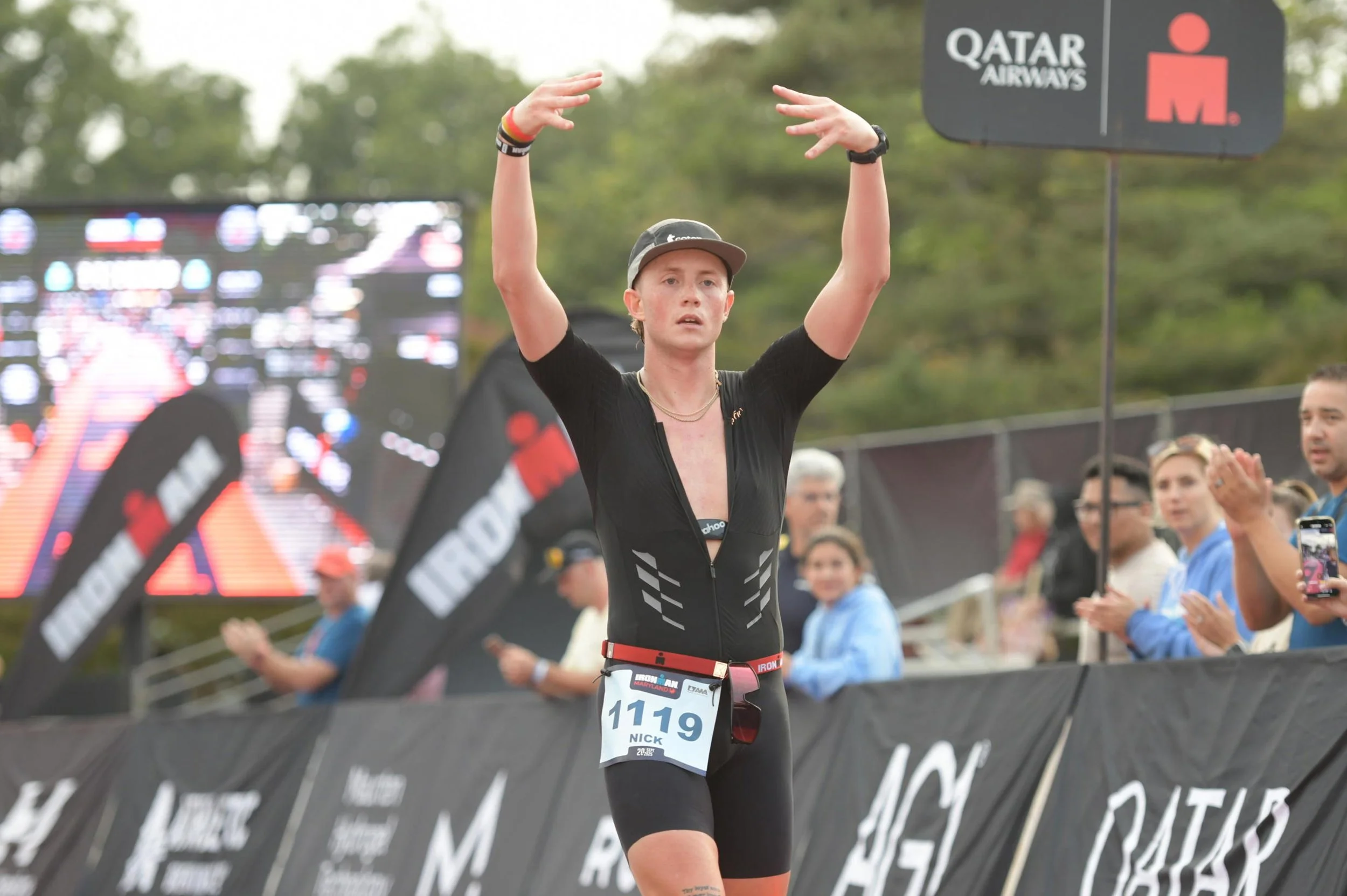
Crossing the finish line didn't bring the immediate satisfaction I had experienced at Lake Placid. I cried. Part of it was physical. My body hurt tremendously. My neck and back had been screaming for hours, my legs were destroyed, and I had spent the final sixteen miles fighting just to keep progressing toward the finish.
Part of it was also disappointment. Six weeks earlier, I had taken roughly 45 minutes off my Ironman PR at Lake Placid. I had run the best marathon of my life and felt like I had finally figured out how to put together a full Ironman. Then Maryland happened. It was difficult to reconcile those two performances in the moment, especially on a course that looked so much easier on paper.
With some distance from the race, I think Maryland taught me something Lake Placid couldn't. Fitness and readiness aren't always the same thing. I was clearly fit. You don't ride an Ironman bike leg in 5:16 at 21.1 mph without fitness. But six weeks after racing Lake Placid as hard as I did, I'm not convinced I was fully recovered enough to ask my body for another maximal 140.6-mile effort. Then I compounded that by selling out during the first 70 miles of the bike.
The result makes a lot more sense in hindsight. It just wasn't very fun to experience.
Still, I crossed the line.
Ironman number four.
Post-Race Maryland Priorities
There was only one reasonable thing left to do after all of that: eat crab cakes.
Maryland absolutely delivered there. We had a huge post-race meal at Suicide Bridge Restaurant, which might be one of the strangest restaurant names I've ever heard. Considering the entire region seemed incapable of producing more than a few feet of elevation, the name also felt particularly confusing.
The crab cakes were incredible, though. After spending an entire day getting stung by jellyfish, hammering 221 weighted watts across a completely flat bike course, destroying my back, and run/walking my way through a marathon, an enormous Maryland seafood meal was exactly what I needed.
Final Thoughts
Ironman Maryland is a fascinating race because the course profile lies to you. You look at the bike elevation and think it must be easy. My Garmin literally recorded three feet. Lake Placid gave me more than 6,000 feet of bike climbing and somehow Maryland hurt me considerably more.
The absence of hills means there are no real breaks. You're continuously producing power, continuously holding the aero position, and continuously exposed to the wind. If you get greedy because the speed looks good, the marathon is waiting to remind you that this is still an Ironman.
The Choptank River also gives the race its own personality. The sea nettles aren't guaranteed to be bad every year, but anyone considering Maryland should know they're a possibility. I can personally confirm that they are real, their tentacles fit quite nicely between your fingers, and they are perfectly capable of stinging you directly on the nose.
Cambridge itself was welcoming, the volunteers were great, Ironman Village was excellent, the roads were some of the best I've raced on, and the countryside on the bike was beautiful. The market district also created one of the better spectator environments I've experienced on a run course.
If I raced Maryland again, I would approach it very differently. I'd respect the flat bike more, spend more time preparing my neck and back for uninterrupted aero riding, and be considerably more conservative during the first 70 miles. More than anything, I wouldn't underestimate what racing another Ironman only six weeks after Lake Placid demanded from my body.
Maryland wasn't the race I wanted after Lake Placid, but it was probably the race I needed to better understand why Lake Placid had gone so well. Not every Ironman ends with a massive PR and a victory lap. Sometimes you get stung by jellyfish, blow yourself up on the bike, spend sixteen miles run/walking, cry after the finish, and wonder why the hell you signed up for this sport.
Then you eat a crab cake.
And eventually you sign up for another one.