2025 Ironman Lake Placid Race Review
Introduction:
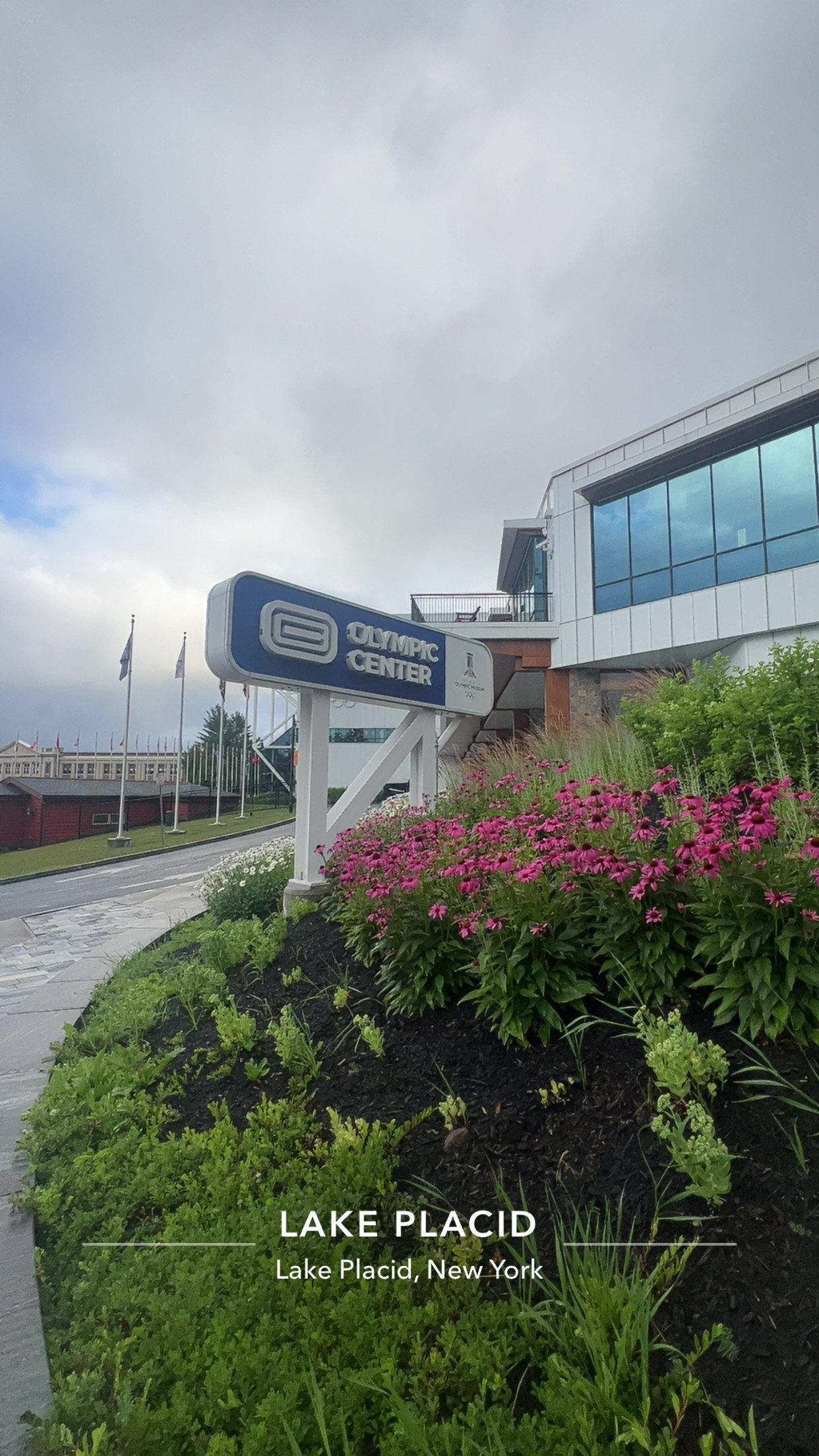
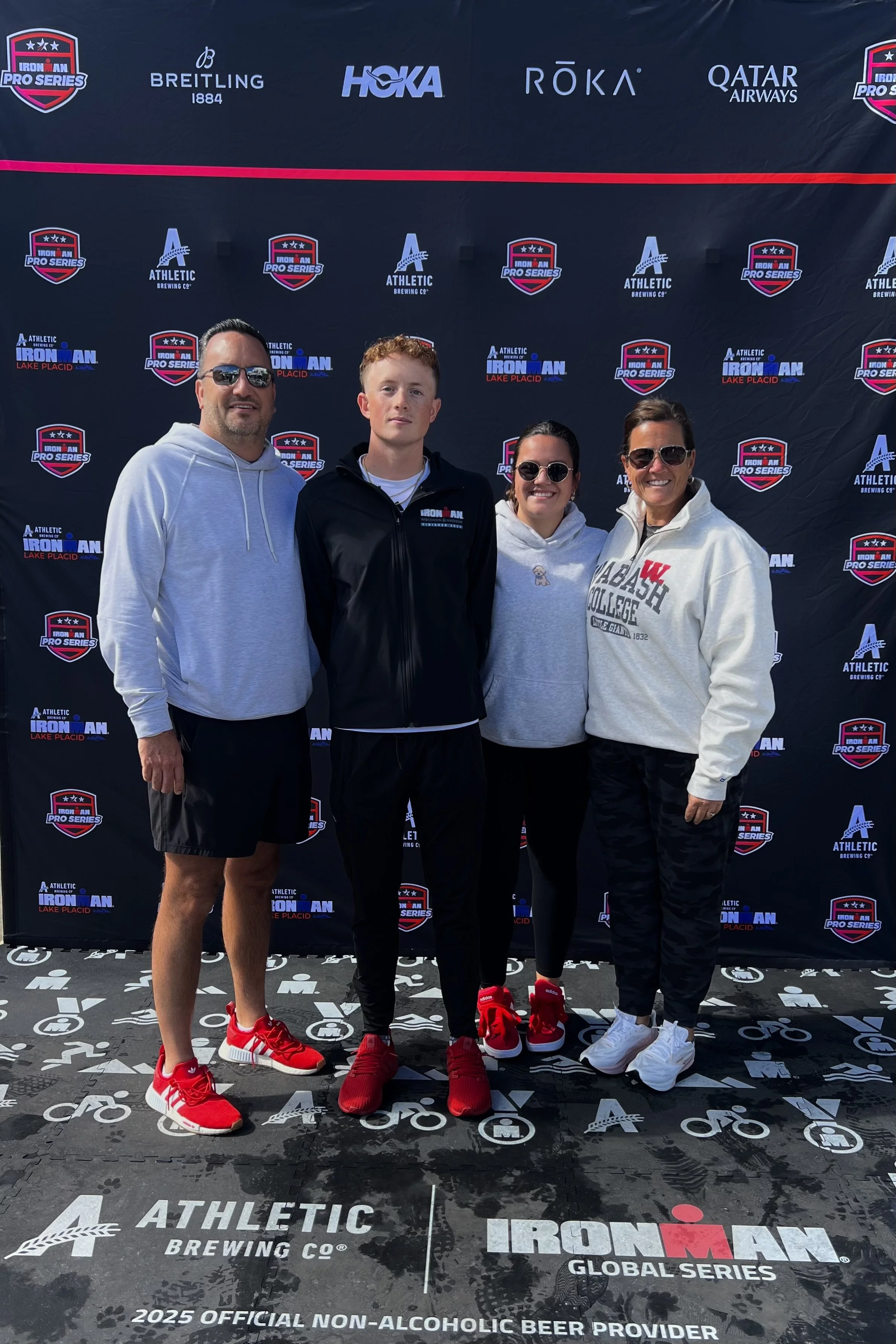
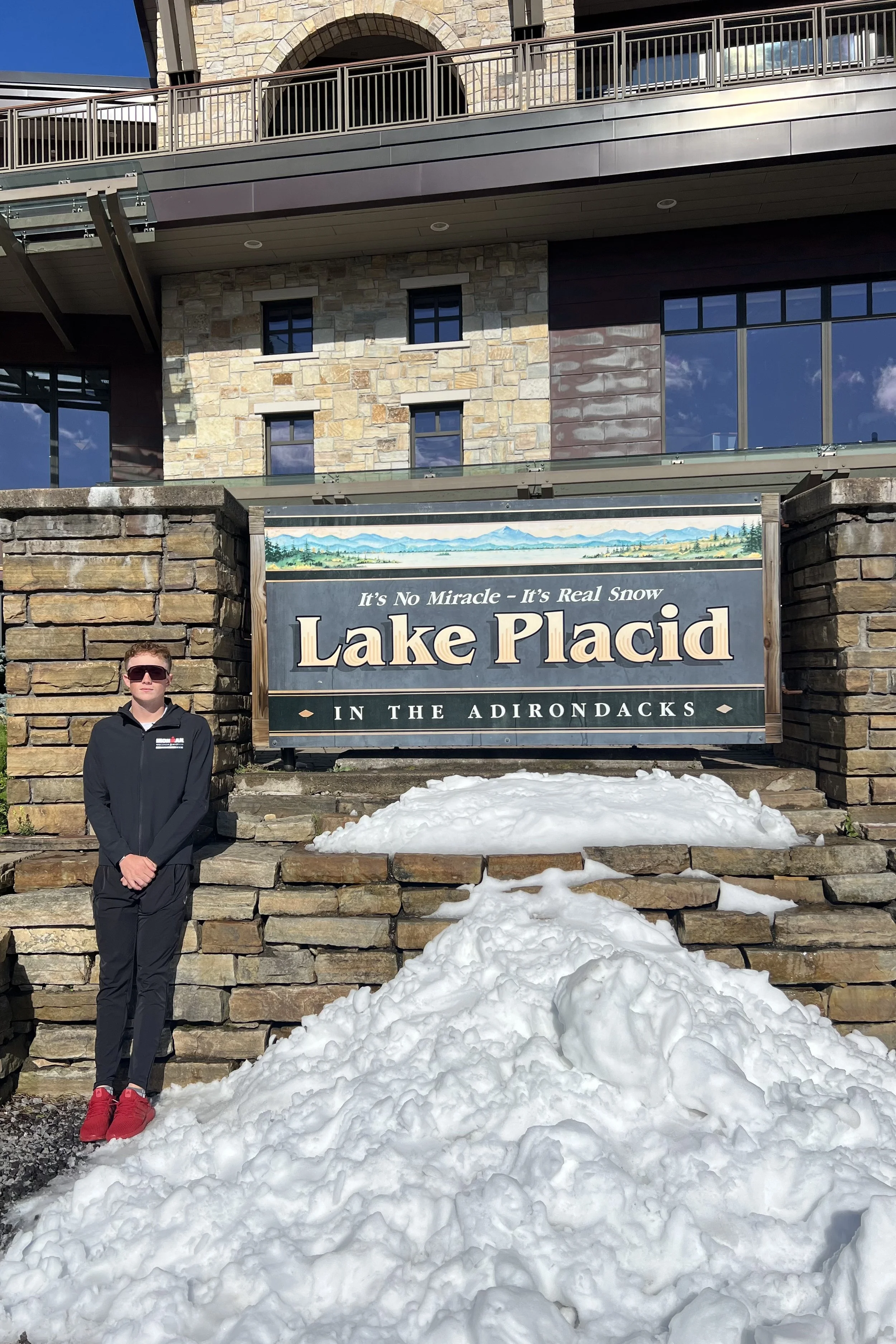
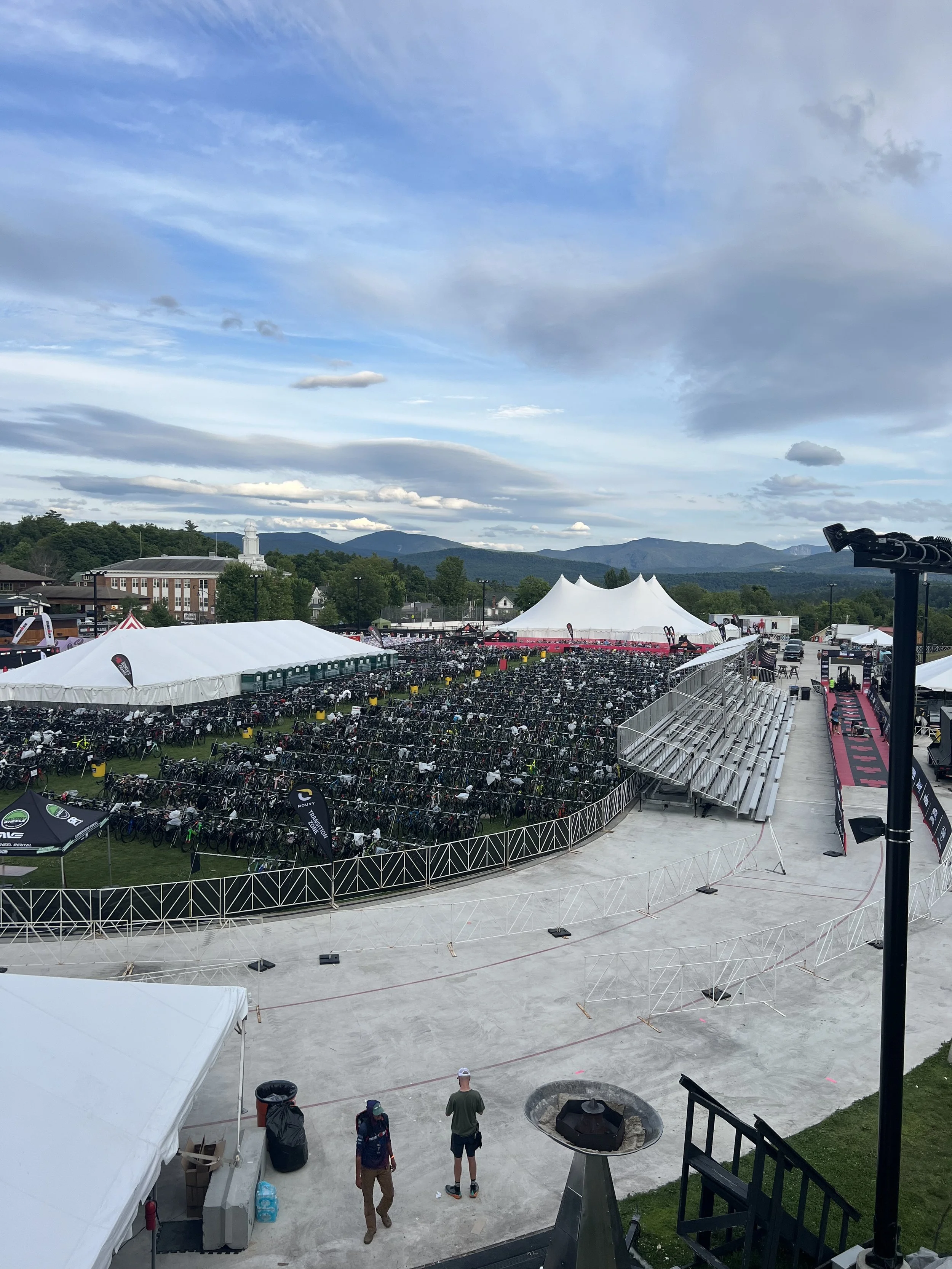
Ironman Lake Placid is one of those races that has a reputation long before you ever get there. I had heard plenty about the Keene descent, the climbing through the Adirondacks, the hills on the marathon, and the atmosphere surrounding one of the longest-running Ironman races in North America. What I didn't fully understand until getting there was how much the entire town embraces the event. For race weekend, Lake Placid basically becomes an Ironman superarena. There are bikes everywhere, restaurants are full of athletes, spectators line the streets, and the Olympic history of the town gives the entire place an atmosphere that is hard to replicate at another race. This was easily one of the most aura-filled races I have ever done.
This would be my third full Ironman, and I knew beforehand that Lake Placid wasn't exactly the easiest place to chase a PR. The course had plenty of elevation, the forecast called for rain, and I still had 140.6 miles ahead of me before I could even think about a finish time. Somehow, though, the day came together better than I could have expected. I finished with a 44-minute full Ironman PR, ran a 25-minute marathon PR, and put together what was easily my strongest full-distance race up to that point.
Race Morning:
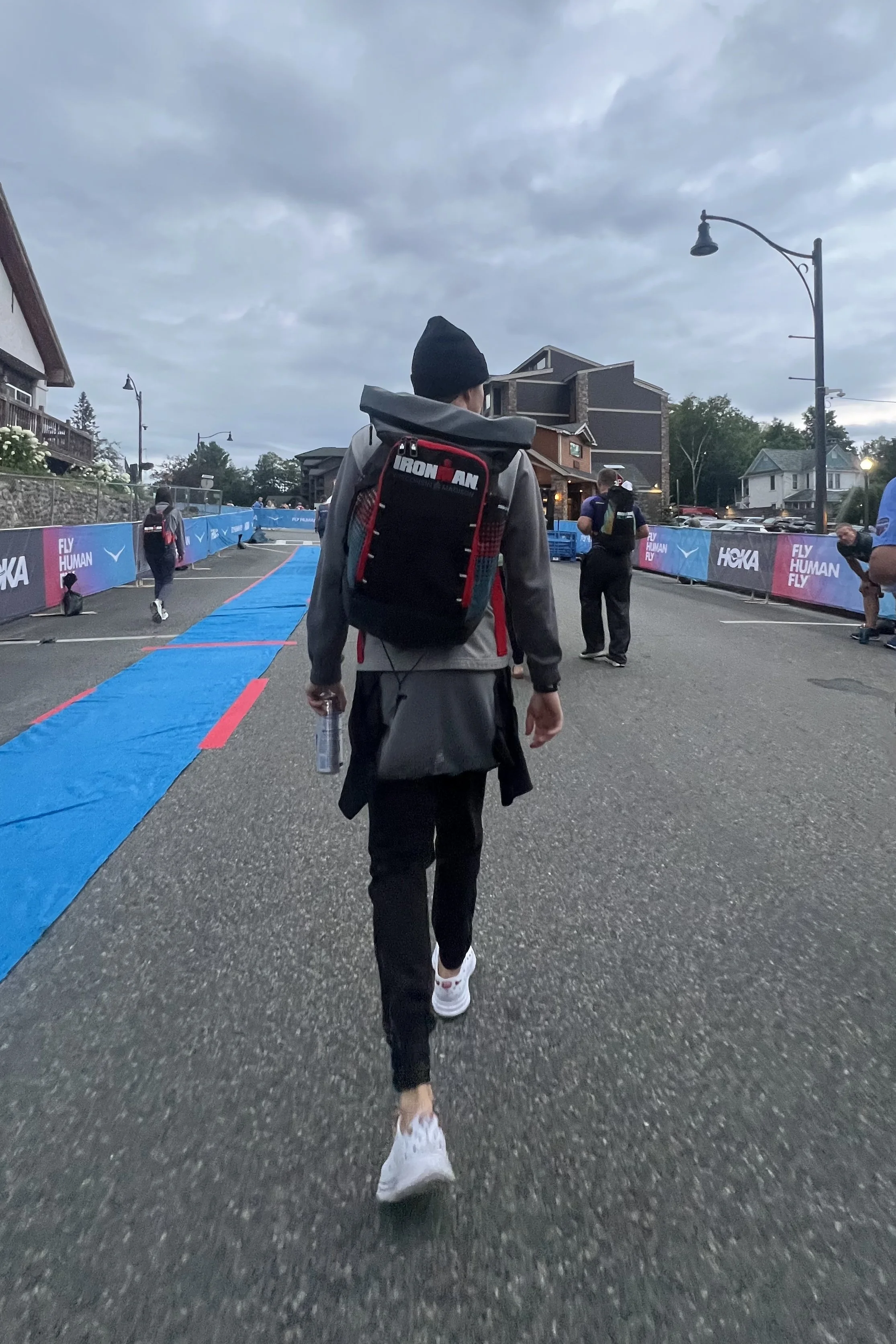
Race morning started at 4:30 a.m. with my normal pre-race breakfast of a large Rice Krispie treat and a 20-ounce Red Bull. Nothing fancy, just a huge hit of quick carbohydrates and enough caffeine to get everything moving before heading toward the start. The bigger concern that morning was the weather. It was raining, and that rain would stick around for essentially the entire race.
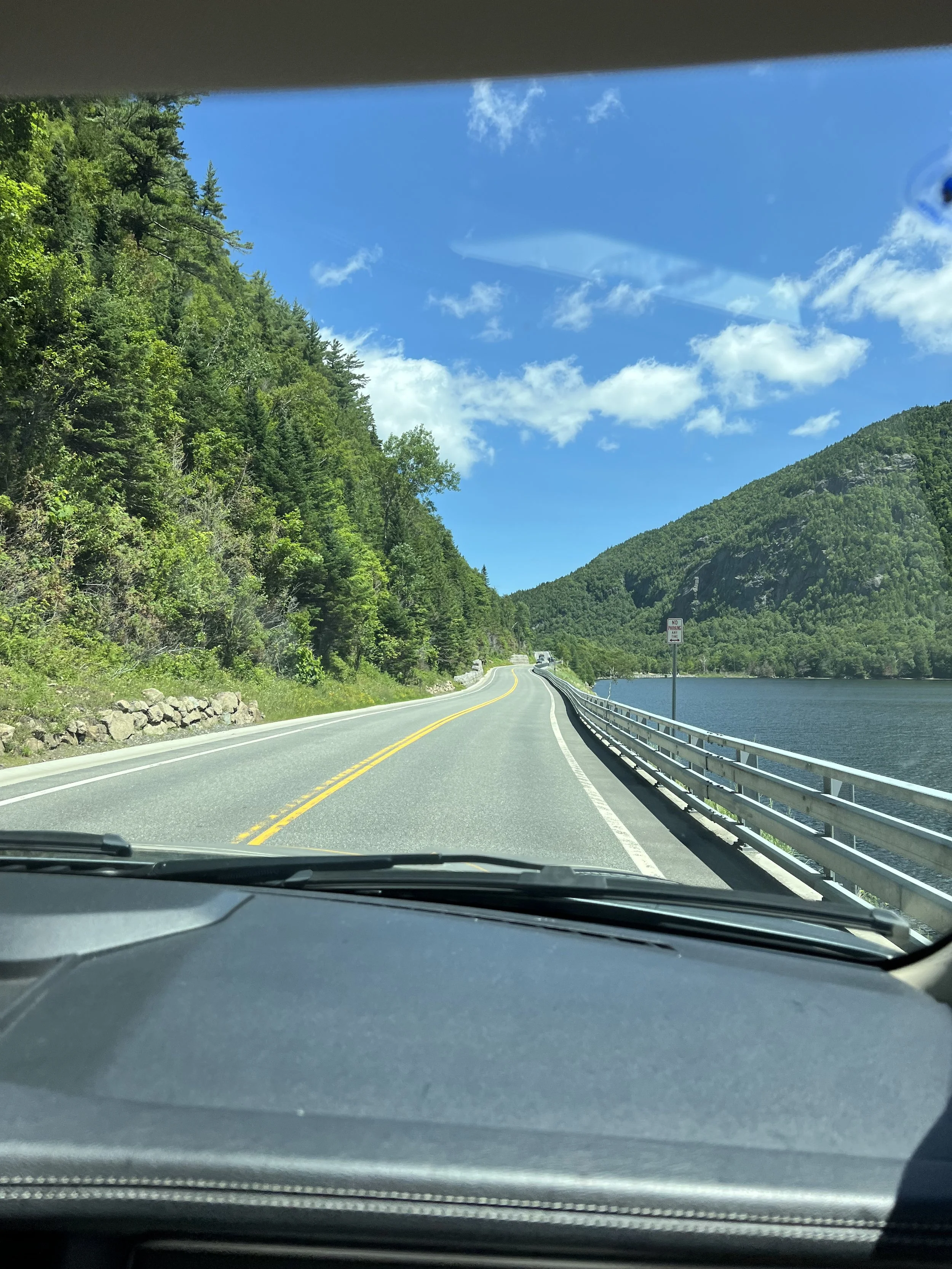
Normally, rain during an Ironman isn't the end of the world. You're already starting the day by jumping into a lake, so getting wet isn't exactly a major concern. Lake Placid is a little different because of the infamous descent into Keene on the bike course. I had actually ridden the descent before race day specifically so I could familiarize myself with the corners and understand what I was getting into. That turned out to be one of the better decisions I made all weekend because descending that mountain in dry conditions and descending it during an Ironman in pouring rain are two completely different things.
Before I had to worry about any of that, though, there were 2.4 miles of swimming in Mirror Lake.
Swim:
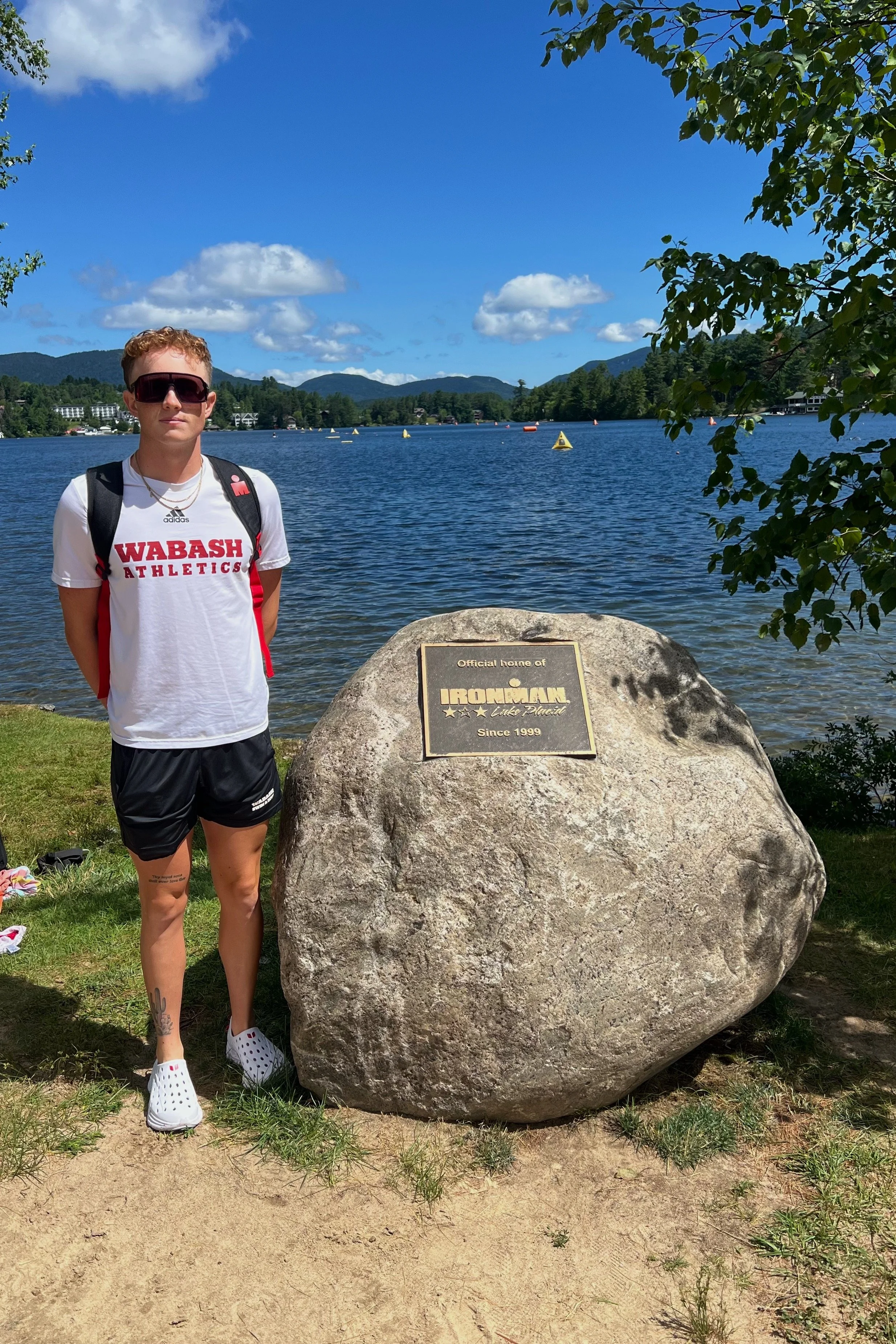
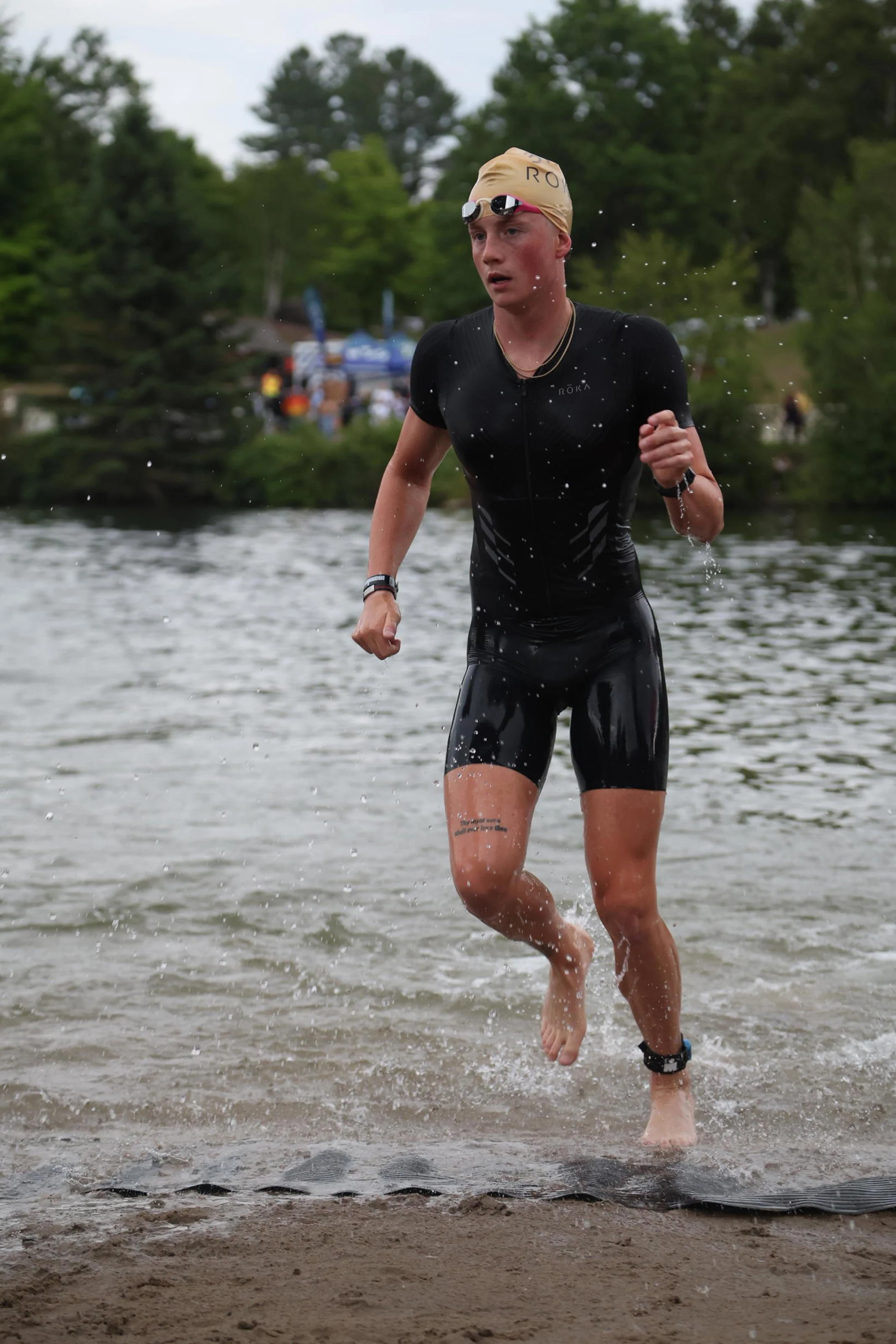
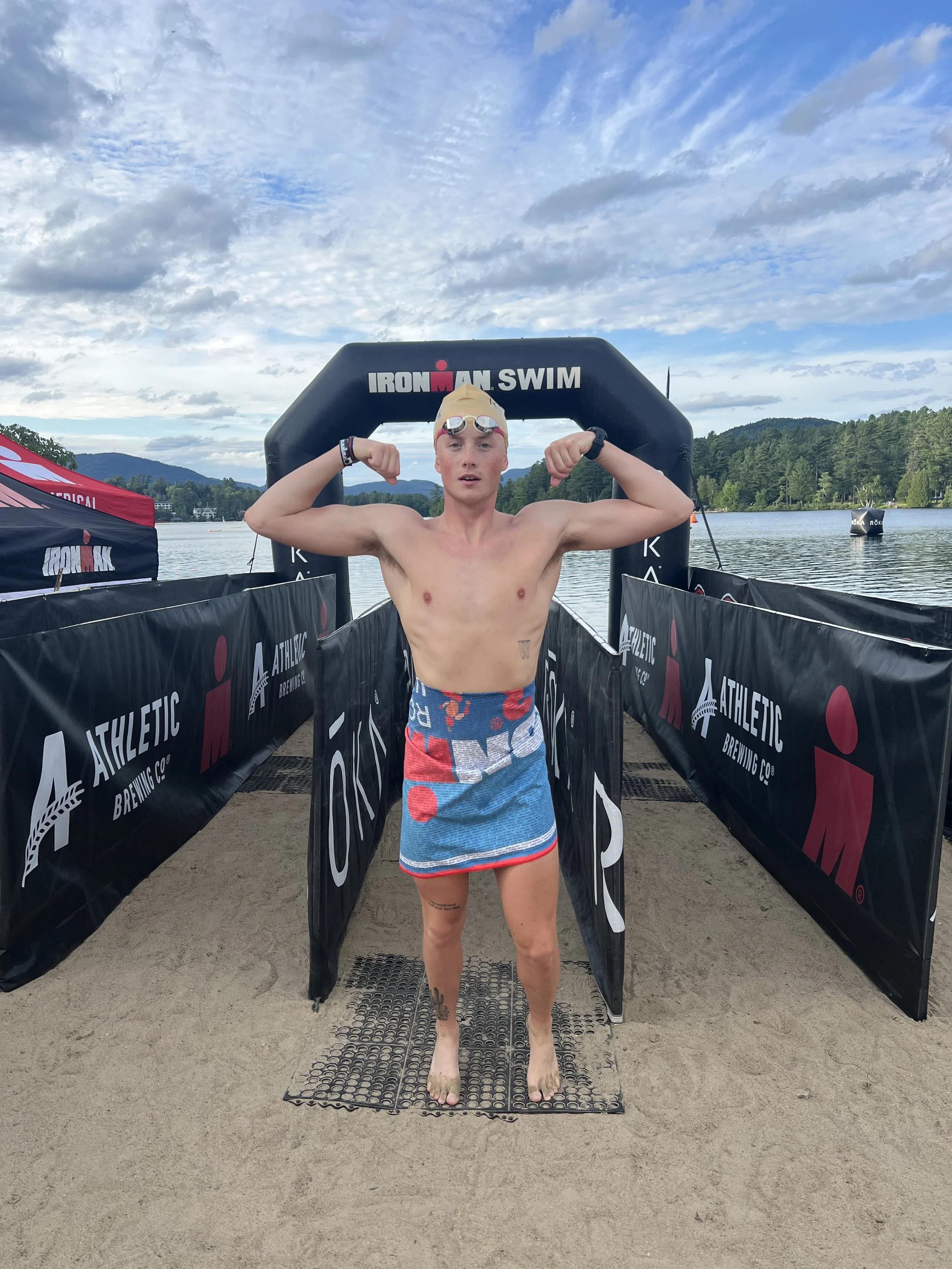
Mirror Lake might be one of my favorite Ironman swim venues I've experienced. One of the coolest features of the course is the cable running along the bottom of the lake beneath the buoys. If you position yourself correctly, you can essentially put your head down and follow the line rather than constantly lifting your head to sight. Anybody who has raced open water knows how valuable that can be. Every time you lift your head, you interrupt your stroke slightly and risk drifting off line, so having what basically amounts to a lane line underneath you is awesome. The only downside is that every other athlete knows about it too, which makes the space directly above the cable some extremely valuable real estate.
The swim was quick from the beginning. My Strava file recorded 4,675 yards in 58:58 at an average pace of 1:15/100 yards, although my actual race swim time was closer to 55:53. My first lap came through in roughly 27:28. Things got much more chaotic during the second loop as the course filled with athletes, but overall I felt really strong in the water.
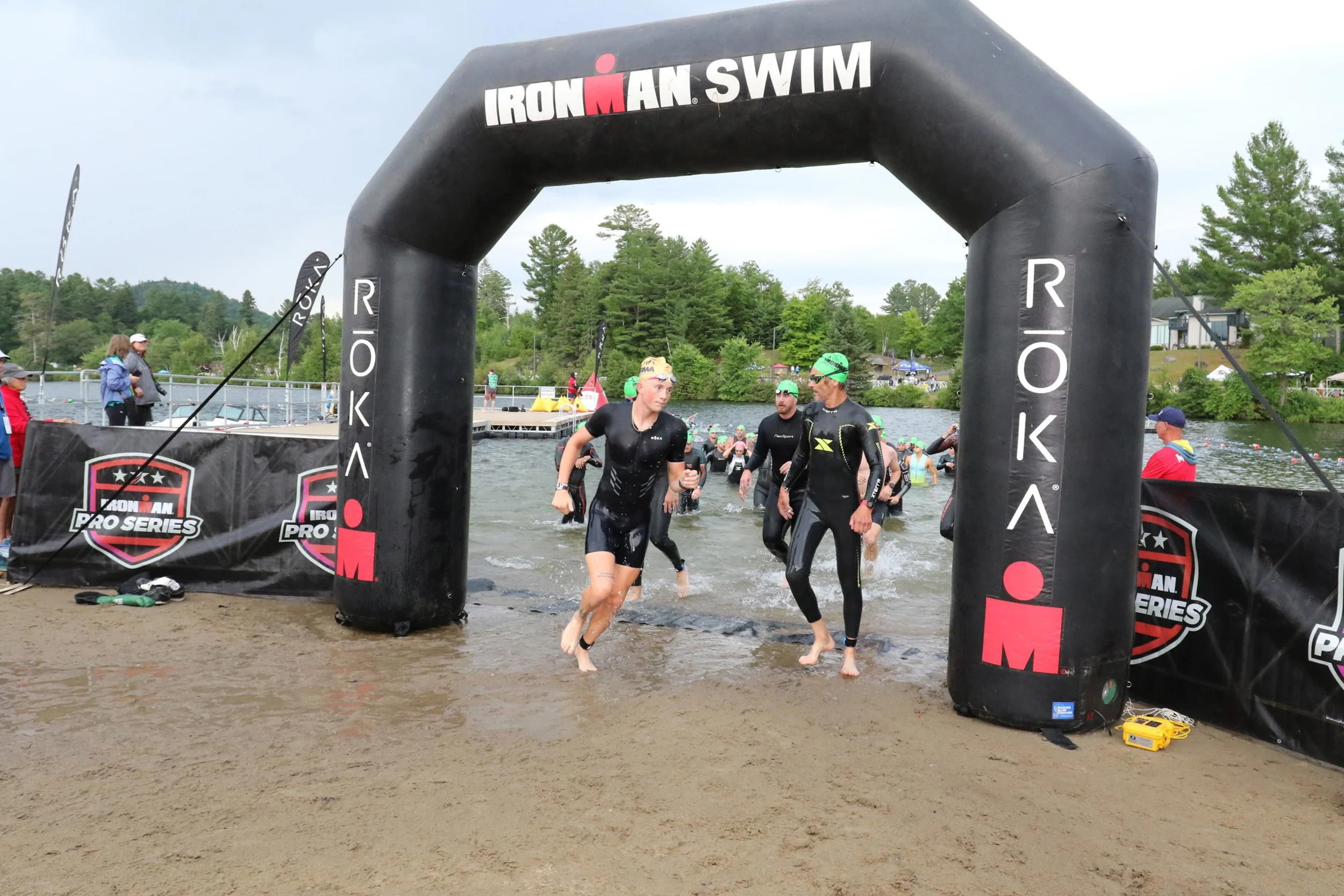
Lake Placid also gave me my first experience with an Australian exit. For anyone who hasn't raced one before, an Australian exit is when athletes complete the first loop of the swim, physically exit the water, run a short distance across land, and then jump back into the water to begin the next lap. I actually really liked it. After swimming continuously for almost half the race distance, getting out of the water, hearing the crowd, running across the beach, and diving back in gave the swim a completely different feel. It broke things up mentally and made the second lap feel almost like a new start.
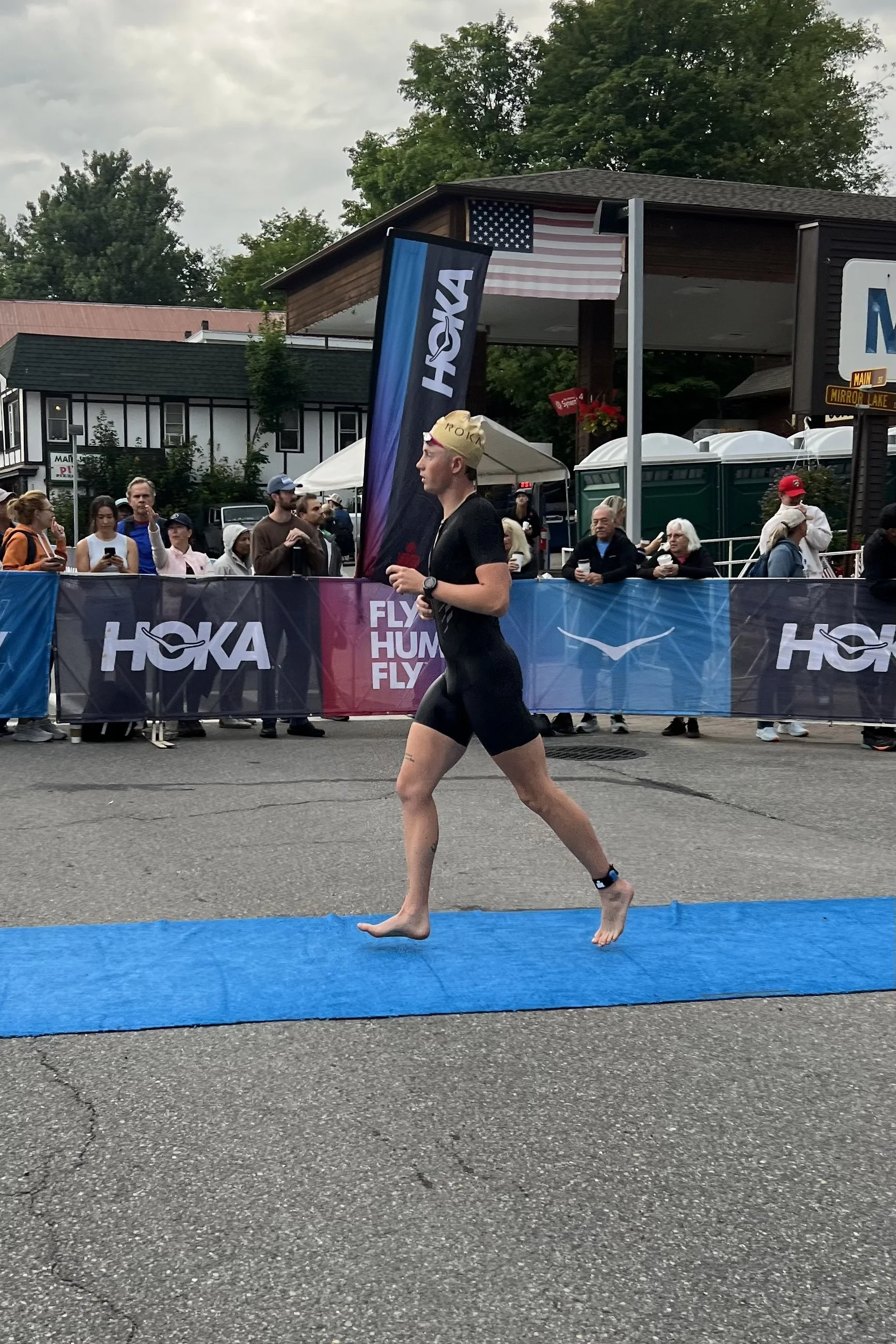
After finishing the second loop, it was time for one of the other unique parts of Lake Placid: the extremely long trip to T1. The run from Mirror Lake into transition feels like its own event, with spectators lining the route as athletes make their way toward the Olympic complex. During that run, I realized I was directly behind triathlon influencer Noel Mulkey, which was a pretty cool little moment in the middle of everything going on. Eventually I made it into transition, grabbed my bike gear, and headed out for 112 miles through the Adirondacks.
Bike:
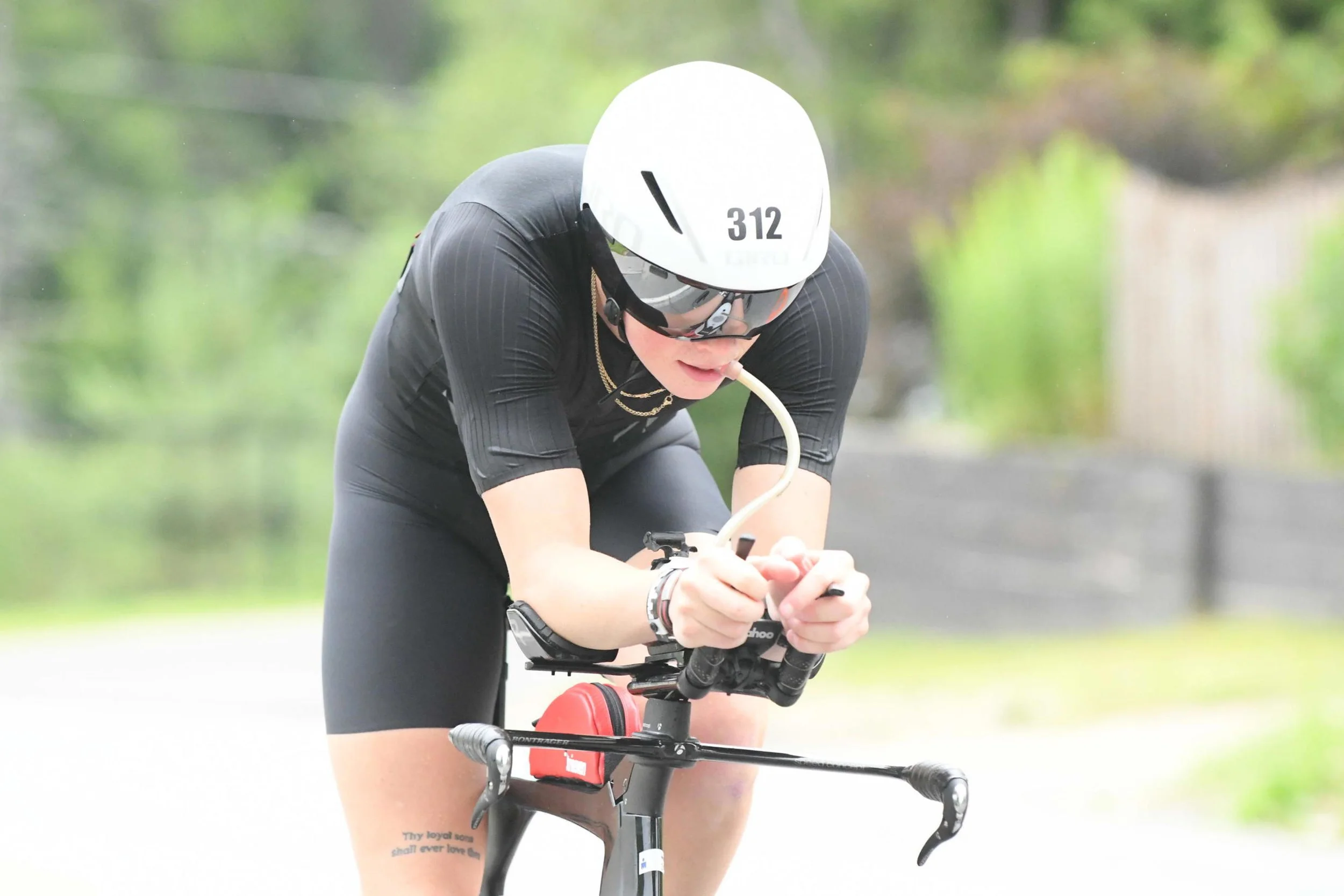
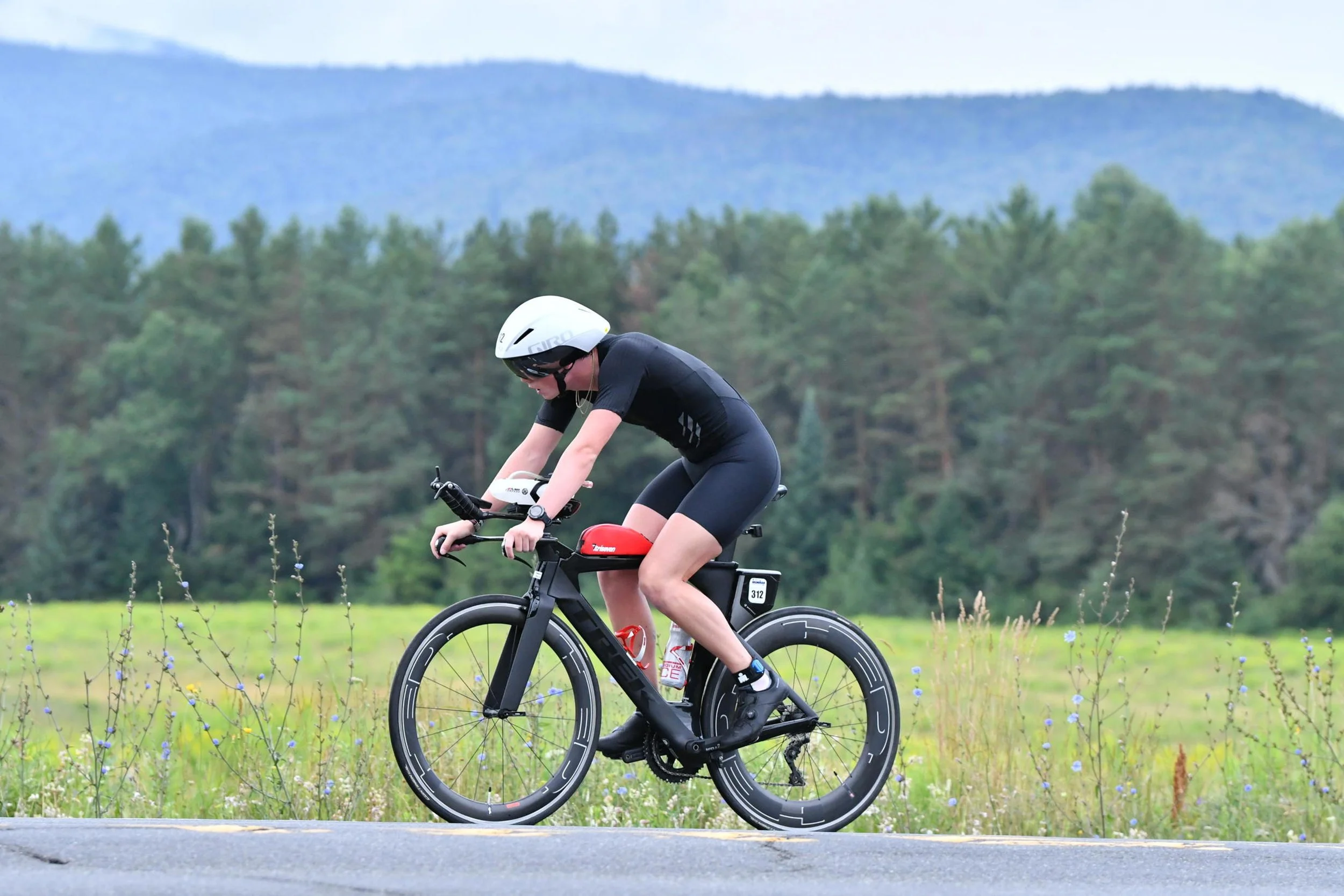
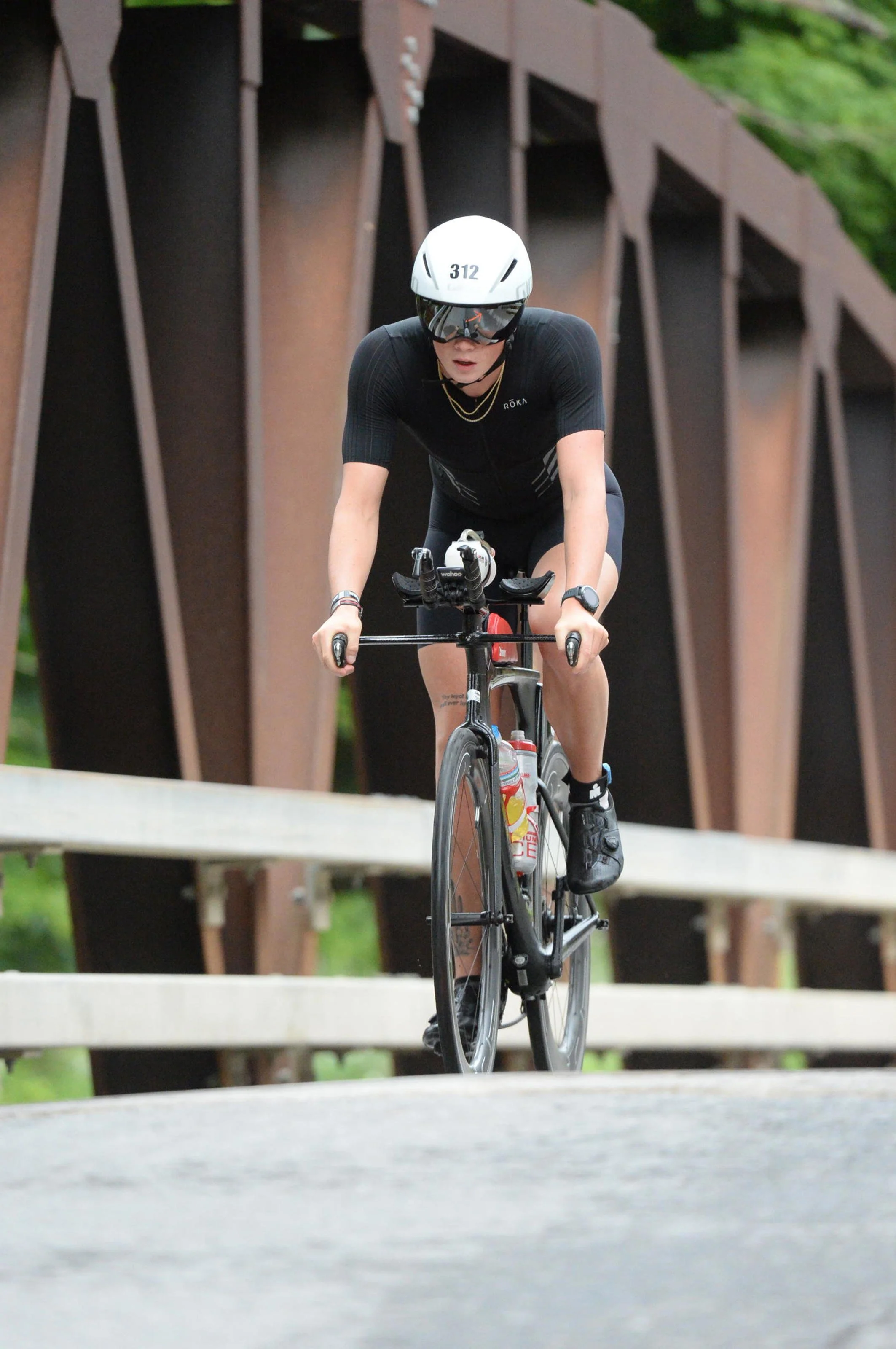
Lake Placid has a reputation for having a brutal bike course, but after racing it, I think that description needs a little context. There is definitely a lot of climbing. Strava recorded 6,060 feet of elevation gain over my 110.83 recorded miles. However, a lot of the sustained climbing isn't ridiculously steep. Many of the ascents stay around 1 to 3 percent, which allowed me to settle into a rhythm rather than constantly grinding my way up walls. The difficulty comes from how much climbing accumulates throughout the day and where some of it occurs.
Then there is the descent into Keene.
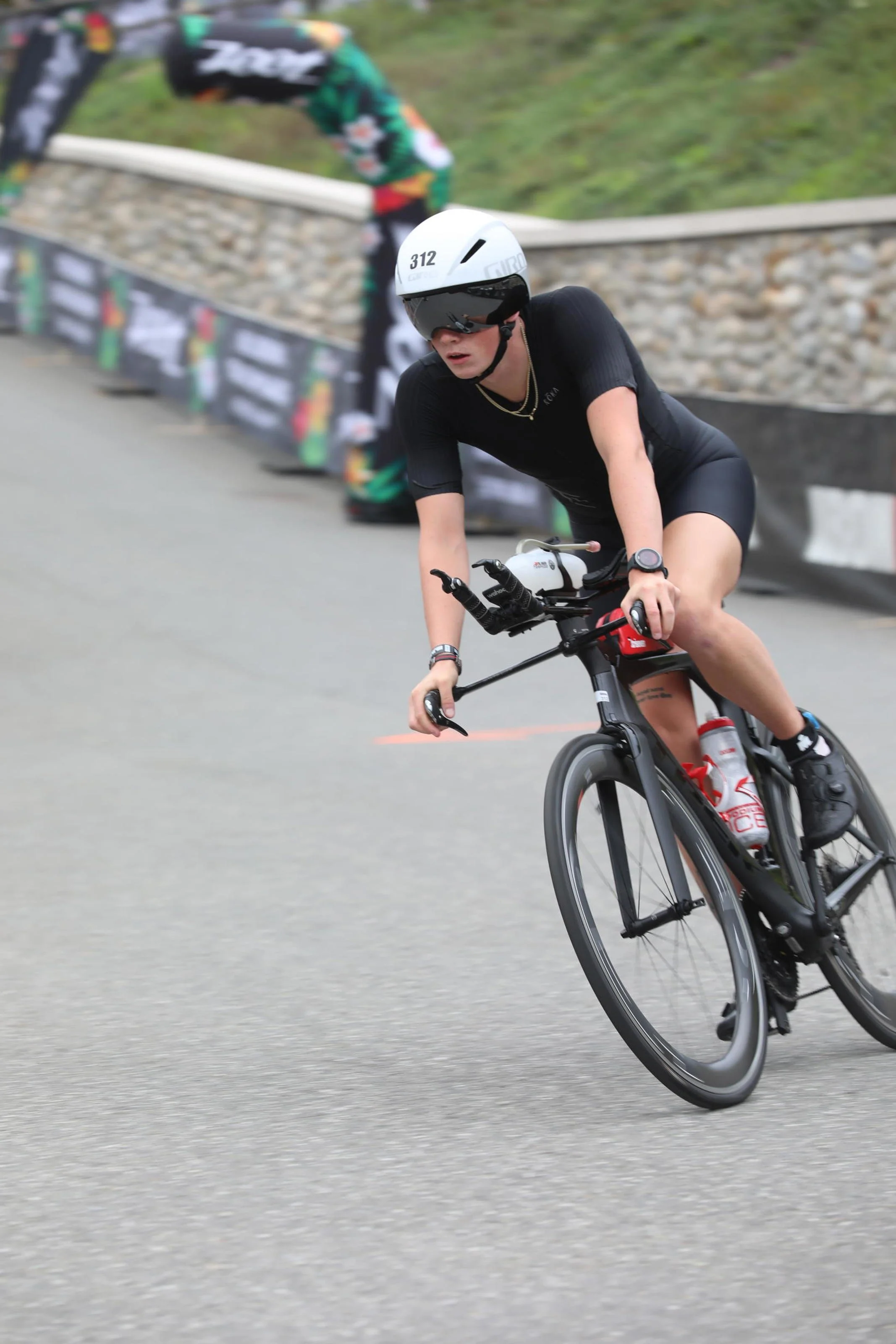
Pre-riding this section turned out to be incredibly valuable, but the rain meant I still wasn't interested in taking any unnecessary risks. I was descending around 35 mph in some sections and felt perfectly comfortable keeping it there. Then some of the professional athletes came flying by me looking like they were doing close to 60 mph. I couldn't even imagine going that fast in those conditions. My recorded maximum speed for the entire ride ended up being 42.4 mph, which was plenty fast for me on wet roads. Watching the pros absolutely send it down the mountain was another reminder of how different that level of racing can be.
Having a professional field at Lake Placid added another really cool dimension to the race. We were sharing the same roads with some of the best triathletes in the world, and throughout the day you would occasionally get a glimpse of the professional race happening around you. At one point I even managed to pass two professional women on the bike. Obviously they were racing their own races and had started ahead of the age-group field, but I don't care. Seeing a PRO bib ahead of me and actually riding past was awesome. I was hype.
Once I was through the major descent, I was able to settle into the bike and really start enjoying the course. Riding through the Adirondacks was beautiful. Mountains, trees, rivers, and small towns surrounded most of the route, and even with the rain coming down there were moments where I had to remind myself to look around and appreciate where I was racing. The roads were also fantastic. I've done races where avoiding potholes becomes part of the strategy, but I really had no complaints about Lake Placid's road quality.
Despite the weather and climbing, I stayed strong throughout the ride. Strava recorded a weighted average power of 244 watts, and I finished the 110.83 recorded miles in 5:52:41 of moving time, averaging 18.9 mph. Considering the 6,060 feet of elevation gain and the rain, I was extremely happy with the way I was riding. I was also setting PRs on several sections of the course, including the Jay climb and Keene-to-Jay segment.
Unfortunately, with roughly twenty miles remaining, the bike decided I was having too good of a day. I dropped my chain, and instead of simply falling off the chainring where I could throw it back on and continue, it wedged itself between the chainring and the frame. I had to stop, get off the bike, and work the chain free while watching time disappear. Eventually I managed to get everything unstuck without causing any serious damage and got moving again.
The final climb back toward Lake Placid was brutal. After spending nearly six hours riding through the Adirondacks, the last thing your legs want is another sustained climb into town. This is also where the spectators really started to make a difference. More and more people appeared along the road as we got closer to Lake Placid, yelling at athletes and helping rally everyone toward transition. Your legs are tired, you're soaked, and you've already climbed thousands of feet, but somehow having people screaming alongside the road gives you enough energy to keep pushing.
I finally made it back into town with the hardest part of the bike behind me. Strava had me at 110.83 miles, 5:52:41 moving time, 6,060 feet of climbing, 18.9 mph average speed, and 244 watts weighted average power. More importantly, I still felt like I had legs underneath me.
Now I just had to run a marathon.
Run:
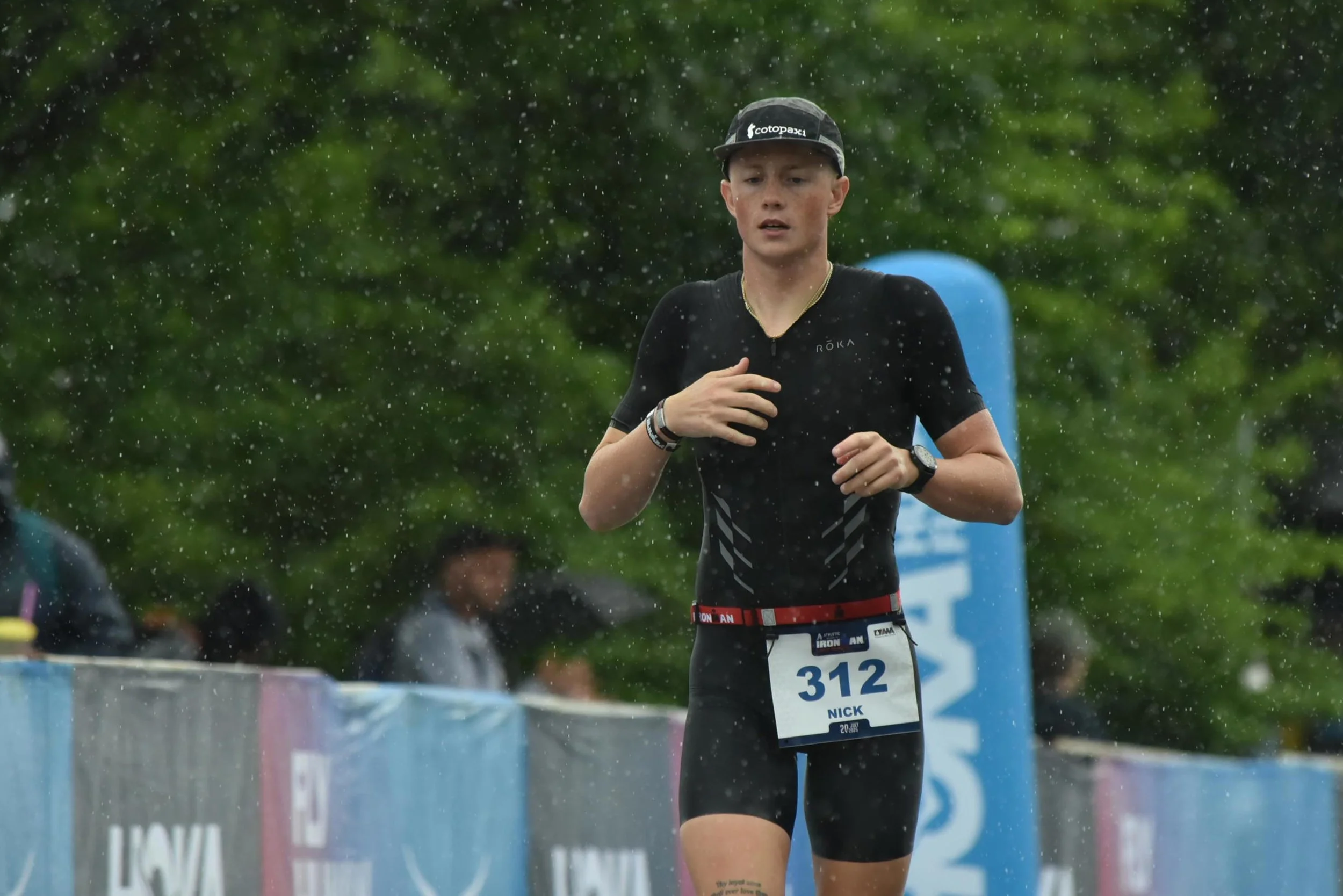
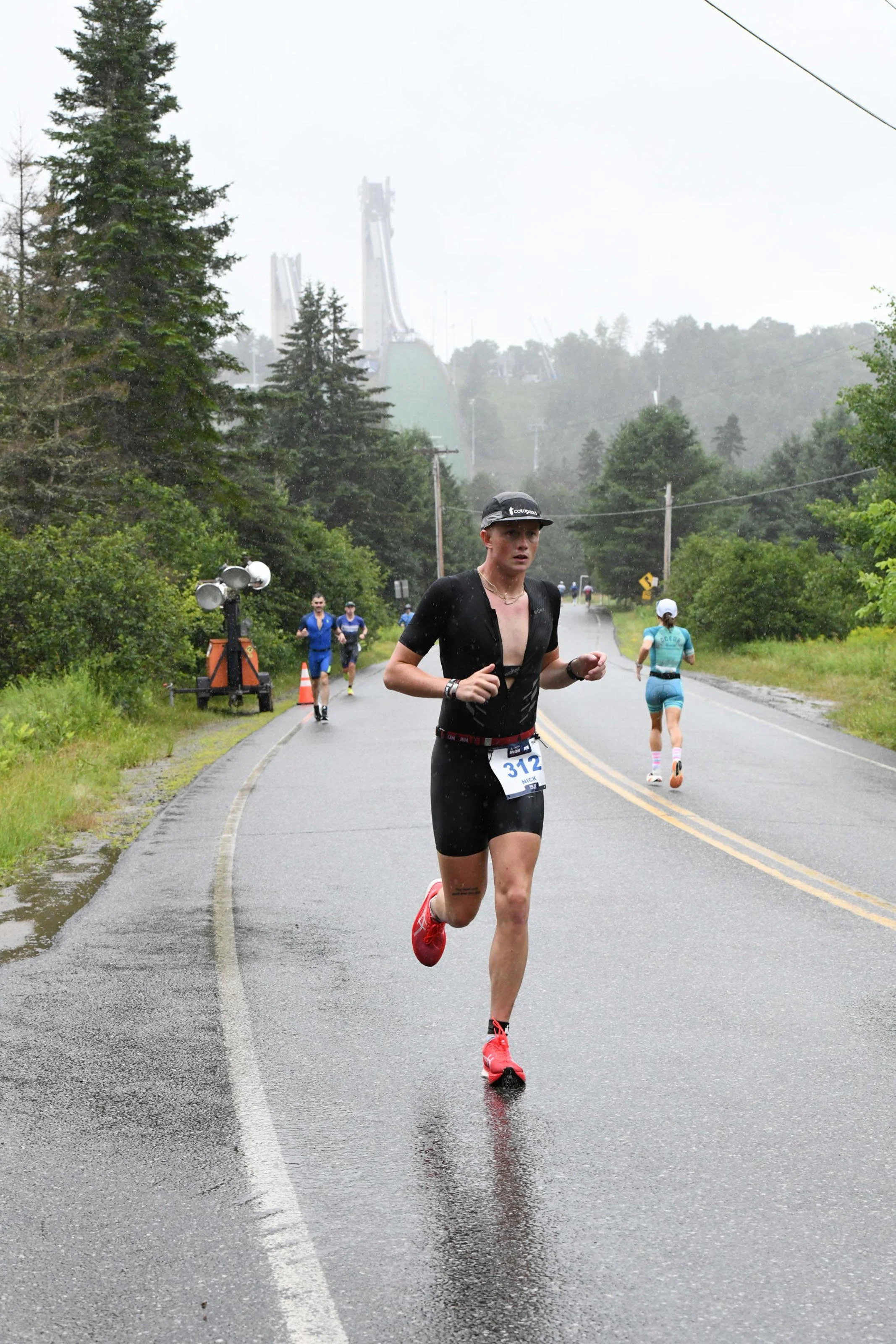
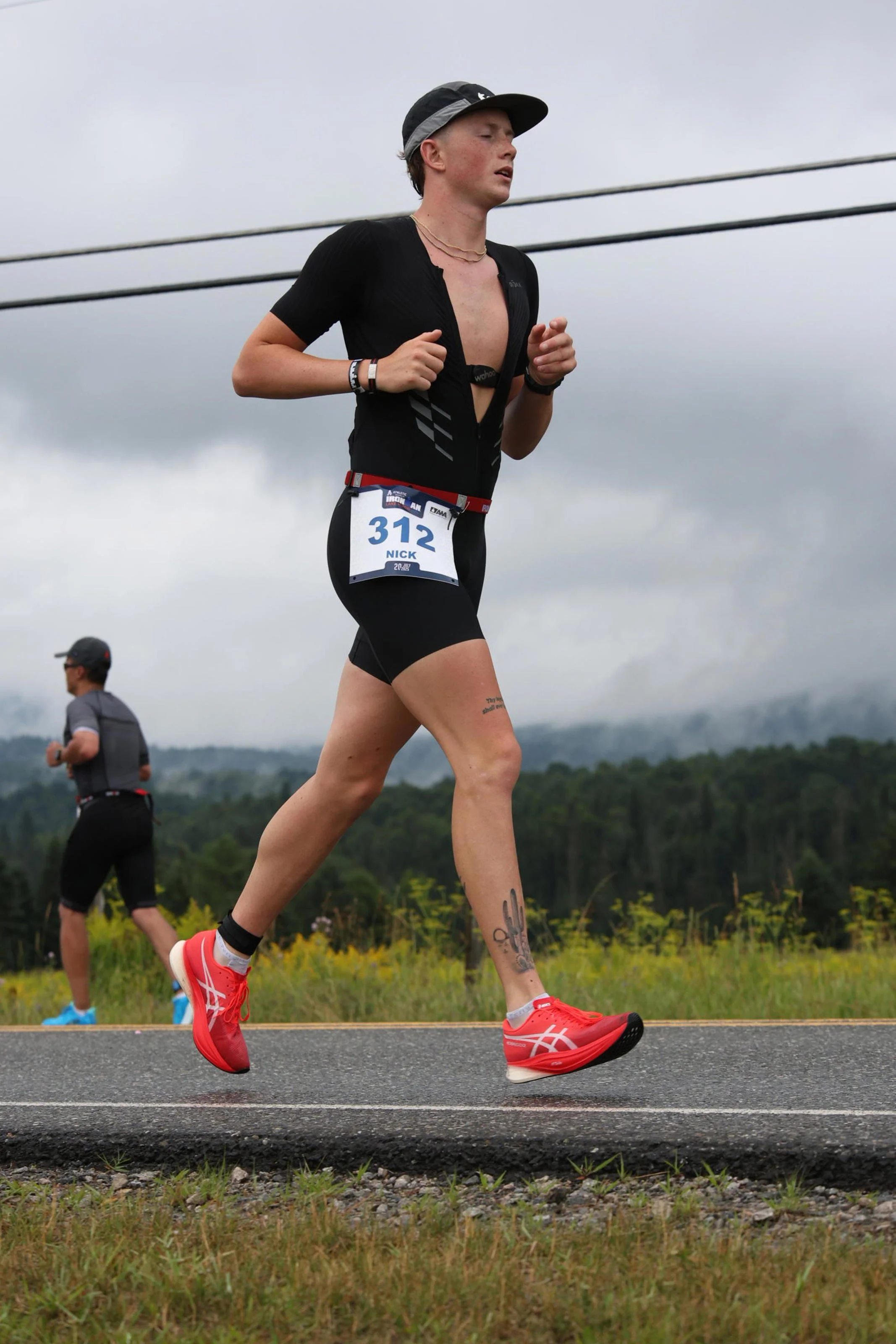
Lake Placid doesn't reward you for surviving its bike course with an easy run. The marathon is another hilly two-loop course, and my Strava file recorded 1,276 feet of elevation gain over that 26.21 miles. After already climbing more than 6,000 feet on the bike, another thousand-plus feet on foot definitely makes itself known.
I came out of T2 strong and tried to stay controlled early. My goal wasn't to prove how good I felt in the first few miles. It was to still feel good when everyone else started falling apart later. I stayed on top of my fueling, kept moving well over the hills, and gradually started making my way through the field.
This became one of my favorite parts of the entire race because I was passing people constantly. The bike had gone well, but the run was where I really started capitalizing on the decisions I had made earlier in the day. My pacing actually got faster through portions of the middle of the marathon, with several miles dropping into the mid-to-low seven-minute range. I was still running strong well into the second half of an Ironman marathon, which is a completely different feeling from simply trying to survive until the finish line.
Fueling was a huge part of why that happened. I stayed on top of nutrition throughout the run and never experienced the massive energy collapse that can destroy an Ironman marathon. The hills still hurt, especially when the course forced us to climb back toward Lake Placid, but I was able to keep running and continue making up positions rather than falling apart.
Eventually, though, the marathon always collects its payment. The final few miles hurt like hell. There isn't really a more sophisticated way to describe it. My legs were cooked and my body was ready to be done, but by that point I also knew I had put together a huge personal best. I wasn't fighting for a particular qualifying position or trying to squeeze every possible second out of the clock, so I allowed myself to pull back slightly rather than completely burying myself in the final miles.
Even with that decision, I finished the marathon in 3:37:19, averaging 8:17 per mile over 26.21 miles with 1,276 feet of elevation gain. It was a 25-minute marathon PR.
After swimming 2.4 miles and riding almost six hours through the Adirondacks, I had run my fastest marathon ever.
Bang.
The Finish
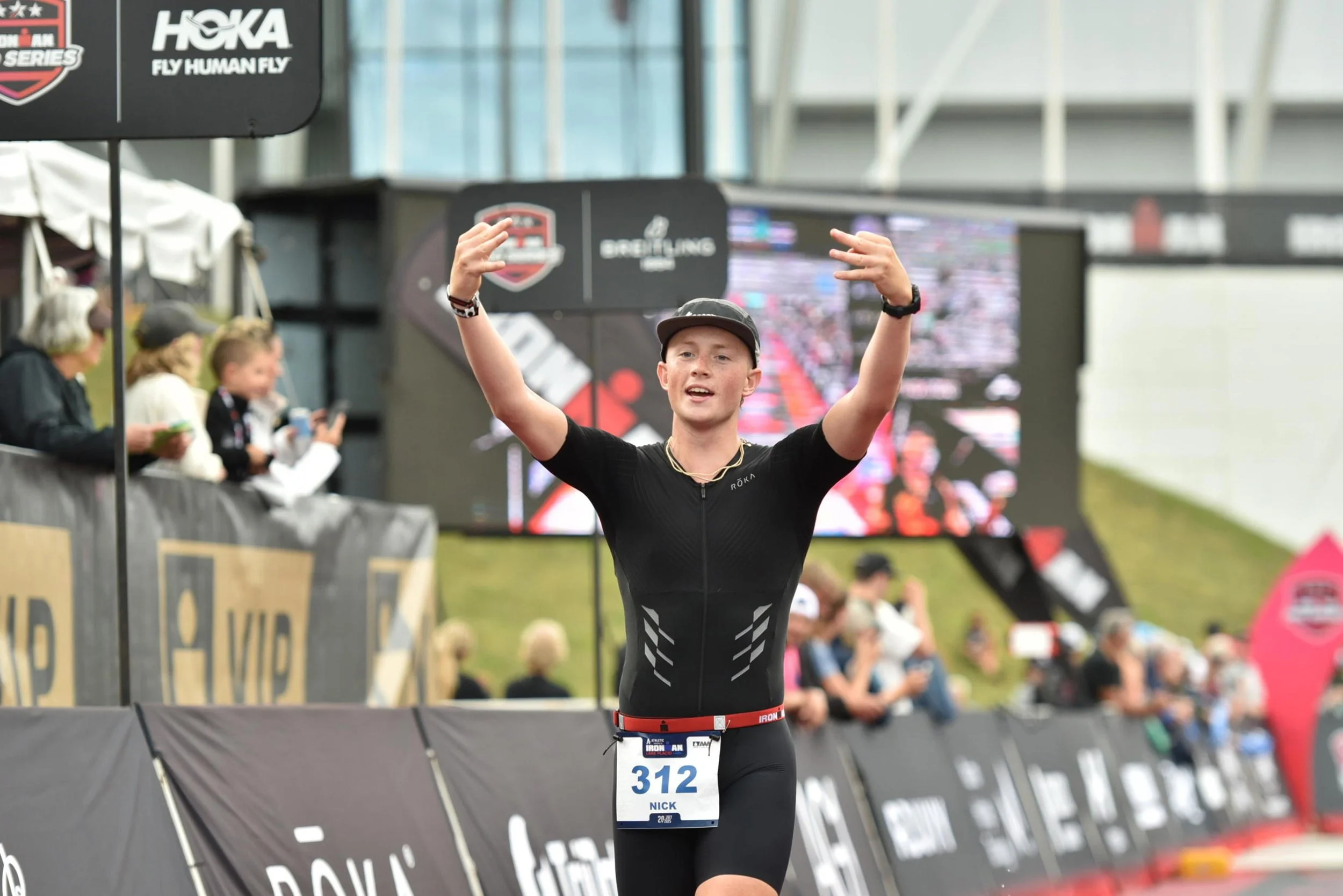
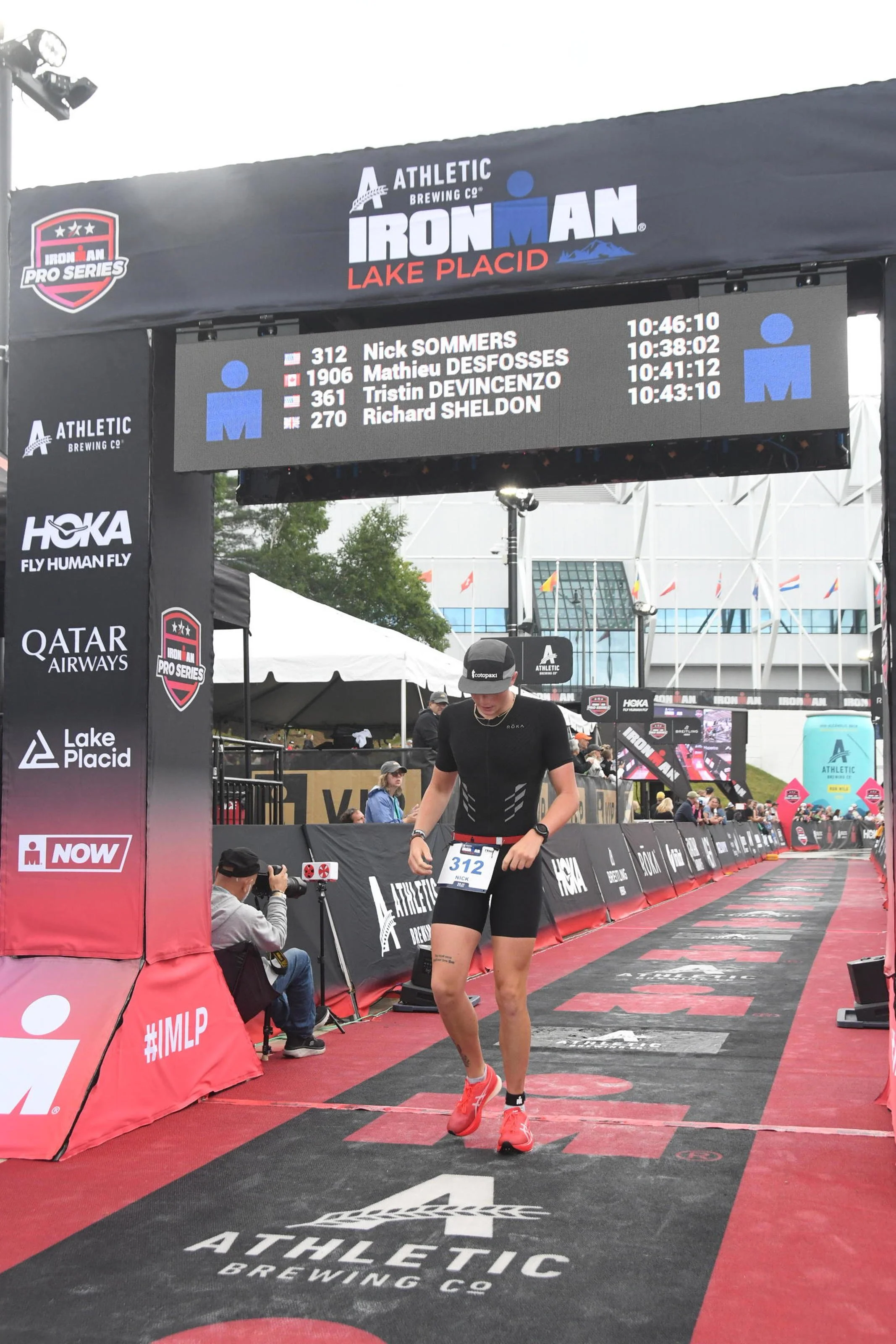
Coming back into Lake Placid at the end of the marathon showed exactly why this race has the reputation it does. The entire town feels like it's participating in Ironman. You aren't approaching a finish chute tucked into some random parking lot. You're running back into a town that has basically reorganized itself around the race for the entire weekend. Spectators are everywhere, athletes are everywhere, and everything around you feels connected to Ironman.
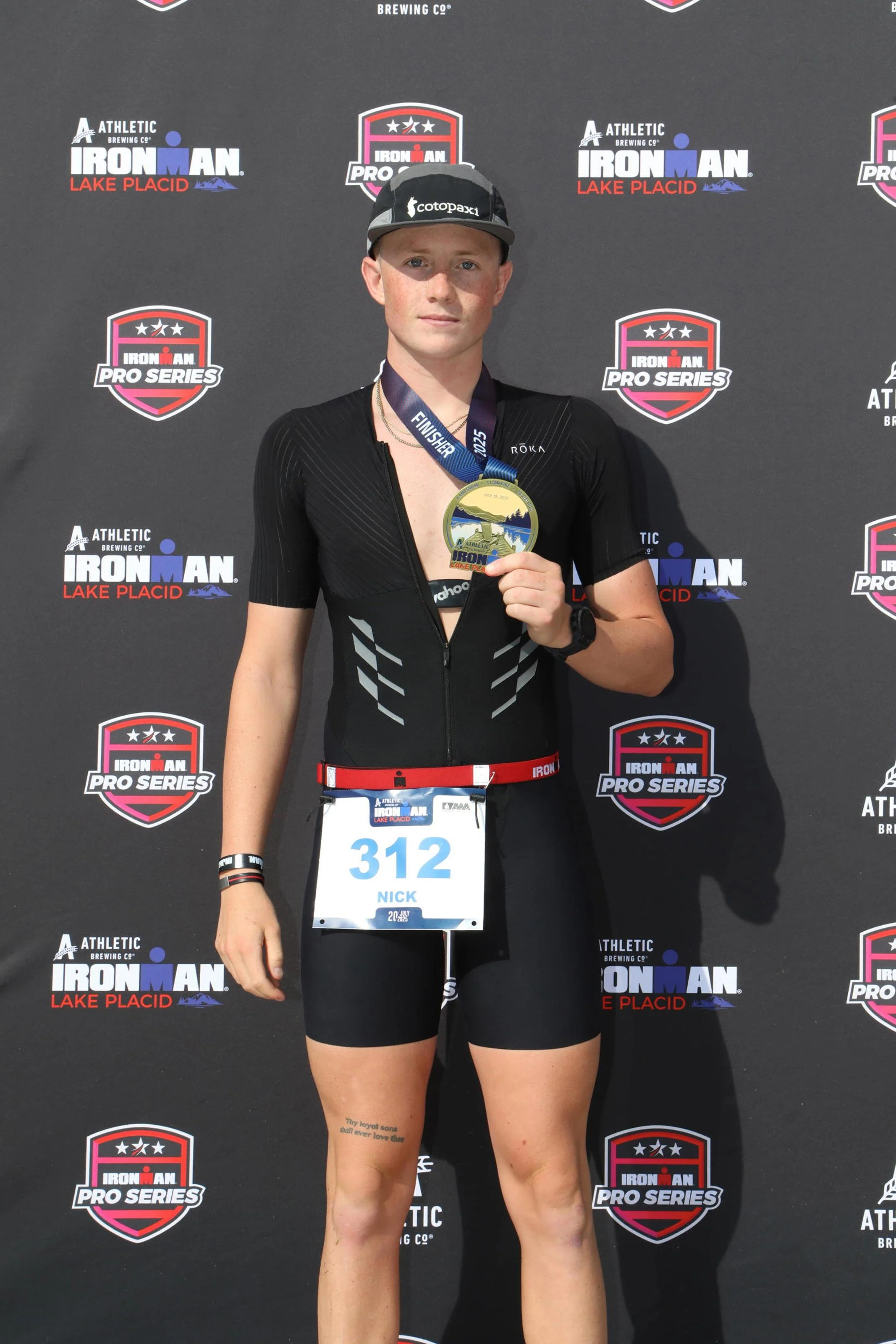
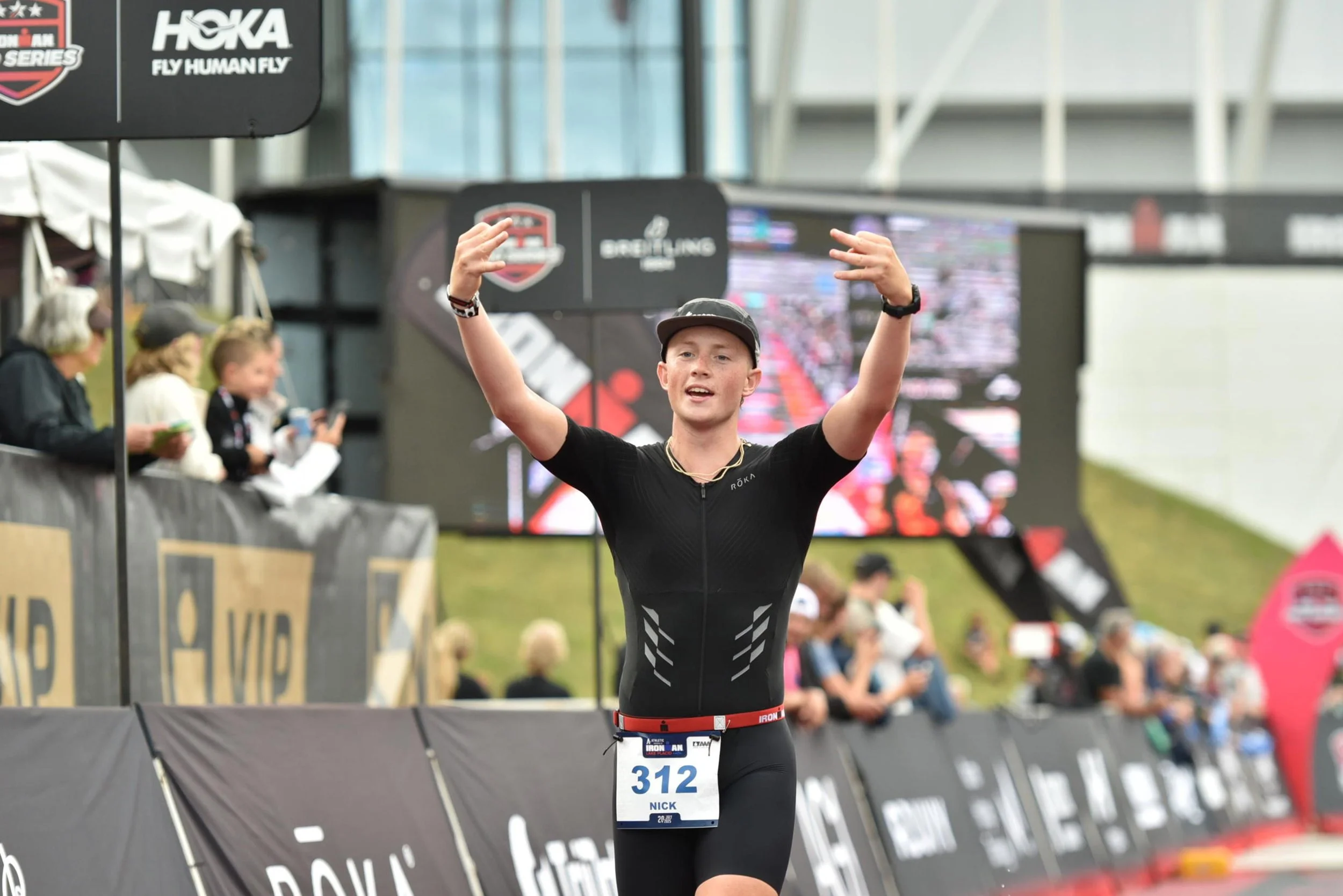
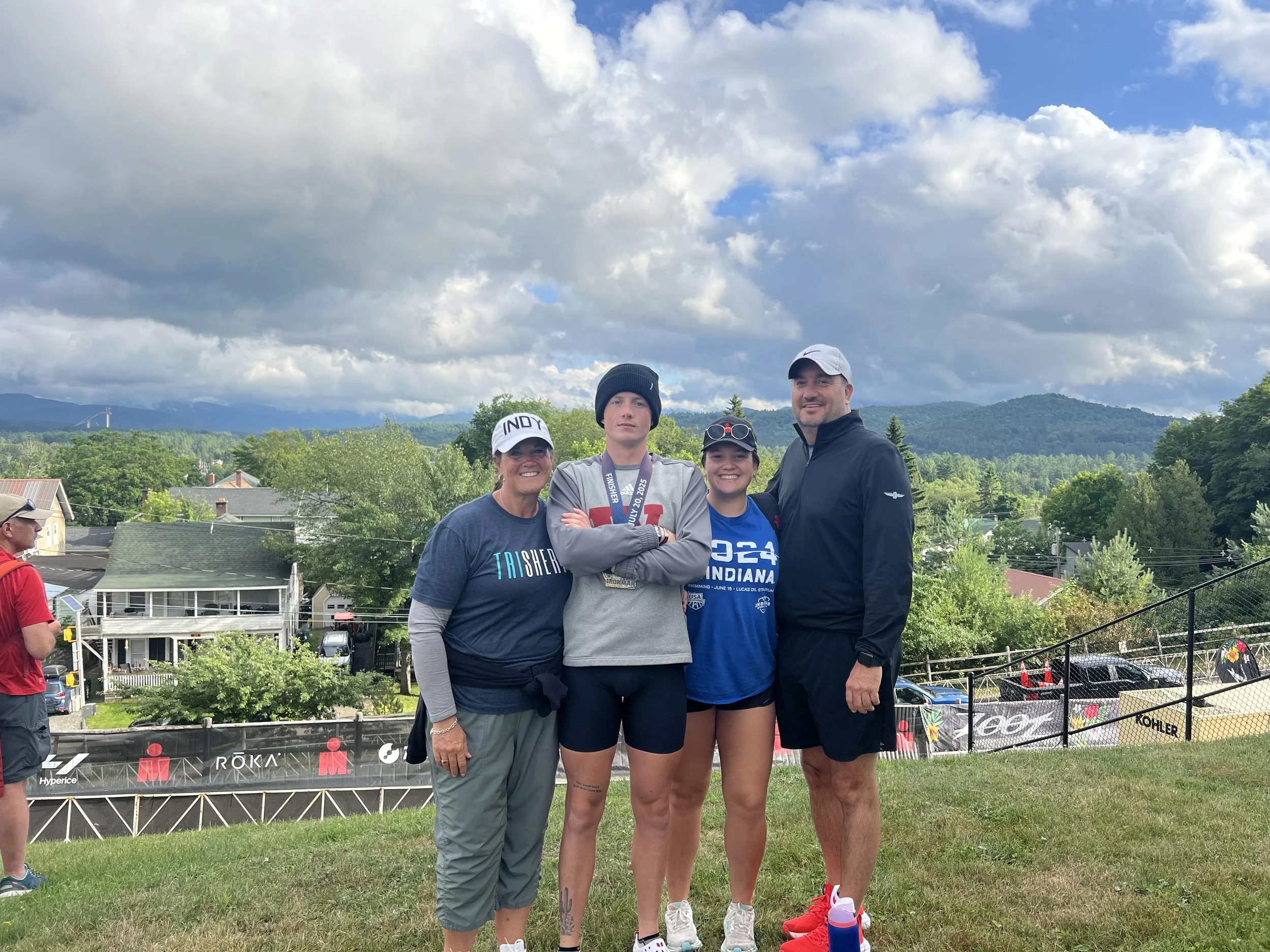
I crossed the line completing my third full Ironman and setting a 44-minute Ironman PR. On a course with more than 6,000 feet of bike climbing, another 1,276 feet on the marathon, and rain throughout basically the entire day, I couldn't have asked for much more.
Apparently however, racing 140.6 miles wasn't enough punishment for one day.
Our hotel was located on top of a brutal hill. Once the race was over, I somehow had to get myself back up there. Walking forward hurt so badly that I eventually turned around and started walking backward up the hill. Imagine finishing an Ironman and seeing some idiot slowly walking backward up a hill through Lake Placid.
That was me.
It hurt like hell.
Final Thoughts
Ironman Lake Placid absolutely deserves its reputation. The course is difficult, but I don't think it's difficult because of one ridiculous climb or one specific section. It's the accumulation of everything. You descend, climb, descend again, and eventually have to climb your way back into Lake Placid. Then you put the bike away and run a marathon with another 1,276 feet of elevation gain. The course forces you to respect it from the beginning because any effort you waste early is probably going to come back for you later.
Pre-riding the Keene descent was one of the best decisions I made all weekend. If you're considering racing Lake Placid, especially if you aren't comfortable descending at speed, I would highly recommend seeing that section before race day. The rain meant I was considerably more conservative than I probably would have been in dry conditions, but knowing the road beforehand removed a lot of uncertainty.
Mirror Lake was also an awesome swim venue. The underwater cable made sighting incredibly easy, and I loved getting to experience my first Australian exit. The bike course was beautiful, the road quality was fantastic, and the spectators were some of the best I've experienced at an Ironman. Even the rain couldn't really take away from how incredible the Adirondacks looked throughout the day.
What separates Lake Placid from other races I've done, though, is the town itself. This isn't an Ironman that happens to take place in a town. For race weekend, Ironman is the town. Everything becomes athlete-oriented, and that creates an atmosphere that is difficult to replicate anywhere else.
Between racing alongside a professional field, watching pros absolutely bomb the Keene descent, passing two pro women myself, riding through the Adirondacks in the rain, climbing through walls of spectators, running a 25-minute marathon PR, and ultimately taking 44 minutes off my full Ironman PR, Lake Placid became one of the most memorable races I've done.
It rained basically all day. My chain tried to ruin my ride. The hills beat the hell out of my legs. The marathon hurt. Then my hotel made me walk backward up a hill after the race.
But I left Lake Placid with my third Ironman finish, my fastest Ironman yet, and a race that showed just how much stronger I had become.
44-minute PR. 25-minute marathon PR. Ironman number three.