Ironman Canada Raceday Review - 8/2/26
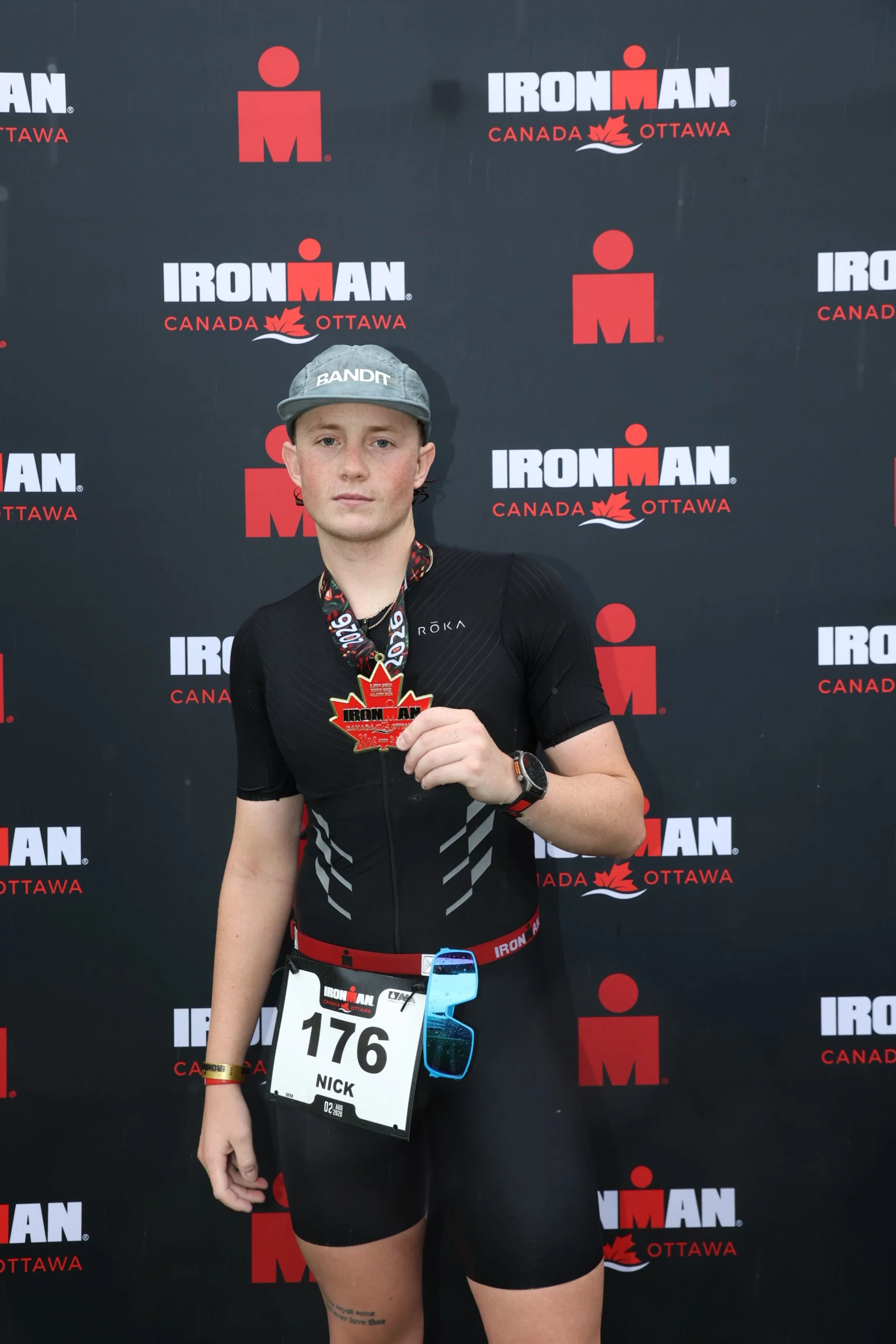
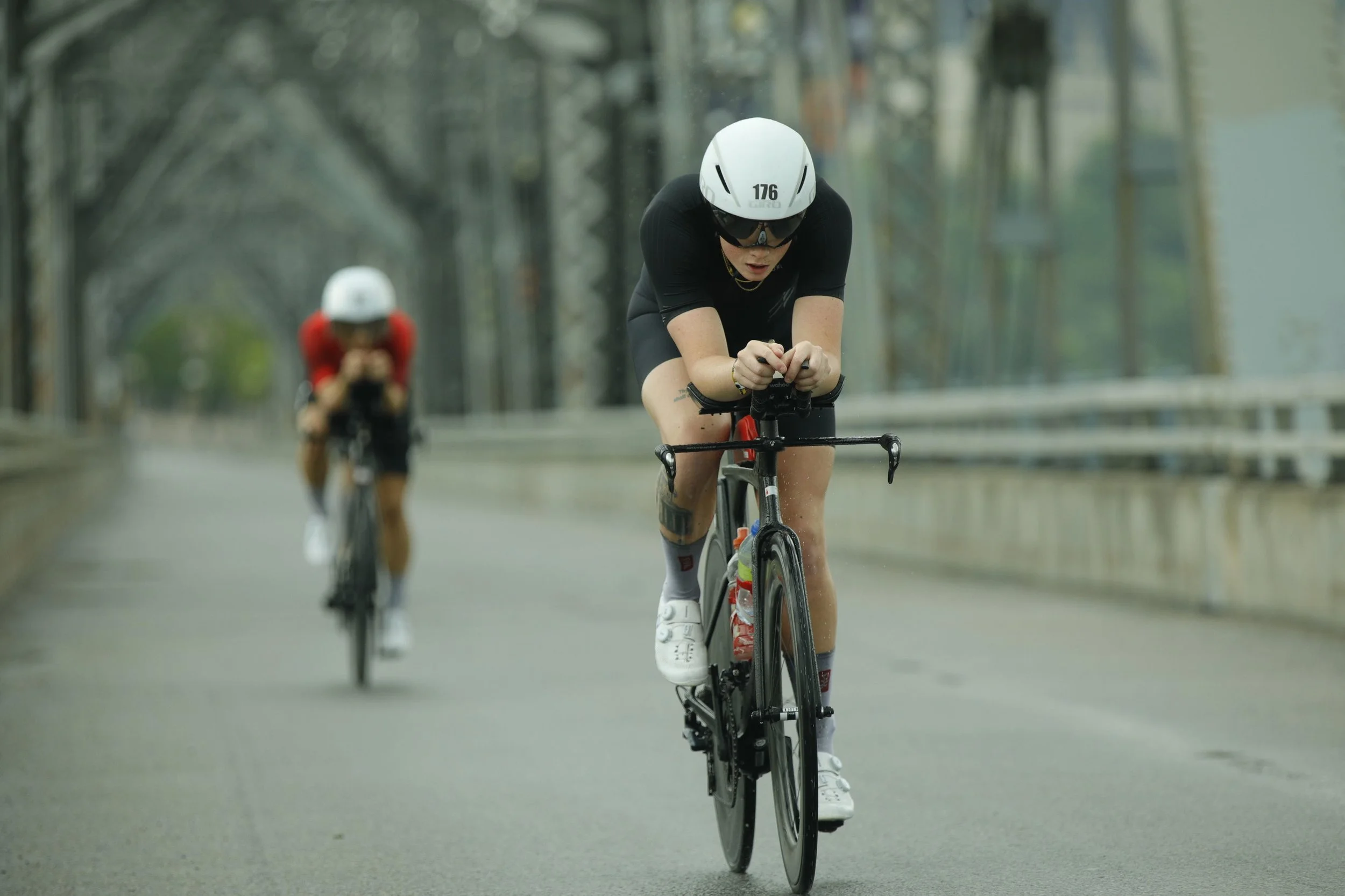
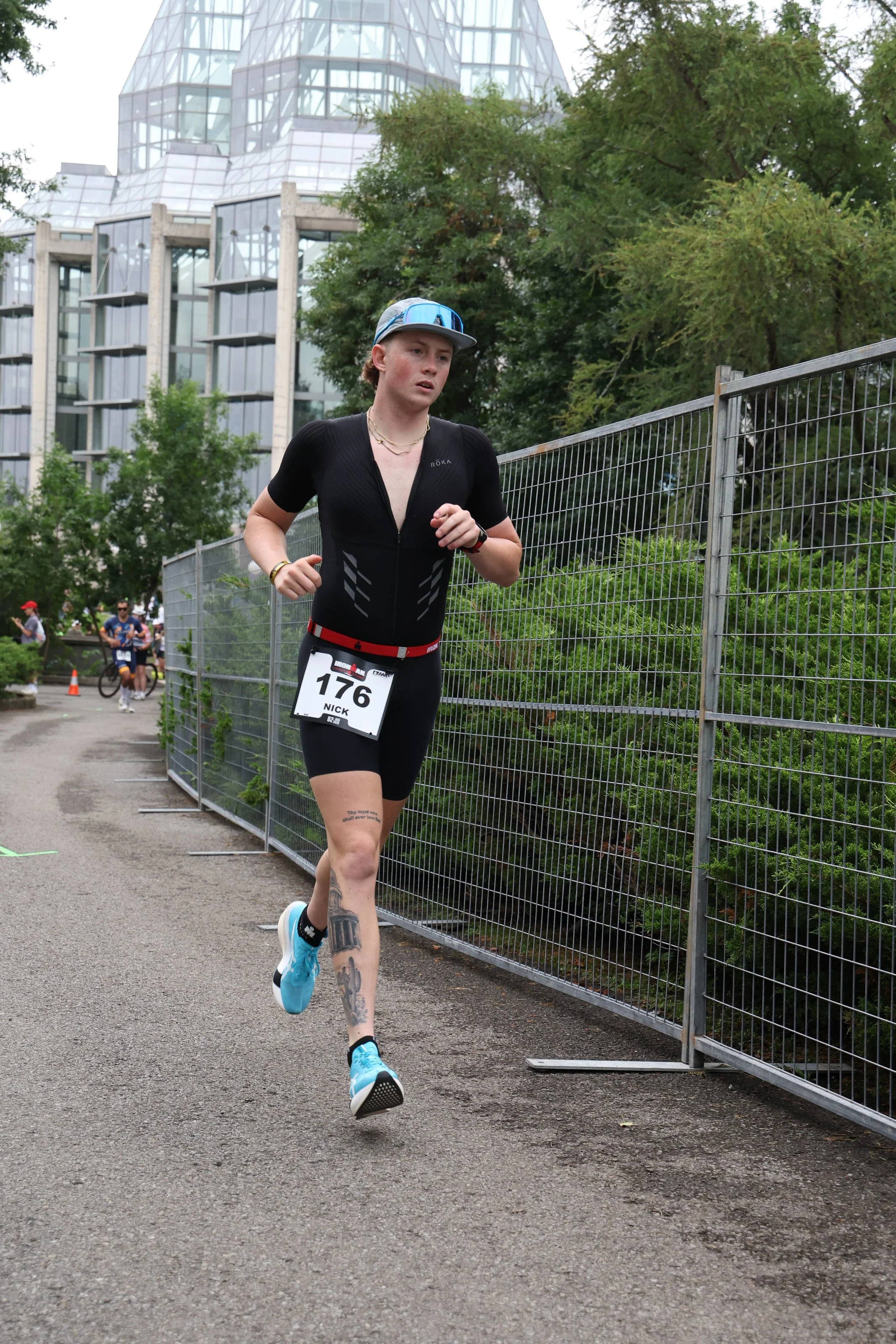
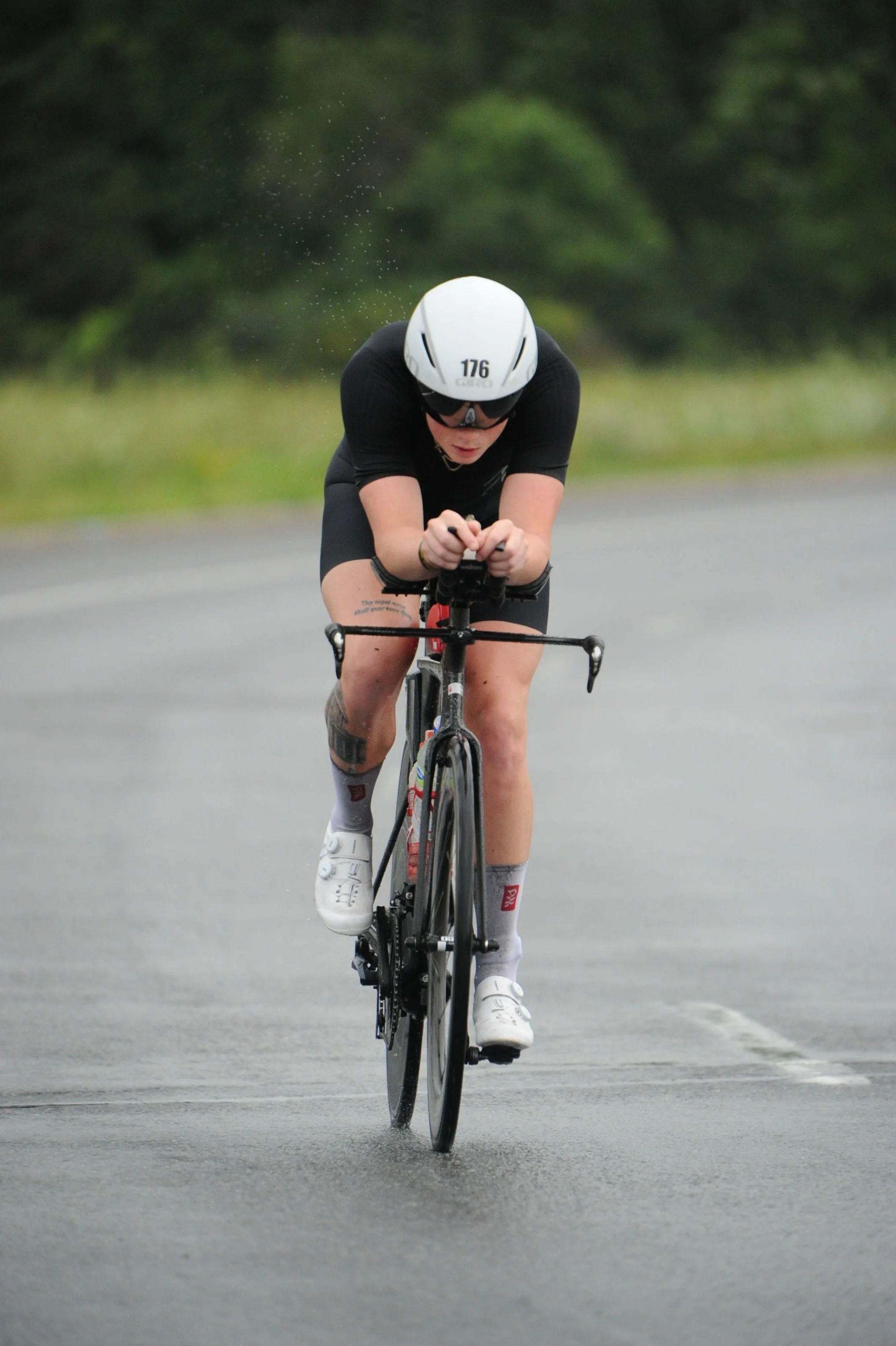
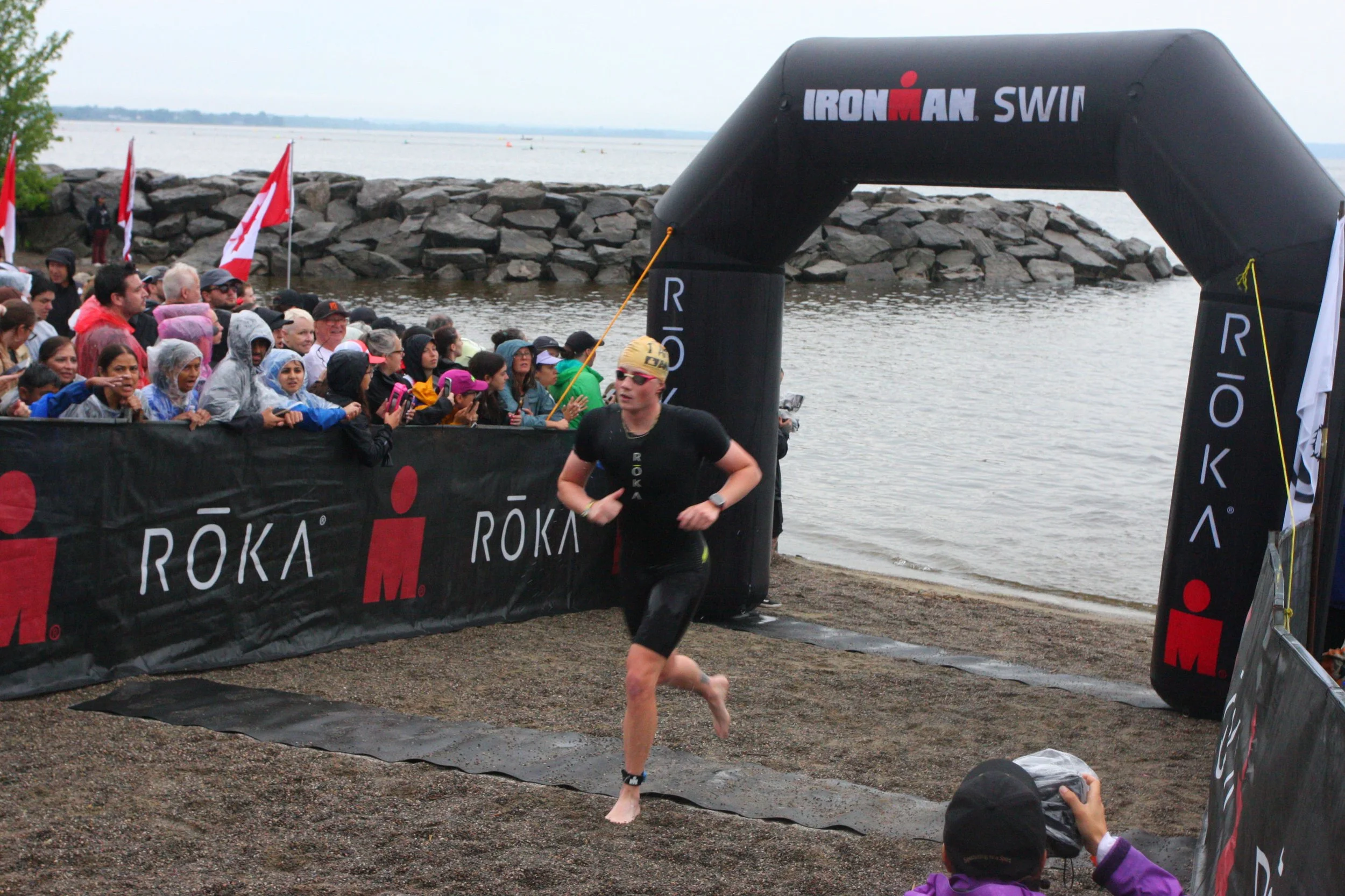
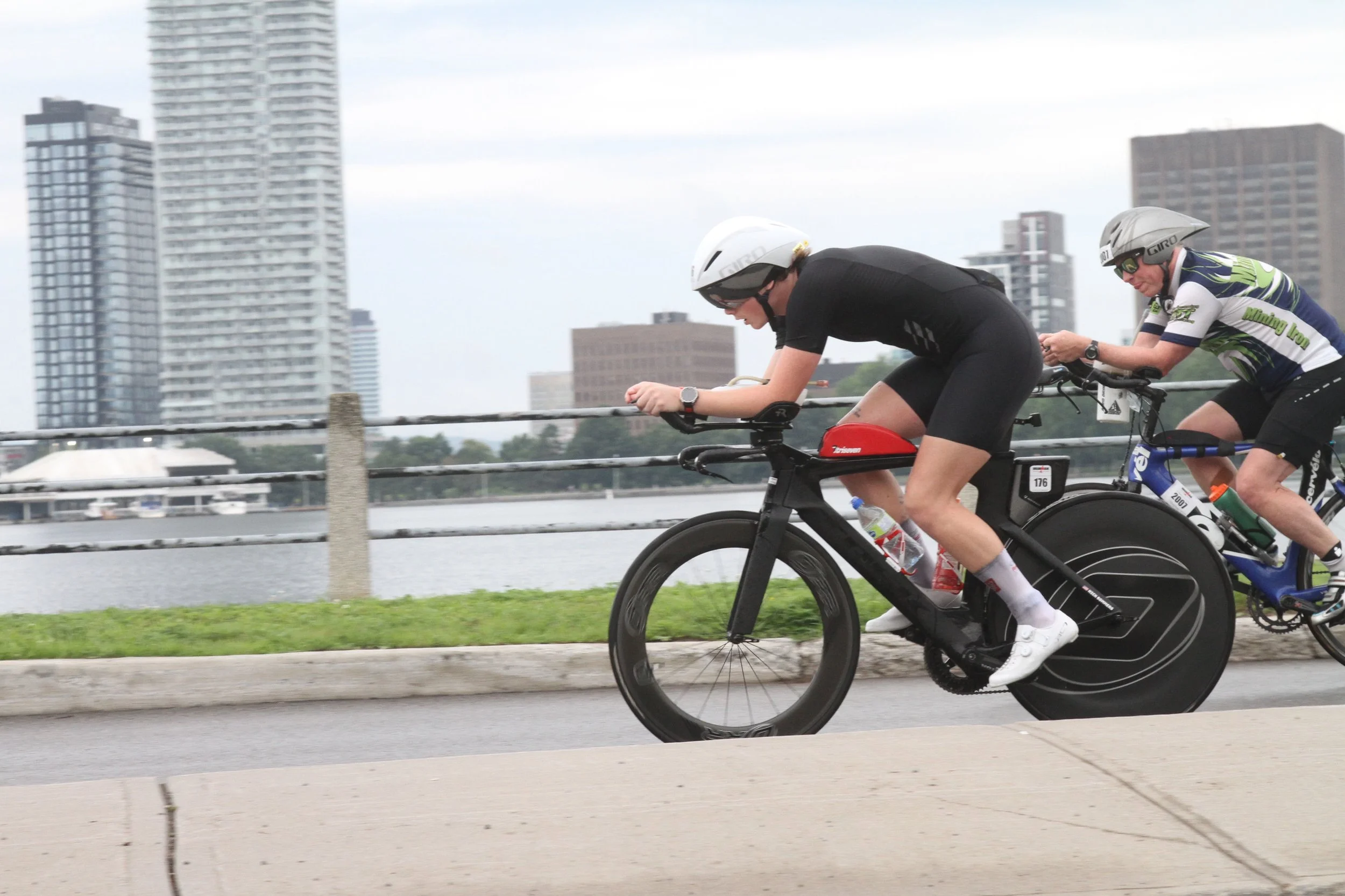
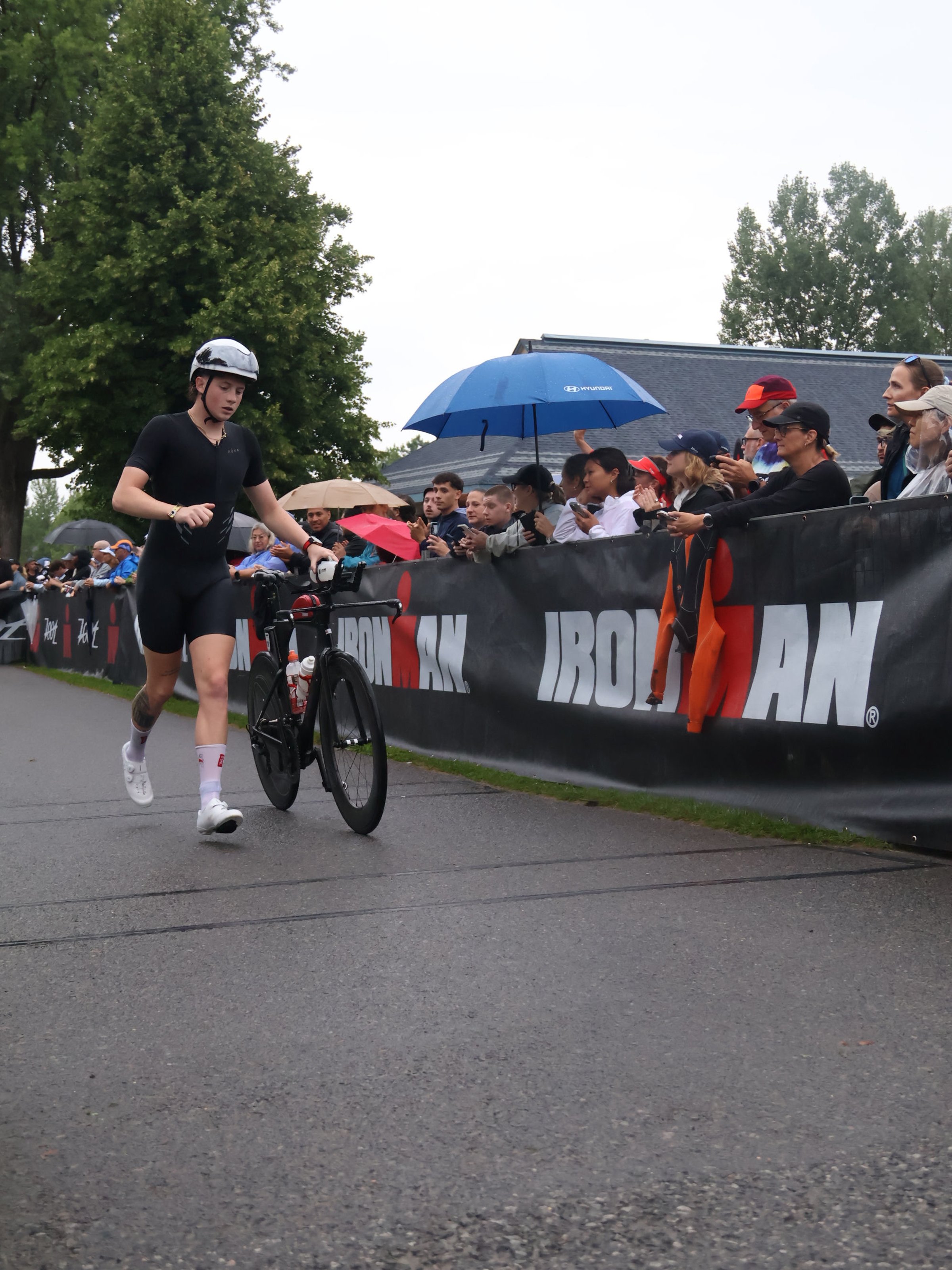
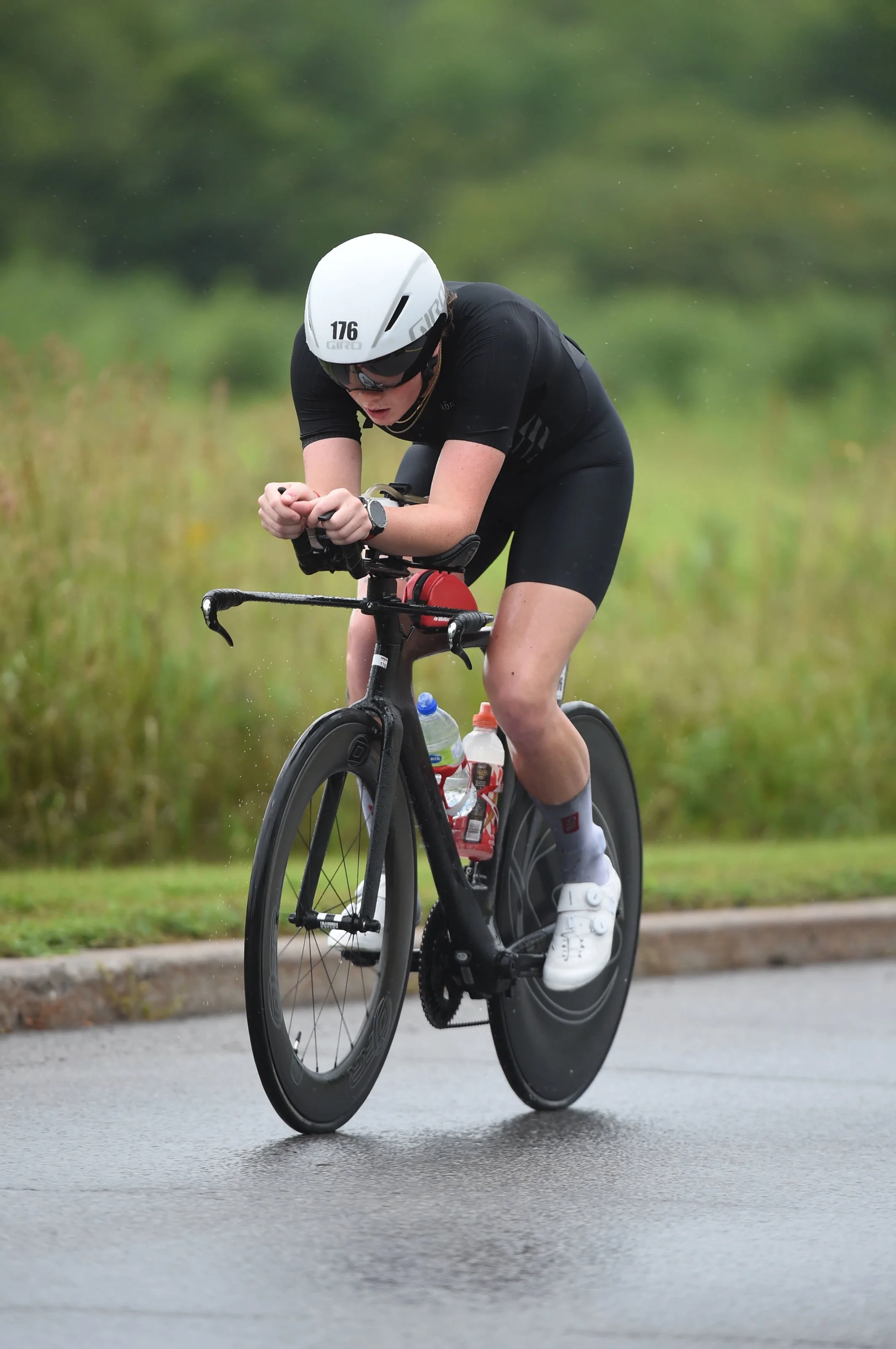
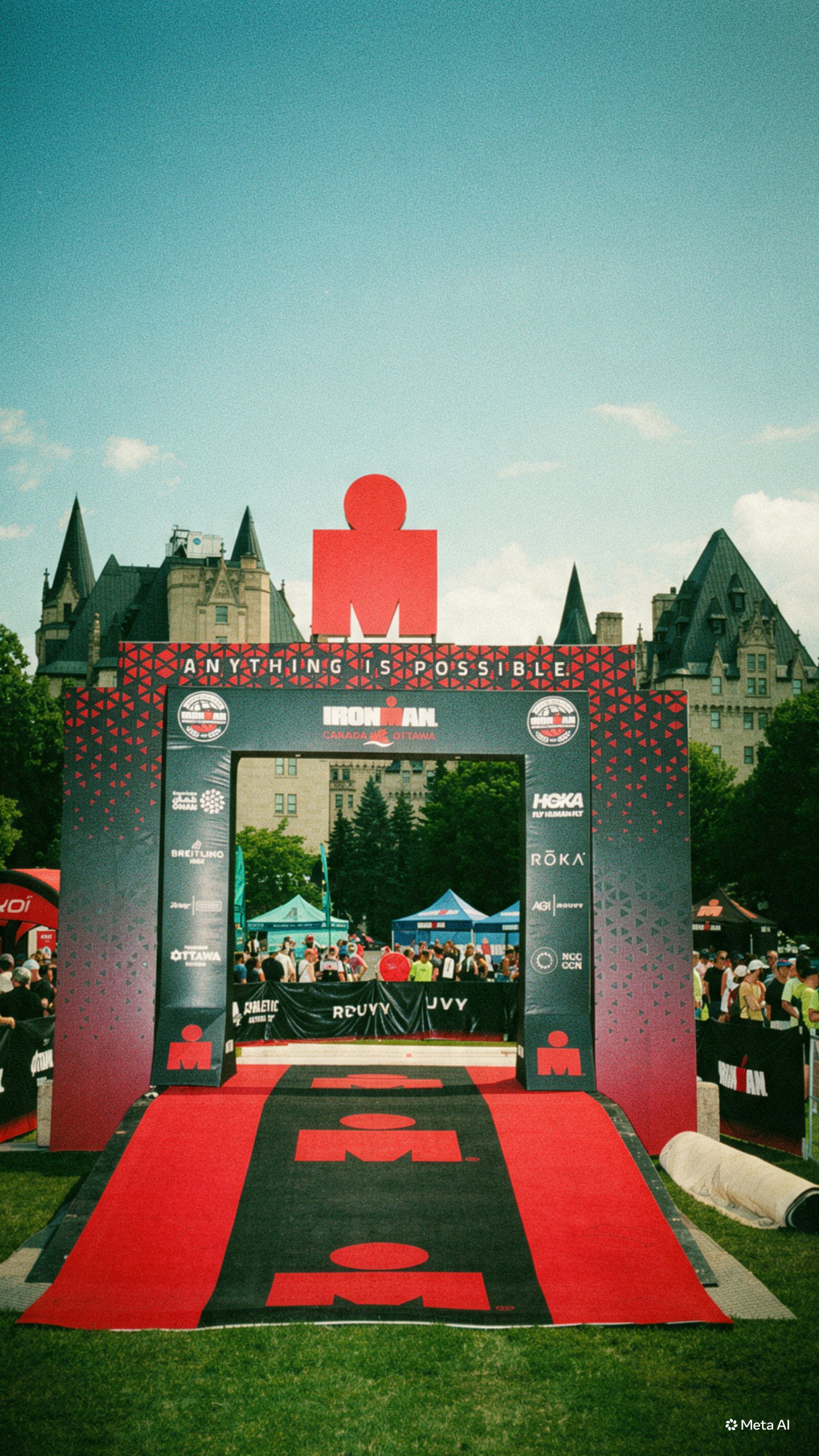
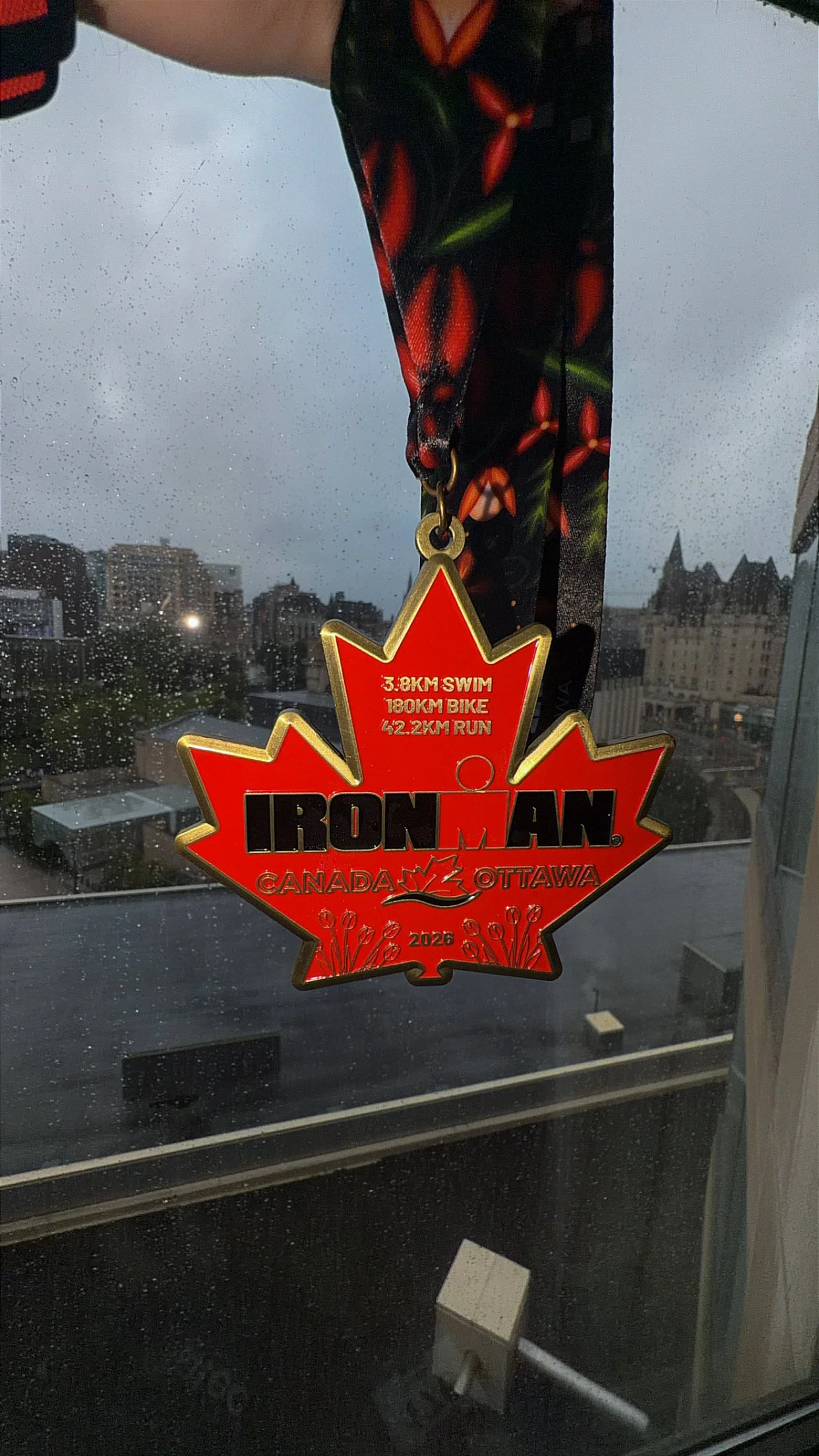
This weekend, I had the privilege of competing in and finishing my fifth full Ironman in Canada's capital city, Ottawa. Going into the race, I had one major goal: break ten hours. What I got instead was torrential rain, rough roads, a broken spoke, and a shoulder injury that would test me all the way to the finish line.
Despite the challenges, Ottawa delivered the same incredible atmosphere that keeps triathletes coming back to Ironman year after year. This review focuses solely on race day itself. I'll cover the logistics and overall experience of the host city in a separate post.
Race Stats
Finish time: 10:50:10
Swim: 58 minutes (1:25/100 m)
Bike: 5:16
Fifth full Ironman finish
Second in the 18–24 age group and twelfth overall out of roughly 2,800 athletes after the swim
Conditions: heavy rain and 76-degree water
Race Morning
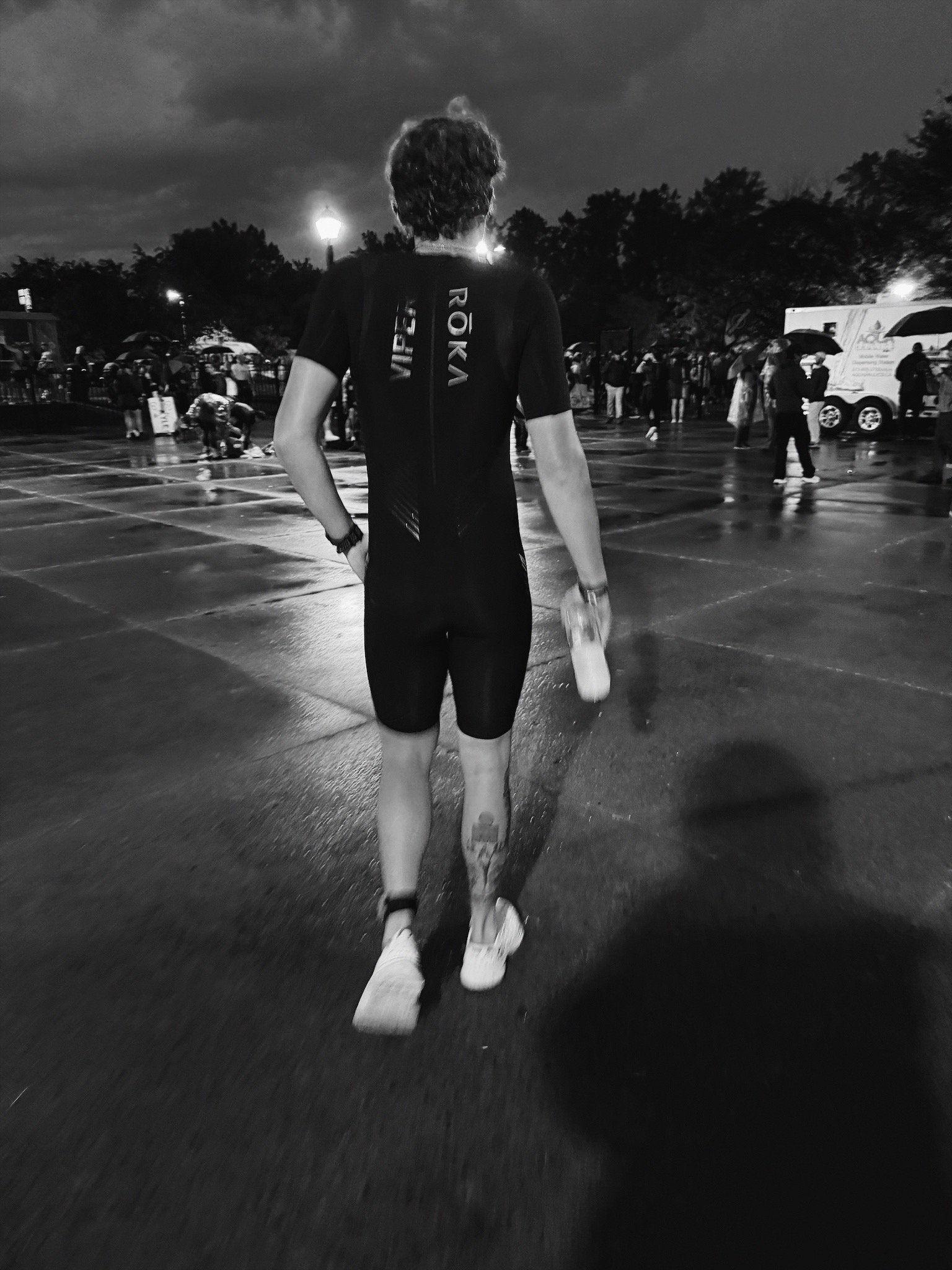
Race morning started early at 4 a.m. with breakfast casserole, a full bottle of water, and a 16-ounce Red Bull to get some early protein, carbohydrates, and caffeine into my system. By 4:15, we were on our way to the shuttle buses for the twenty-minute ride to the swim start.
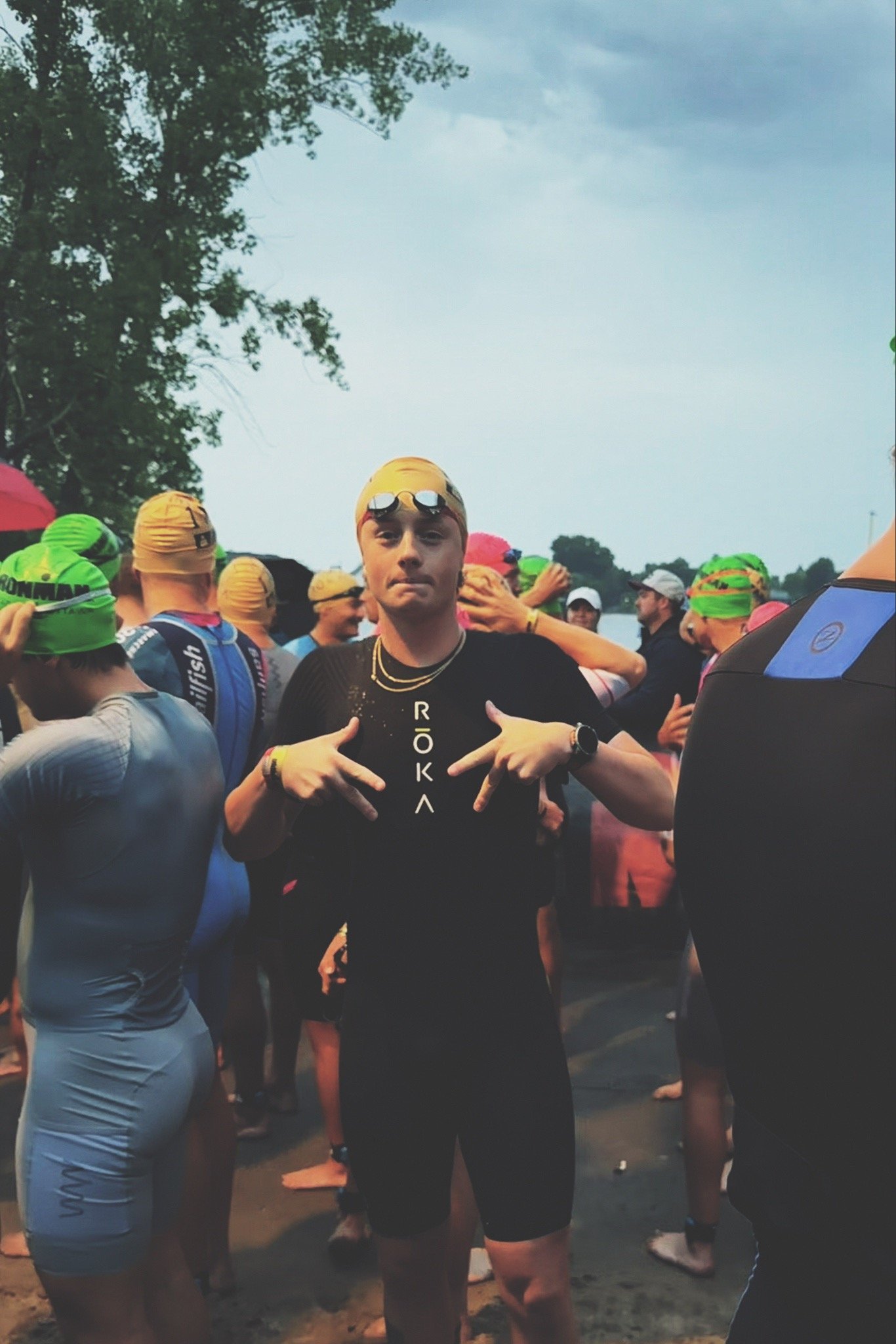
The shuttle ride itself was rough, bouncing over some pretty terrible Canadian roads before we even made it to transition. Once there, I organized my gear, put on my ROKA swimskin, and started mentally preparing for the long day ahead.
My dad and sister however, had a much worse experience with the shuttles and had to wait roughly 45 minutes to finally make it down to the swim course. In that time, I was able to get my final stretches in and make it into the swim corral for the start of my day.
The forecast had called for rain all day, which meant staying conservative on the bike and prioritizing safety over speed.
Unfortunately, it didn't just rain.
It poured.
Swim and T1
The goal going into the swim was simple: preserve energy and set myself up for a strong bike and run. I started farther back than normal so that I could get onto some feet early and take advantage of the draft instead of burning matches trying to lead from the gun.
The water temperature sat at a warm 76 degrees, and the conditions were calm. The first thousand meters felt smooth, and around that point I decided to pick up the pace and bridge toward the front of the chase pack. The leaders had already created a sizable gap, which was the tradeoff of starting farther back than I normally would.
For a while, four of us rotated pulls and worked together, but by the second turn buoy I realized I was basically alone. The buoys also seemed slightly out of alignment, which made sighting surprisingly difficult.
I decided to back off the pace, drift back into the group, and let someone else take over navigation on the backstretch.
Unfortunately, nobody behind me wanted to move to the front.
So I rolled onto my back, swam some backstroke, let the group pass, and jumped back onto their feet. At the fourth turn buoy, I decided it was time to bring the pace up one final time. I switched back to backstroke, hammered for about a minute, and managed to move back to the front of the chase pack before entering T1.
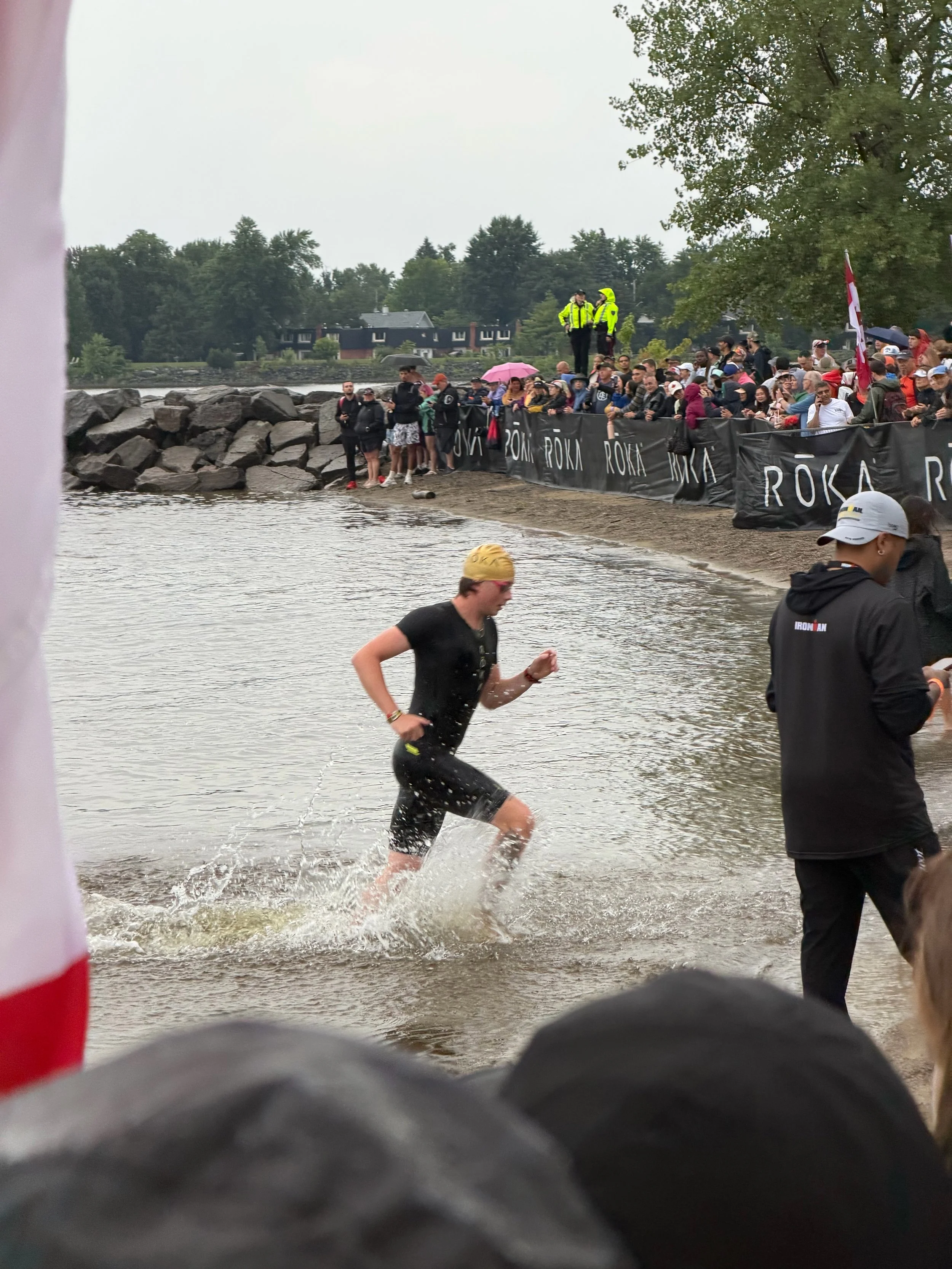
I exited the water in just over fifty-eight minutes, averaging 1:25 per 100 meters.
That swim split placed me second in the 18–24 age group and twelfth overall out of roughly 2,800 athletes. Even better, my average heart rate was only 134 beats per minute. That's incredibly low for me, and seeing that number confirmed that my race plan had worked exactly as intended.
T1 was shorter than some of my previous races, so I decided to take my time. I dried my feet, put on socks, and grabbed three cups of water to start replenishing fluids immediately.
The Canadian officials were also extremely strict with the rules. I later heard about an athlete who received a penalty for touching his bike before clipping his helmet. Hearing that afterward made me appreciate how seriously they took race safety and fairness.
Leaving transition, I felt exactly how I wanted to feel: controlled, hydrated, and ready to settle into six hours of work.
That confidence didn't last long.
Bike
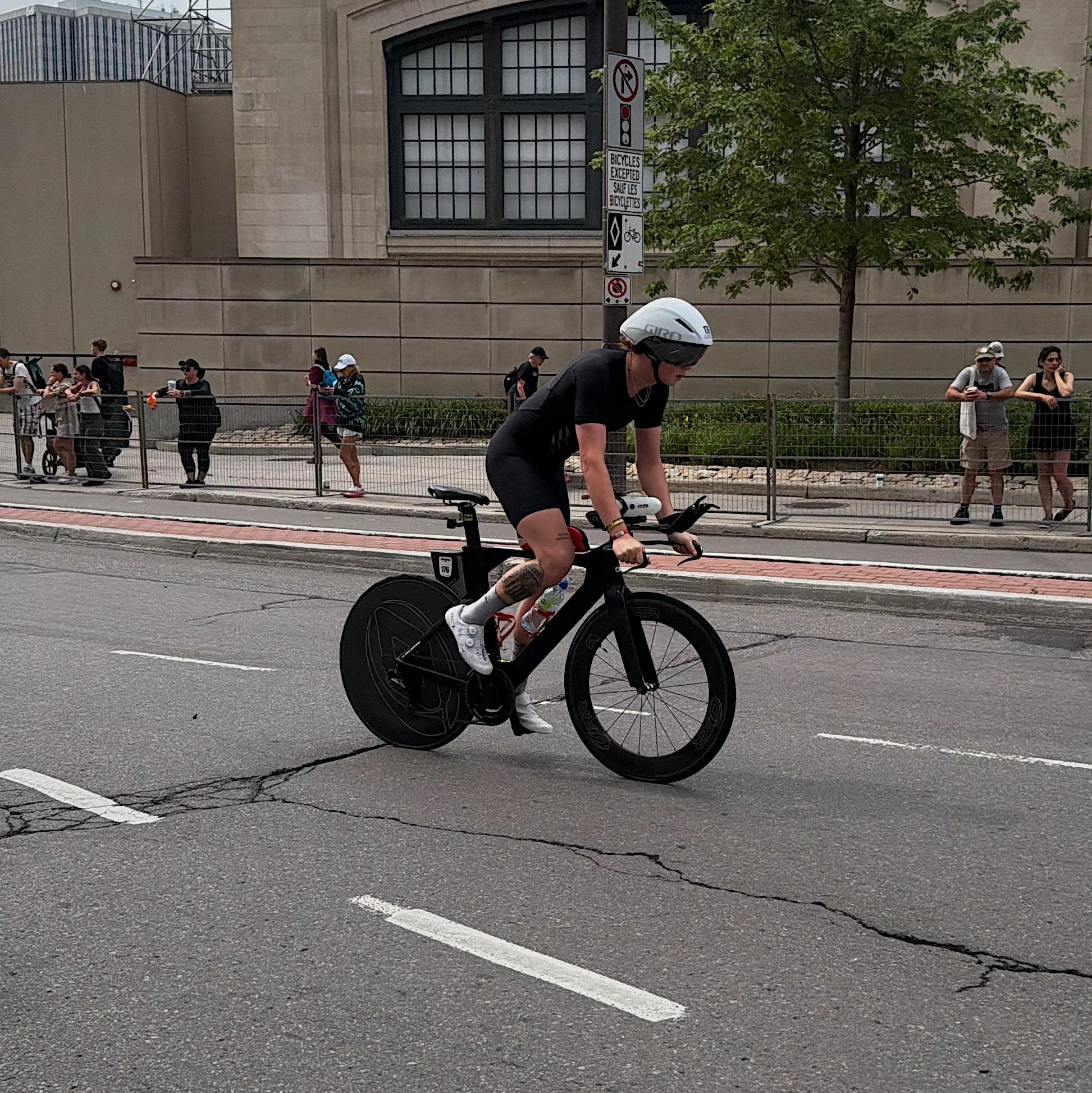
Oh my lord, that course was rough. I'm not talking about the elevation profile. I'm talking about the roads. The course did have about 2600 feet of climbing but it was in the form of rollers and false flats. This type of course make the elevation feel very manageable.
But, the three-loop course created traffic problems from the very beginning. Athletes were riding three and four wide on narrow roads, and between potholes, bumps, bottles flying out of cages, and heavy rain, the entire bike required absolute focus.
It was exhausting to spend so much energy simply trying not to crash, and many participants did. That said, there were still parts of the course that I genuinely enjoyed.
The opening fifteen miles only had to be ridden once and followed the river through old Ottawa. The terrain was fast, with gentle rollers, and I settled into a controlled effort at around 22–24 mph while holding an average heart rate of 155.
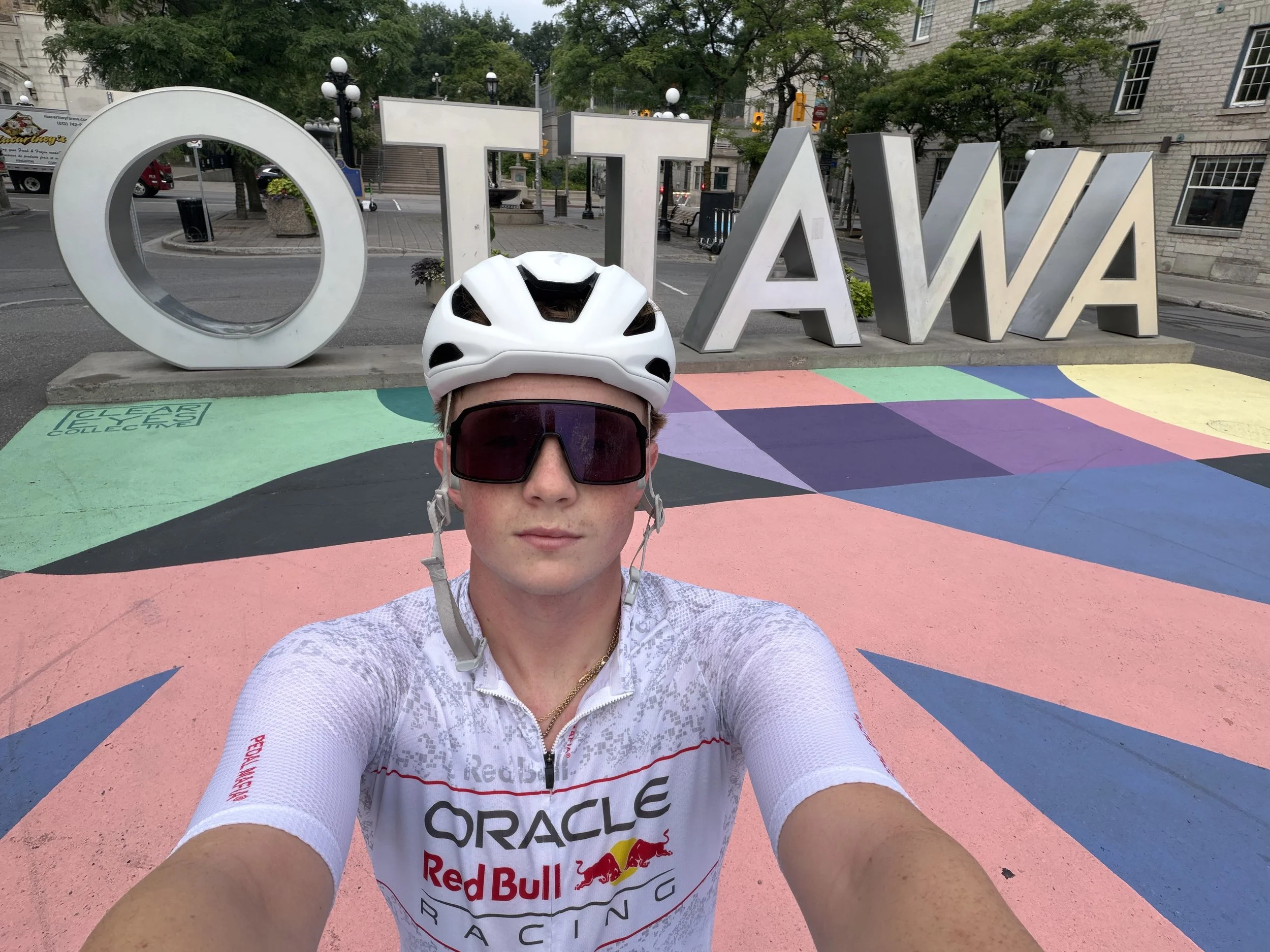
Once we got into downtown Ottawa, the roads deteriorated quickly, but the scenery made up for some of it. Riding past Parliament and through the historic sections of the city was a really cool experience. I was blown away by the differences between Canada and America and found it fascinating to see how countries can structure their governmental architecture so differently.
The second section of the course featured a five-mile out-and-back with an aid station on the return leg. My nutrition plan from the beginning was to prioritize hydration and electrolytes.
Each of my bottles contained double servings of Precision carb mix, providing roughly sixty grams of carbohydrates and about one thousand milligrams of electrolytes per bottle. Combined with aid station water, the plan worked extremely well, and I never cramped during the bike.
The third section stretched roughly fifteen miles in each direction through the countryside. The outbound leg featured a brutal headwind, but thankfully the return trip rewarded us with a tailwind before crossing into Quebec.
Unfortunately, Quebec's roads weren't much better. Even though they had been freshly paved, it felt like riding over fifty miniature speed bumps for miles. It was uncomfortable and honestly a bit dangerous.
Around mile forty-five, I started developing some lower back pain. I used the descents to stretch and massage some of the tight spots, which helped enough to keep things manageable.
The second loop became incredibly congested as faster athletes mixed with those starting their first lap. At one point, I got stuck behind five or six athletes blatantly drafting each other. I had spent the entire day riding legally and pulling my own weight, so watching that unfold was frustrating. The third loop is where things started to unravel.
With about twenty miles remaining, I broke a spoke on my rear wheel. At the time, I didn't realize that the spoke had completely snapped, but I immediately noticed brake rub and could feel the bike slowing down. It was incredibly frustrating, especially considering the wheels were practically brand new.
Bike Nutrition
Two Rice Krispie treats
Three Precision 30-gram chews
One Precision 90-gram gel
Two bottles of double-serving Precision carb mix
Roughly 350 grams of carbohydrates
Roughly two grams of sodium
Looking back, I probably could have taken in even more carbohydrates, but overall the plan worked and left me feeling strong heading into the marathon. I want to use this nutrition strategy moving forward and improve on the base that was built this past weekend.
Despite the conditions and mechanical issues, I crossed the bike line with a new personal best of 5:16. I averaged 202 watts, held an average heart rate of 149, and averaged roughly 21.5 mph.
Given the weather, road quality, and broken wheel, I was extremely happy with that result.
T2 and Run
Coming into T2, I grabbed my gear bag, changed into my run kit, ate two more Rice Krispie treats for another sixty grams of carbohydrates, drank three cups of water, and headed out onto the run course. T2 was super short. Literally just the gear bag pickup and changing tent. i enjoyed the length of it as previous races have had extremely lengthy transitions.
For those that dont know how a full Ironman T2 works, they grab your bike and rack it for you so that you can focus on a quick transition into the run section.
The first ten miles felt fantastic. I held right around an eight-minute pace and stayed on top of hydration, grabbing water at every aid station and Precision electrolytes at every other station. Then, around mile twelve, everything changed.
My shoulder and rotator cuff started hurting badly enough that I couldn't comfortably hold my arm up anymore. After grabbing my special-needs bag, I made the decision to stop at the medical tent and see if they could do anything to help.
The medic gave me a makeshift sling, which worked for another four miles.
Around mile seventeen, the sling started to fail, so I wrapped it around my wrist and tucked the fabric beneath my shoulder and right armpit.
Surprisingly, it worked.
My pace dropped to around 8:30 per mile, but by that point the race had become less about chasing a specific time and more about getting the most out of the body I had left. Writing this a few days later, my arm feels back to normal which is weird but something to plan for leading into future races.
The final two kilometers were almost entirely uphill. Knowing how badly my shoulder and hamstrings were hurting, I decided to walk the steepest section instead of completely emptying the tank.
As I approached the finish line, I dropped the sling into a nearby trash can and ran home holding up five fingers to celebrate my fifth full Ironman finish.
I crossed the line in 10:50:10, good for my second-fastest full Ironman.
The run course overall was designed well. It was challenging to see family more than once because of the out-and-back nature. I do think that future improvements need to have a more exciting course however. It ran through a kind of crummy part of town that reaked of pot. I dont usually mind it but it was almost overwhelming.
While I didn't achieve the sub-ten-hour goal I had set for myself, Ottawa was still an important step forward and a huge rebound from my disappointing performance at Ironman 70.3 Happy Valley.
Post Race:
After the race i took some time to calm down, collect my thoughts, and get some much needed food after burning roughly 7,000 calories in the race. They served pizza, poutine, gelato, and pasta, which was all pretty solid. But this was only my first meal of the night haha. While my mom and dad picked up my bike, my sister and I headed back to the hotel so that I could wrinse the day off of me and finally relax a little. After my shower, we headed to a restaurant right on the race course called Milestones. I got some spinach and artichoke dip, chicken alfredo, and a seafood chower. This filled me up well and we finished just in time to get my cycling gear bag and see some of the fellow participants finish.
As you may remember from my last race review, my mom met a guy named Eric before the race at Happy Valley. He was in Canada too and was set to race with Larry before his passing. We wanted to be there for his finish and made it with plenty of time to spare. I could see the raw emotion on his face coming down the finish line and I even got a high five as he made his way to the line. I don’t know if he knew it was me, but I wanted to show my support for him and the emotional day that it must have been. And it was his birthday, which makes it an even more special day.
After we made it back to the hotel, got ready for bed, and set the alarms for 7 AM the next day to make our way down to Niagara Falls for my 22nd birthday.
Final Thoughts
I would absolutely recommend Ironman Ottawa to anyone looking to complete a full-distance race. The atmosphere, spectators, the host city, and overall energy were fantastic.
That being said, the road quality and race-morning shuttle logistics definitely take a few points away from the overall experience. Between the congestion, potholes, and difficult course conditions, safety became just as important as fitness. Additionally, the gear bag pickup was absolutely insane. Bags weren’t ordered, it was dark by the time they were ready, and race numbers had slipped off as a result of the rain. This issue was preventable if Ironman would have simply provided permanent markers from the beginning like in Pennsylvania. Additionally, placing bags in order before moving them from T1 to the pick-up zone would’ve solved the headache for both participants and the volunteers that were tasked with organizing the bags.
Even so, crossing the line and finishing my fifth Ironman made every challenge worth it.