2026 Ironman 70.3 Happy Valley Race Recap
Intro:
This past weekend I completed my 8th Ironman 70.3 in Happy Valley, Pennsylvania. I felt like my preparation for this race was solid, but unfortunately race day didn’t go according to plan.
Before I talk about my race, I want to take a moment to recognize a fellow competitor named Larry.
The day before the race, my mom met a group of gentlemen outside of our hotel. She described them as electric and hilarious. They were telling stories from past Ironmans, cracking jokes, and listening to my mom talk about my racing career. Larry was one of those men. My mom said he was the kind of person who could light up a conversation and make everyone around him feel welcome.
On race morning, sometime around 8:30 AM, my parents heard over the Ironman race radio that a major swim extraction was underway. Never in a million years did they think it would involve someone they had spoken with less than 24 hours earlier.
A few days after the race, one of Larry's friends reached out and told me he was in the ICU and in critical condition. Today I learned that Larry passed away.
I wanted to take a moment to acknowledge him because it is easy to get caught up in finish times, personal records, and race results. This weekend was a reminder that there are things far bigger than any finish line.
What makes this especially difficult to process is that Larry was not new to the sport. He was an experienced athlete and by all accounts a capable swimmer. Sometimes tragedies happen in endurance sports without warning, and that reality can be hard to accept.
My heart goes out to Larry's family, friends, and the community that surrounded him. From everything I've heard, he was the kind of person who made people better simply by being around them.
This experience also changed my perspective on what I considered a "bad race." I crossed the finish line disappointed with my performance, but I still got to come home. I got to hug my family. I got to write this blog post.
That is not something I take for granted after this weekend.
Rest in peace, Larry.
My Race Weekend
In the days leading up to the race, we went through all of my typical pre-race routines and traditions. One of those is doing a course recon of the bike course so I know where the major climbs are and where I can ease up to conserve energy for the run. During my recon ride, I found two significant hills that would almost certainly force me out of the saddle. The first 10-15 miles, however, seemed relatively flat and fast.
I rode that opening section on Friday before the race and immediately noticed my heart rate was much higher than normal. Between the humidity and pre-race nerves, I found myself feeling more anxious than usual. The ride definitely planted some doubts in my head heading into the weekend, but I knew the key would be staying in control and riding my own race.
One thing about this race that was different than any triathlon I've ever done was the split transitions. The swim course and T1 were about a 30-minute drive away from T2. Because of that, we had to drop off both gear bags the day before the race. It wasn't a huge deal since I've done several full Ironmans with transition bags, but it was definitely different than what I'm used to.
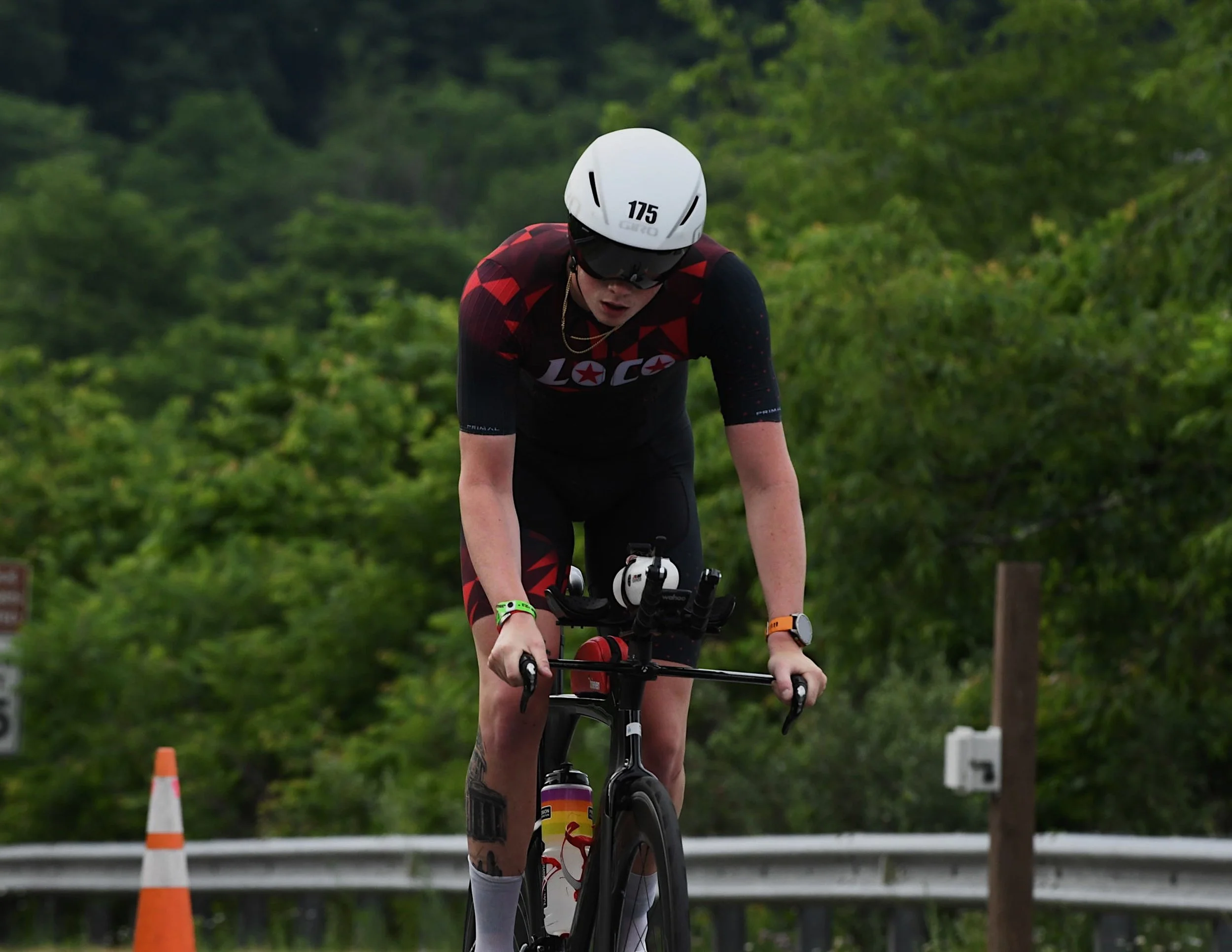
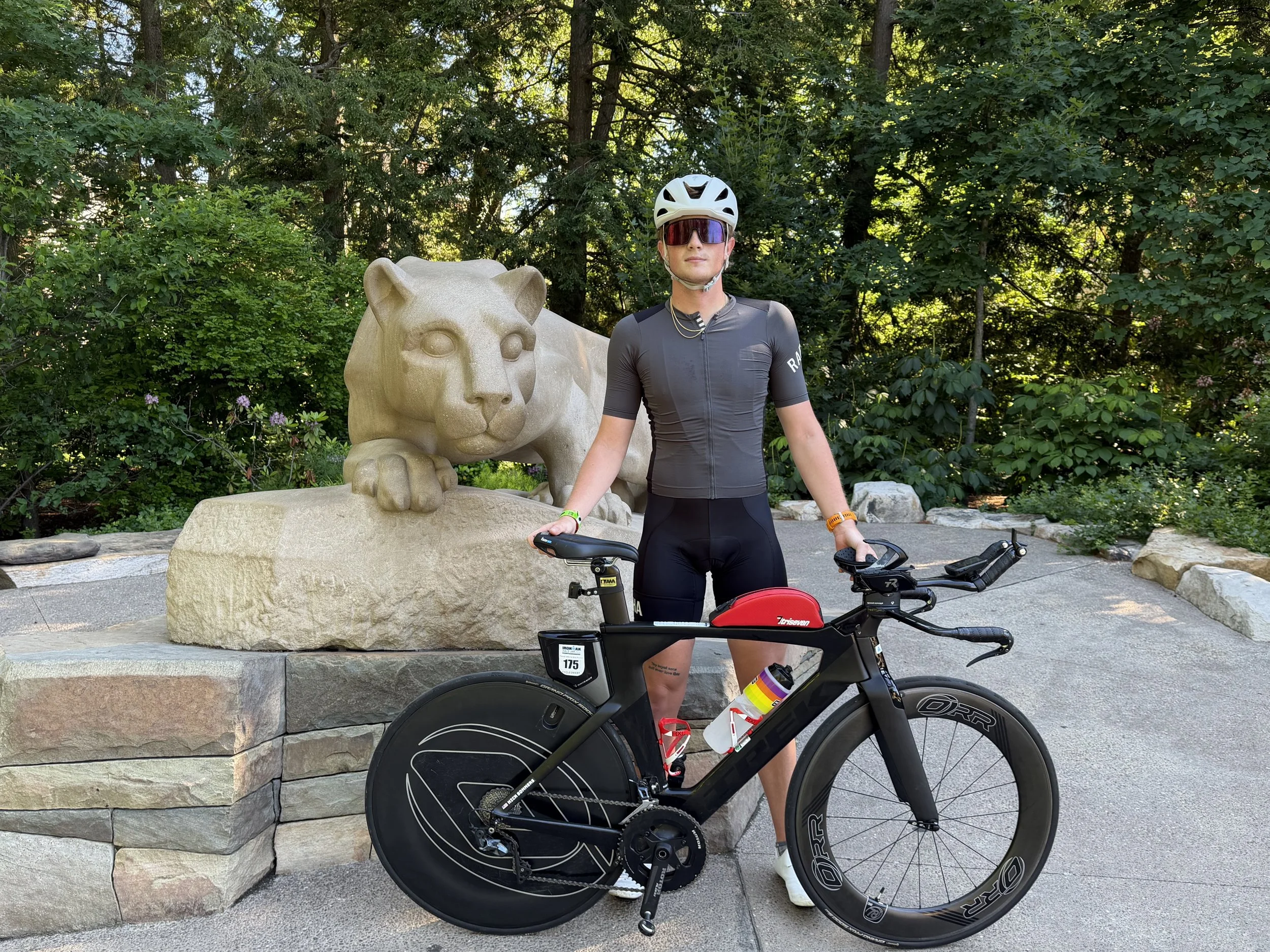
For the bike course I mounted my ORR disc wheel to gain some free speed from the aerodynamics and planned to wear my Giro Aerohead to help cut through the headwinds that plagued most of the course after the opening miles.
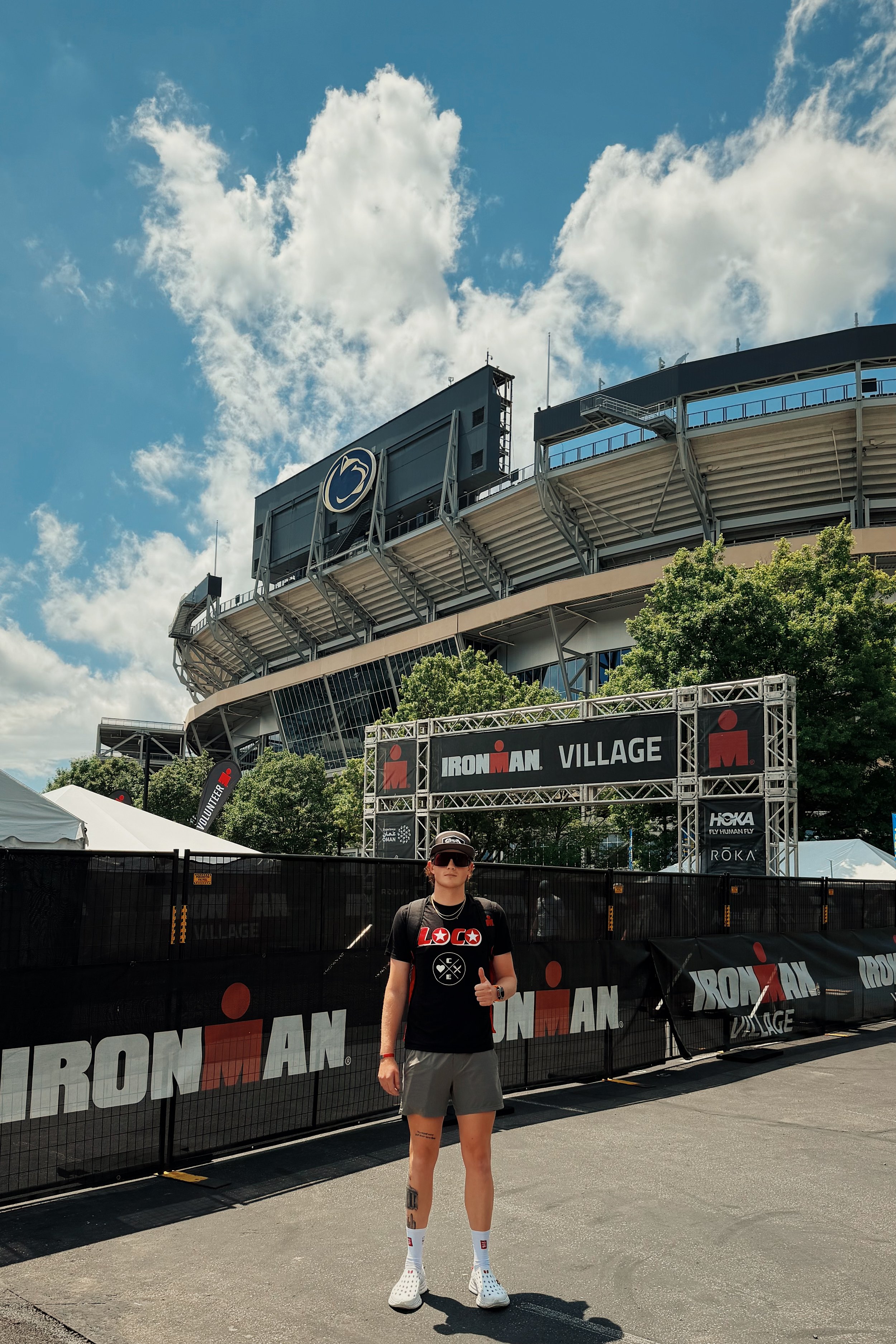
We also made our usual trip to the Ironman Village. Every race, I buy the same two things: race stickers and one of the personalized name towels Ironman sells. It's a small tradition, but one I've come to enjoy over the years.
Leading up to the race, I hydrated heavily with Mortal electrolytes and plenty of water. Race day, however, came with a cold front that dropped the morning temperature from around 75 degrees into the upper 50s. I saw that as a win. Cooler temperatures meant I could potentially push a little harder and not have to reserve as much energy for heat management later in the day.
The swim venue itself was beautiful. The water quality was excellent, with roughly 5-8 feet of visibility. My pre-race swim focused on maintaining my feel for the water and completing a few short speed efforts to get my body acclimated for race morning.
We also managed to hit a few really solid restaurants leading up to the race, which is always one of my favorite parts of traveling for these events. Even if you’re not traveling to State College, Pennsylvania for a race, you should still check out these fantastic spots!
Faccia Luna Pizzeria – Faccia Luna was one of my favorite meals of the weekend. The pizza was excellent, the portions were generous, and it was a great spot to load up on carbs before race day. Their lobster ravioli was so good and very filling.
Penn State Berkey Creamery – If you're in Happy Valley, you have to stop at the Berkey Creamery. The ice cream cones are both fantastic and absolutely massive, and the frozen yogurt was just as good, according to my momma.
The Corner Room – The Corner Room is a Penn State staple and a great place to grab a meal while soaking in the college-town atmosphere. The menu has something for everyone, and the location puts you right in the middle of downtown State College.
The Tavern Restaurant – The Tavern offered a more upscale dining experience while still feeling comfortable and welcoming. It was a great place to sit down, relax, and enjoy a quality meal before a busy race weekend.
Race Day
On race day we all woke up around 4:00 AM and got prepared for the long day ahead.
I started my morning with a 16-ounce full-sugar Red Bull, Belvita Crunch bars, and two homestyle Rice Krispie treats. The goal was to get some easy carbs in early so I could layer gels throughout the race without experiencing GI discomfort.
I set up my transition area exactly how I always do: towel on the ground, shoes next to it, and my helmet sitting on the aerobars. I also made sure my bike computer was on and all of my sensors were connected so I could gather as much data as possible. Not only does this help during the race, but it also gives me valuable information to review afterward.
After that, I stretched, zipped into my Roka Viper swimskin, and headed toward the swim corral.
On my walk over, both Sam Long and Matthew Marquardt ran right past me as they were preparing for the professional race. One of the coolest parts of this event was having the pros and amateurs competing on the same course. Seeing athletes I've followed for years standing less than three feet away was incredibly motivating.
At 7:00 AM, it was finally my turn.
I seeded myself slightly farther back than normal because I had only been swimming consistently for about two weeks before race day. Looking back, that was probably a mistake. Somehow the slowest swimmers always seem to find their way to the very front.
My plan was simple: stay long, stay controlled, and find someone whose feet I could sit on. Fortunately, I was able to do exactly that.
The swim ended up being one of the strongest parts of my day. I exited the water in 27:31, which works out to roughly 1:21 per 100 meters. I was thrilled with that result because it put me right in line with many of my previous races despite the limited swim training leading into the event.
Coming out of the water, I struggled a bit getting out of my new swimskin, but eventually got it off. As I made the long run toward T1, I knew almost immediately that something felt off. My running legs simply weren't there.
The start of the bike still featured an extremely high heart rate for me. I tried to ease up, but simply couldn't get it down. Regardless, I took out the first 20 miles at well over a 20 mph pace.
Normally, a high heart rate that early in a race is a warning sign. It usually means you're either carrying a lot of nerves, fighting environmental conditions, or burning energy faster than you should be. Looking back, I think it was a combination of all three.
The course was very pretty though. Central Pennsylvania is a beautiful area that features a lot of small historic towns and U.S. history. The roads were also fantastic. A lot of them featured fresh pavement, and even the older roads were kept in great condition.
One thing that I found unique about this course is that it goes straight through the heart of Amish country. The Amish made up a large percentage of the supporters we saw on the bike course, which was really cool. One funny thing that surprised me was the amount of horse poop on the roads. The majority of it had been cleaned up, but there were still a few areas with some scattered leftovers. The good thing was that it was mostly in the middle of the road, so it never became a real issue for athletes.
The two biggest climbs came around mile 25 and mile 48. The first climb was smaller at roughly 400 feet of gain with an average grade around 4%, while the second was much tougher at nearly 850 feet of gain and an average grade of about 5%. The first climb, however, had pitches upwards of 10 and 11 percent, which forced some pretty significant power surges without much opportunity to recover.
On hilly courses like this, I try to climb hard and descend with little to no pedaling. Being from Indiana and not having much vert to train on, that's what makes the most sense for me. If I'm going to lose time somewhere, I'd rather lose it descending than completely blow up my legs trying to maintain power over every roller.
I averaged 225 watts over the 56-mile bike course, which initially seemed low for me. Taking the constant rollers and climbing into consideration though, it makes a lot more sense. My average heart rate was 164, which is extremely high for a bike effort. At Ironman Canada I'll probably aim to stay closer to the 155 range so I don't burn myself out before the run.
The reason that number concerns me is because heart rate is often a better indicator of overall stress than power alone. You can fake the watts for a while, but eventually your body lets you know when you've gone too hard.
One thing I was really happy with was my cadence. I stayed right around 92 RPM for most of the ride, which fits my style of cycling well. A higher cadence generally helps me save my legs a little more for the run compared to grinding bigger gears.
By the end of the bike, the temperature had climbed almost 16 degrees and the humidity was becoming noticeable. I could definitely feel it, but I was excited to change sports and get onto the run course.
T2 was a little slow because I got a slight calf cramp while putting on my running shoes, but I came out of transition hot. My feet were trotting along nicely until about mile two.
Then everything fell apart.
My heart rate skyrocketed and for some reason my body just wasn't able to produce the speed or cadence that I wanted. That was a huge mental blow. I thought maybe I needed more fluids and carbs, so I hammered a gel and a Rice Krispie Treat, but it simply didn't work.
My thought process was simple. Most problems in long-course racing can usually be traced back to pacing, hydration, or nutrition. Unfortunately, this time the quick fix never came.
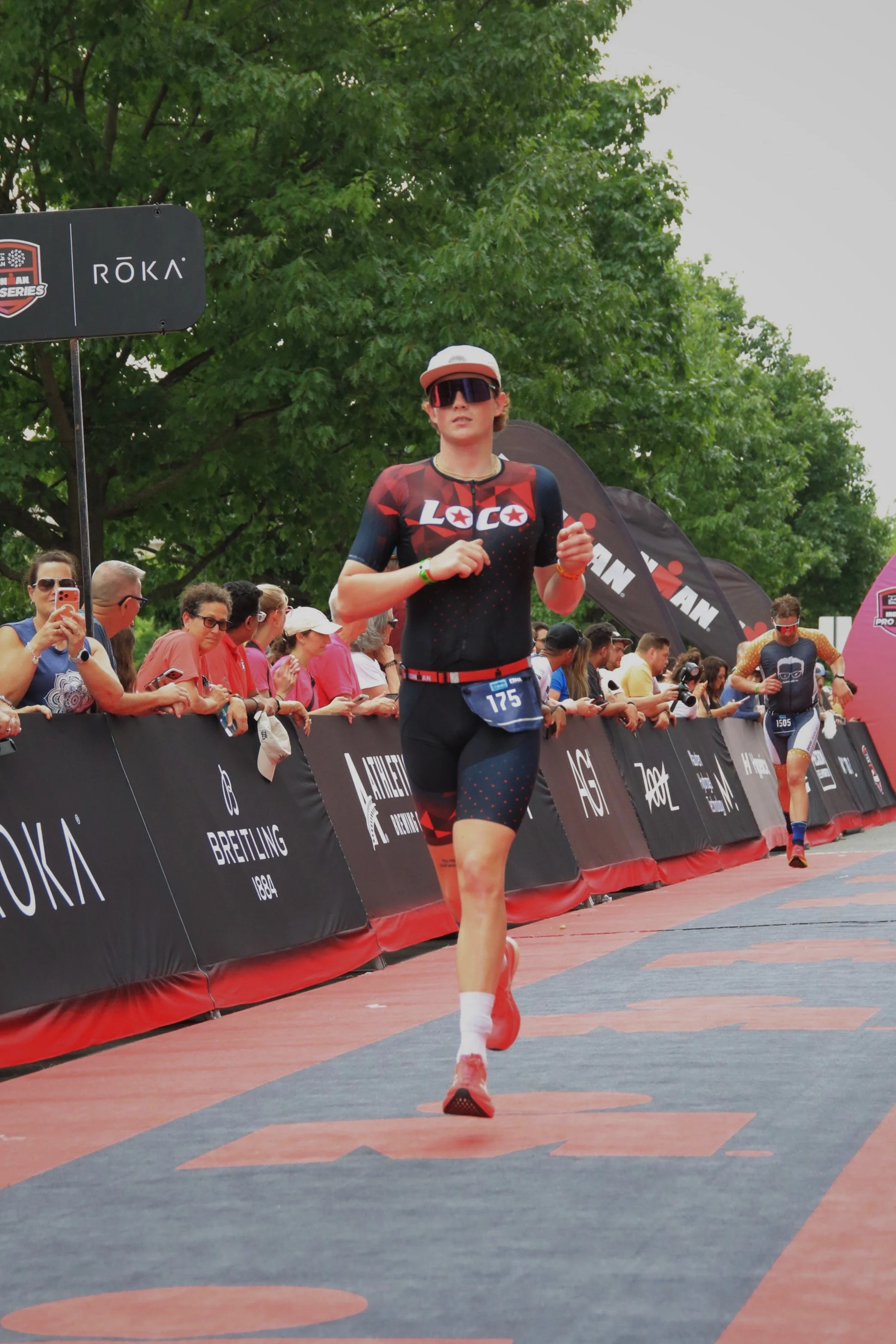
I couldn't figure out how to run. That killed me mentally, and I pretty quickly receded into a mindset of simply finishing the race.
The run itself was beautiful though. It wound through the entire Penn State campus and even took athletes through Beaver Stadium, the largest stadium in college football by seating capacity. On the second lap, after I knew I wasn't going to have the race I wanted, I decided to slow down and really take it all in. I wanted to do the rest of the race for the fun of it, and that's exactly what I did.
At that point, I had two choices. I could spend the rest of the race angry, or I could enjoy the experience that thousands of people travel across the country and world to have. I chose the second option.
Don’t think it wasn’t wearing on me though. The longer the race went on, the more frustrated I became. I watched 4:30 disappear. Then 5 hours. Then 5:30. Coming down the finish chute, I was honestly distraught. I felt like I had disappointed myself.
In my Instagram post after the race, I wrote, "The pain of failure correlates with the height of expectation." That couldn't have been more true.
Looking back, I think the label "North American Championships" rattled me more than I realized. Seeing the professionals and the heavy hitters in my age group took me out of the race before the gun ever went off. My parents even noticed it.
They saw me get quieter. They saw me stop walking with as much swagger. They saw me accept a loss days before the race actually started. if I'm being honest, the race wasn't lost at mile two of the run. It may have been lost when I started giving those athletes more respect than I gave myself.
That's what I want to change moving forward.
I'm in the arena with fantastic competitors. I'm there. Why not go out and give them a run for their money? I'm not talking about the pros, but the other 18-24 year olds that I've competed against in past races and will continue to see moving forward.
I want to be the guy that shows up confident. The guy that respects the competition but doesn't fear it. At the end of the day, we all put our wetsuits on the same way. We all swim the same course, ride the same roads, and run the same miles.
But despite the rough day, I still finished one of the hardest endurance events in the world on an extremely difficult race course. I'm thankful for all the folks that reached out after the race to congratulate me and remind me that it's okay. Finishing on a bad day can sometimes be more impressive than finishing on a day where everything is falling perfectly into place.
This may be a small setback, but my eyes are forward and I'm going to keep my head held high. Ironman Canada is on August 2nd, and I plan to be full steam ahead.
This race also reminded me of something much bigger than finish times and race results. After learning about Larry's passing, I found myself looking at the weekend differently. I got to cross the finish line. I got to hug my family afterward. I got to come home and write this blog post. (I know this is a bit of a repeat, but I find it to be a very important conclusion)
Not everyone got that opportunity.
So be grateful. Be grateful for the ability to train. Be grateful for the opportunity to race. Be grateful for the people who support you. Most importantly, be grateful if you get to come home afterward.
Thank you for reading this post, and feel free to reach out with questions about this race or any of the other 11 Ironman-branded events that I've competed in.
I want to share these experiences with others, and I hope to inspire a few people along the way to DO HARD SHIT.
-Nick
